10 Best Cart Recovery Apps for Shopify
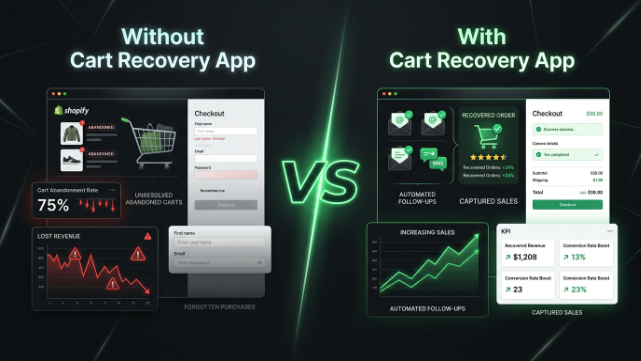
If you run a Shopify store, you already know the pain. Someone adds a product to their cart, gets all the way to checkout, and then just vanishes. No purchase, no explanation, nothing. It happens more often than you’d think. On average, around 70% of Shopify carts get abandoned before the sale is complete. That means for every ten people who show real buying intent, seven of them walk away.
Here’s the good part though. Most of those shoppers aren’t gone forever. They got distracted, saw a shipping cost they didn’t expect, or just weren’t ready to pull the trigger yet. With the right cart recovery app, you can bring a solid chunk of them back and turn abandoned carts into actual revenue.
In this guide, I’m walking you through the 10 best cart recovery apps for Shopify in 2026. I’ll explain what each one does best, who it’s for, and roughly what it costs, so you can pick the one that actually fits your store instead of guessing.
Why Cart Recovery Apps Matter So Much
Before we get into the list, let’s talk about why this even matters. A well optimized recovery flow can typically bring back 5 to 15% of abandoned carts, and the best performing stores using the right channel mix hit 15 to 20%. If your store is doing decent traffic, that’s not a small number. That’s real money sitting on the table every single month.
The reason recovery apps work so well is simple. These shoppers already showed intent. They picked a product, added it to the cart, and started the checkout process. You’re not trying to convince a cold stranger to buy something. You’re just reminding a warm lead to finish what they started. That’s a much easier sale to close.
1. Klaviyo
Klaviyo is the name almost everyone in ecommerce email marketing knows. It’s often called the industry standard, and for good reason. Klaviyo gives you pre built abandoned cart flows that you can turn on within minutes, and then customize with conditional branching based on cart value, purchase history, or customer lifetime value.
What makes Klaviyo stand out is the segmentation. You can send a completely different message to a first time shopper with a small cart versus a repeat buyer with a big order. The AI also predicts which shoppers are most likely to convert and adjusts send times around that. Recovery emails through Klaviyo tend to see open rates well above the industry average.
Klaviyo works with Shopify, WooCommerce, BigCommerce, and Magento, so if you ever expand beyond Shopify, your setup carries over. Pricing starts free for up to 250 contacts, then moves to paid plans as your list grows.
Best for stores that are serious about email marketing and want one platform to handle their entire retention strategy, not just cart recovery.
2. Omnisend
Omnisend is a strong pick if you want email, SMS, and push notifications working together without stitching together three separate tools. It’s an all in one marketing platform built with ecommerce in mind, and its abandoned cart workflows are genuinely solid.
The biggest advantage here is simplicity. You get a clean workflow builder, ready made templates, and a Shopify integration that just works without a lot of setup headaches. Compared to Klaviyo, Omnisend tends to be more affordable once your email volume grows, which makes it appealing for small and mid sized stores.
One thing worth knowing is that Omnisend doesn’t natively support WhatsApp, so if your customers lean heavily on WhatsApp, you’ll want to pair it with something else for that channel.
Best for stores that want multi channel recovery without the complexity or cost of Klaviyo.
3. Recart
Recart is built specifically around SMS marketing, and it treats text messaging as the main event rather than an afterthought. If email open rates on your store feel low, SMS is worth testing, since text messages get opened far more often and far faster than email.
Recart also does something a lot of apps don’t bother with. It actively works with merchants on onboarding, messaging, and workflow refinement, so you’re not just left alone with a dashboard and a template. That kind of hands on support matters a lot for stores that are new to SMS marketing.
The catch is that Recart is SMS centric, so if you need a full email and SMS operating system with deep segmentation, you might still want Klaviyo or Omnisend as your core platform, and use Recart specifically for the SMS layer.
Best for stores that want SMS to be the lead recovery channel, not a backup.
4. Postscript
Postscript is another SMS focused platform, purpose built for Shopify stores. If email recovery isn’t cutting it and you want a channel with extremely high open rates, Postscript makes that transition simple.
It shines in situations that need urgency. Flash sales, limited time discounts, and time sensitive restocks all perform noticeably better over SMS than email, simply because people check their phones constantly. Postscript’s setup is straightforward, and its Shopify integration pulls cart and customer data directly, so your messages can reference the actual product someone left behind.
Best for stores that already have email recovery running and want to add a higher engagement channel on top of it.
5. PushOwl
PushOwl takes a different approach entirely. Instead of relying on email addresses or phone numbers, it uses browser push notifications. That means you can reach someone who abandoned their cart even if they never gave you their contact information, as long as they allowed notifications while browsing your site.
This makes PushOwl a great low friction addition to your recovery stack. It’s not meant to replace email or SMS, but it fills a real gap, since a large share of abandoners never fill out a contact form at all. PushOwl offers a free tier with a set number of push impressions, which makes it easy to test before committing to a paid plan.
Best for stores that want an extra recovery touchpoint without asking shoppers for more information upfront.
6. Retainful
Retainful is a budget friendly option built around email recovery, referral programs, and loyalty features. If you’re a smaller store that doesn’t need Klaviyo’s full complexity, or you’re just not ready to pay Klaviyo pricing yet, Retainful gets the basics done reliably.
It handles the standard multi step abandoned cart email sequence, along with coupon based incentives to nudge shoppers back. It’s not going to compete with Klaviyo on advanced segmentation, but for straightforward cart recovery, it does the job without a steep learning curve or a big monthly bill.
Best for new or small stores that want dependable email recovery without paying for features they won’t use yet.
7. Recapture
Recapture has been in the cart recovery space since 2015, which is a long time in the world of Shopify apps. It’s a dedicated recovery tool, meaning that’s really all it does, and it does it well. The dashboard is built around tracking abandoned checkouts and automating email sequences to win them back.
Because it’s a focused tool rather than a full marketing suite, Recapture tends to be simpler to set up than platforms like Klaviyo. If you just want a dedicated app that handles cart recovery and nothing else, Recapture is one of the more established names in that specific lane.
Best for founder run or lean teams that want a dedicated recovery tool without the overhead of a full marketing platform.
8. Firepush
Firepush combines SMS and web push notifications in a single app, which makes it a nice middle ground if you want more than one recovery channel but don’t want to manage two separate subscriptions. It handles abandoned cart recovery, promotional campaigns, and automated follow ups from one dashboard.
It’s a solid pick for stores that are past the free tool stage but not quite ready for a heavyweight platform like Klaviyo or Omnisend. The setup is fairly quick, and because it covers two channels, you get more recovery touchpoints without juggling multiple app subscriptions and separate billing.
Best for stores that want SMS and push notifications together without paying for two separate apps.
9. Consistent Cart
Consistent Cart is a straightforward email based recovery app with a free plan to get started, which makes it approachable for stores just beginning to think seriously about cart recovery. It focuses on doing the fundamentals well rather than trying to be everything at once.
If your store is still small and you want to test whether cart recovery emails actually move the needle before investing in a bigger platform, this is a reasonable place to start. Once you outgrow it, you can always migrate to something with deeper segmentation later.
Best for stores testing the waters with cart recovery for the first time.
10. Kanal
Kanal is a WhatsApp first cart recovery app, and it’s become increasingly relevant as WhatsApp adoption keeps growing across many regions. It lets you recover abandoned carts, run WhatsApp campaigns, and automate flows with AI, all built specifically for Shopify.
In markets where WhatsApp is the dominant messaging platform, recovery rates through WhatsApp tend to beat email by a wide margin, sometimes reaching well above 20% when paired with a good incentive. Kanal comes with a visual flow builder and live chat support baked in, so setup doesn’t require a developer.
Best for stores whose customers live on WhatsApp more than they live in their email inbox.
How To Pick The Right One For Your Store
With ten options on the table, the choice really comes down to your customers and your budget. If email is your main channel and you want deep segmentation, Klaviyo is hard to beat. If you want one tool that does email, SMS, and push without much complexity, Omnisend is a strong middle ground. If your customers respond better to texts or WhatsApp, lean into Recart, Postscript, or Kanal instead of forcing everyone through email.
A smart move that a lot of successful stores make is layering more than one channel. Run email as your base layer, then add SMS or WhatsApp for higher urgency situations like flash sales or restocks. Just be careful not to hit the same customer with three different messages about the same cart within a few hours. That gets annoying fast and can actually hurt your brand instead of helping it.
A Quick Note For Pakistani Shopify Stores
If you’re running a Shopify store here in Pakistan, cart recovery works a little differently than it does for stores targeting the US or Europe, and it’s worth adjusting your approach.
Cash on delivery is still hugely popular here, and a lot of abandoned carts happen because shoppers hesitate at the payment step, not because they lost interest in the product. Your recovery messages should directly address that hesitation, whether it’s confirming COD availability, mentioning JazzCash or Easypaisa as options, or reassuring them about delivery timelines through couriers like Leopards, TCS, or PostEx.
WhatsApp is also a much bigger deal in Pakistan than email. A huge share of your customers are checking WhatsApp constantly, while their email inbox might go unchecked for days. This is exactly why a WhatsApp first tool like Kanal, or pairing SMS recovery with WhatsApp outreach, tends to outperform pure email recovery for local audiences. If your current setup only sends recovery emails, you’re likely missing a big chunk of shoppers who would have responded instantly to a WhatsApp nudge.
Trust also plays a bigger role here than in more mature ecommerce markets. A recovery message that mentions your return policy, delivery timeframe, or even a phone number to reach a real person can make the difference between someone completing checkout and someone abandoning for good. Don’t just copy a generic template built for a Western audience. Localize the tone, the payment mentions, and the channel to match how your actual customers shop.
Final Thoughts
Cart abandonment isn’t going away, but it’s also not a lost cause. With the right app, or the right combination of email, SMS, push, and WhatsApp, you can recover a meaningful chunk of that lost revenue every single month without spending a rupee on new traffic. Start with one channel, get it working properly, then layer in a second one once you see it delivering results.
If you’re running a Shopify store in Pakistan and want help picking the right recovery stack, setting up your flows properly, or optimizing your checkout so fewer carts get abandoned in the first place, that’s exactly what we do at TheScriptFlow. We work with Shopify stores across Pakistan and internationally on everything from theme development to conversion rate optimization, including cart recovery setups tailored to how your customers actually shop. Reach out to us at thescriptflow.com and let’s get your store recovering the sales it’s currently leaving on the table.