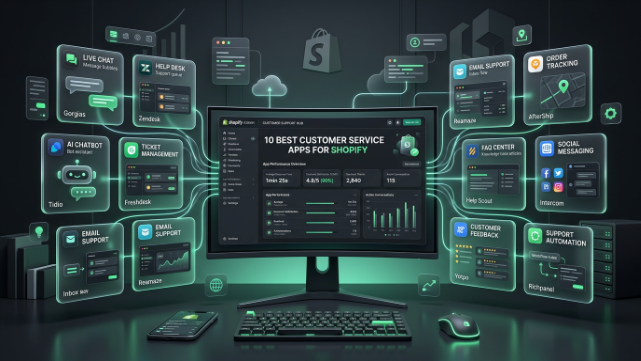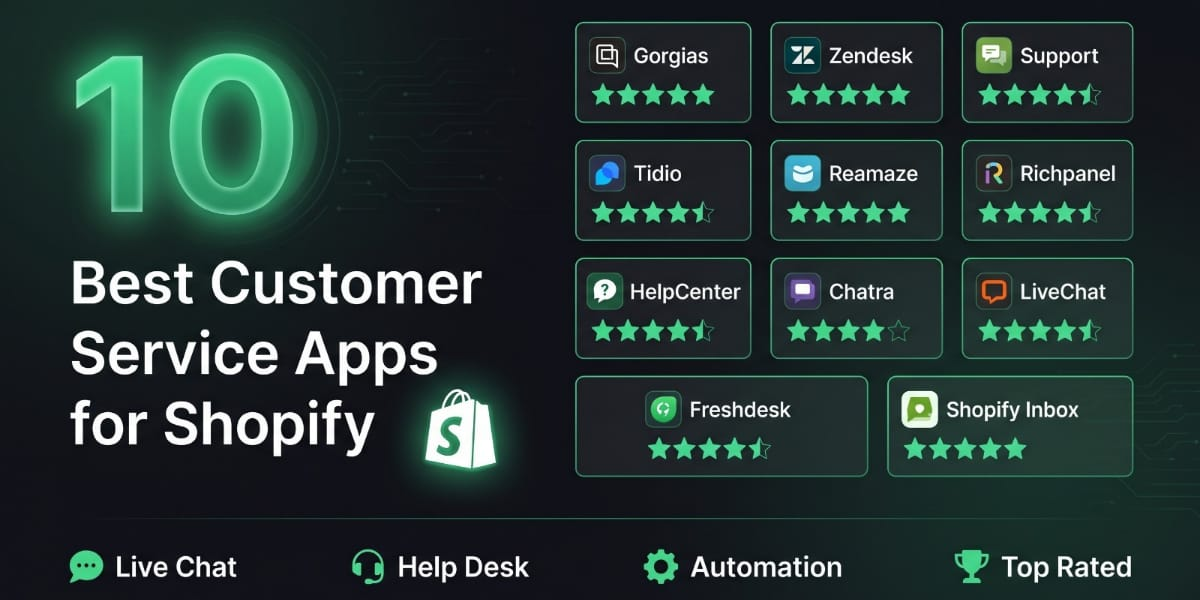
10 Best Customer Service Apps for Shopify
Hey! So you’re looking to level up your customer support game on Shopify, and honestly, that’s one of the smartest moves you can make for your store. Good products get people to click buy, but good support is what makes them come back and tell their friends about you. Let’s go through the 10 best customer service apps for Shopify, one by one, and I’ll break down what each one actually does so you can pick the right fit for your store.
Why You Even Need a Dedicated Support App
Before we jump into the list, let’s quickly talk about why this matters. When you’re just starting out, you can probably handle customer questions through your personal email or Instagram DMs. But as your store grows, that setup falls apart fast. You start missing messages, losing track of who asked what, and customers get frustrated waiting for replies.
A proper customer service app pulls all your support channels into one place, email, chat, social media, sometimes even phone, so nothing slips through the cracks. Most of these apps also connect directly with your Shopify store, meaning your support team can see order details, tracking info, and purchase history without switching tabs. That’s a massive time saver and it makes your responses way more accurate.
Alright, let’s get into the apps.
1. Gorgias
Gorgias is probably one of the most popular helpdesk apps built specifically for Shopify stores, and it’s not hard to see why. It combines your email, live chat, social media messages, and even phone support into a single dashboard, so your team isn’t jumping between five different tools all day.
What makes Gorgias stand out is how deeply it integrates with Shopify. Your support agents can view and even edit orders, process refunds, or apply discount codes right from within a customer conversation, without ever opening a separate Shopify admin tab. It also has automation features that can handle repetitive questions like “where’s my order” automatically, which frees up your team to focus on more complex issues.
Gorgias is a great pick if you’re running a growing store and want your support team to move fast without constantly switching between apps.
2. Zendesk
Zendesk is one of the biggest names in customer service software, not just for Shopify but across pretty much every industry. It’s known for being extremely robust, with tools for ticketing, live chat, a knowledge base, and detailed reporting all built in.
The reason a lot of bigger Shopify stores go with Zendesk is because it scales really well. If you’ve got a large team handling hundreds of customer conversations a day, Zendesk gives you the structure and automation rules to keep things organized without chaos. It’s a bit more of an investment in terms of setup time compared to some lighter apps, but for stores that are scaling fast, it’s worth it.
If you’re a smaller store just starting out, Zendesk might feel like overkill, but keep it in mind as you grow.
3. Tidio
Tidio is a favorite among smaller and mid sized Shopify stores because it’s simple to set up and combines live chat with basic AI chatbot functionality. You can have it answer common questions automatically, like shipping times or return policies, while still letting a real person jump in when needed.
One of Tidio’s biggest selling points is its affordability. It offers a solid free plan, which makes it a great starting point if you’re not ready to invest heavily in a support tool yet but still want something more capable than Shopify’s most basic chat option.
Tidio also lets you see what visitors are browsing on your site in real time, so you can proactively reach out if you notice someone hesitating on a product page, which is a nice touch for recovering potential lost sales.
4. Re:amaze
Re:amaze is another all in one customer support platform that blends live chat, email, and social media messaging into one inbox. It’s built with ecommerce in mind, so the Shopify integration feels smooth right out of the box.
What a lot of store owners like about Re:amaze is its automation and workflow features. You can set up FAQs, chatbots, and even satisfaction surveys to understand how your customers feel about the support they’re getting. It also supports multiple storefronts, so if you’re managing more than one Shopify store, Re:amaze can handle all of them from a single dashboard.
It’s a solid middle ground option, more powerful than something like Tidio, but not as heavy or complex as Zendesk.
5. Richpanel
Richpanel is designed specifically to reduce the workload on your support team by combining self service options with a proper helpdesk. Customers can track orders, request returns, or get answers to common questions without even needing to type out a message, through a self service portal built right into your store.
This is a huge time saver for stores dealing with a high volume of repetitive questions, since it takes those common requests off your team’s plate entirely. Richpanel also organizes conversations from email, chat, and social media in one place, similar to the other tools on this list, but its focus on self-service really sets it apart.
If a big chunk of your support tickets are things like “where’s my order” or “how do I return this,” Richpanel can seriously cut down your team’s workload.
6. HelpCenter
HelpCenter is a bit different from the others on this list because its main focus is building out a proper FAQ and knowledge base for your store, alongside live chat and support ticket features. Instead of customers having to message you for every little question, you can create a searchable help section where they can find answers themselves.
This is especially useful if you’re getting a lot of repetitive basic questions and want to reduce that load without hiring more support staff. HelpCenter lets you build detailed FAQ pages with categories, making your store feel more professional and self sufficient. It also includes contact form and live chat options for anything that needs a personal response.
7. Chatra
Chatra keeps things focused primarily on live chat, and it does that job really well. It’s clean, simple to install, and gives you real time visibility into who’s browsing your store, which pages they’re looking at, and how long they’ve been there.
One thing that makes Chatra appealing is its group chat feature, which lets multiple team members jump into a single customer conversation if needed, like bringing in a specialist to answer a technical question. It also has an offline mode that collects messages as tickets so you never lose a conversation just because you weren’t online at that moment.
If your main priority is a strong, no-frills live chat experience without needing a huge suite of extra features, Chatra is worth checking out.
8. LiveChat
As the name suggests, LiveChat is laser focused on providing a smooth, feature-rich chat experience for your store. It’s been around for a long time and has built a strong reputation for reliability and ease of use.
LiveChat offers detailed customer insights, chat routing so messages go to the right team member, and integrates with a ton of other tools beyond just Shopify. It also has solid reporting features, so you can track things like response times and customer satisfaction ratings over time.
It’s a great option if chat is going to be your primary support channel and you want something proven and stable rather than experimental.
9. Freshdesk
Freshdesk is a well known helpdesk platform that brings together email, chat, phone, and social media support into one system. It’s built for businesses of all sizes, and its Shopify integration lets your team view order details right alongside customer conversations.
One of Freshdesk’s strengths is its automation capabilities. You can set up rules to automatically assign tickets to specific team members based on the type of question, prioritize urgent issues, and even trigger automated responses for common queries. It also includes a knowledge base feature similar to HelpCenter, letting you build out self-service resources for customers.
Freshdesk tends to work well for stores that need a fuller-featured helpdesk without jumping straight to something as complex as Zendesk.
10. Shopify Inbox
And finally, we’ve got Shopify Inbox, sometimes just called Shopify Chat, which I actually covered in detail in a previous blog. This one’s built directly into Shopify itself, so there’s zero extra integration work needed, and it’s completely free.
Shopify Inbox lets you chat with customers in real time right from your storefront, see their cart and browsing activity, and respond from your phone through the Shop app. While it doesn’t have as many advanced automation or ticketing features as some of the paid tools on this list, it’s an excellent starting point, especially if you’re a smaller store or just testing the waters with live chat support for the first time.
Since it’s free and built right in, there’s really no reason not to at least have Shopify Inbox running alongside whatever other tool you choose from this list.
How to Actually Choose Between These Apps
With so many solid options, picking the right one really comes down to where your store is at right now. If you’re just starting out and want something free and simple, Shopify Inbox or Tidio are great starting points. If you’re growing and dealing with a decent volume of support requests across multiple channels, Gorgias or Re:amaze hit a nice balance of power and ease of use.
For bigger stores with dedicated support teams handling high ticket volumes, Zendesk or Freshdesk give you the structure and automation to keep things running smoothly. And if a huge chunk of your questions are repetitive order and return inquiries, Richpanel or HelpCenter can seriously lighten your team’s workload by letting customers help themselves.
What This Means for Shopify Stores in Pakistan
If you’re running a store here in Pakistan, a few things are worth keeping in mind when picking one of these tools. A lot of your customer questions are probably going to be around cash on delivery availability, courier tracking, and delivery timelines to specific cities. Tools like Gorgias or Freshdesk let you set up automated replies specifically addressing these common local concerns, which saves your team a ton of repetitive typing.
Since many customers here are still getting comfortable with online shopping, having a strong self-service FAQ section through something like HelpCenter or Richpanel can also reduce the number of basic questions your team has to handle manually, while still keeping live chat available for anything more urgent.
Budget matters too. If you’re just getting started and want to keep costs low while still offering solid support, starting with Shopify Inbox and layering in Tidio’s free plan for extra chatbot functionality is a smart, low-cost combination before you invest in a bigger platform like Zendesk.
Wrapping It Up
At the end of the day, the best customer service app for your Shopify store is the one that actually matches how your business runs day to day. There’s no single “best” option here, it really depends on your store size, budget, and how complex your support needs are.
If you’re not sure where to start, begin with the free options like Shopify Inbox, get a feel for your support volume and common questions, and then upgrade to a more robust tool like Gorgias, Freshdesk, or Zendesk once you can clearly see where the extra features would actually help.
If you’re running a Shopify store in Pakistan and want help setting up any of these support tools, building out your FAQ pages, or improving your overall customer experience, that’s exactly what we do at TheScriptFlow. We work with Shopify stores across Pakistan and internationally to make sure every part of your store, including support, is set up to convert and retain customers effectively. Reach out to us at thescriptflow.com and let’s get your store’s support running the way it should.