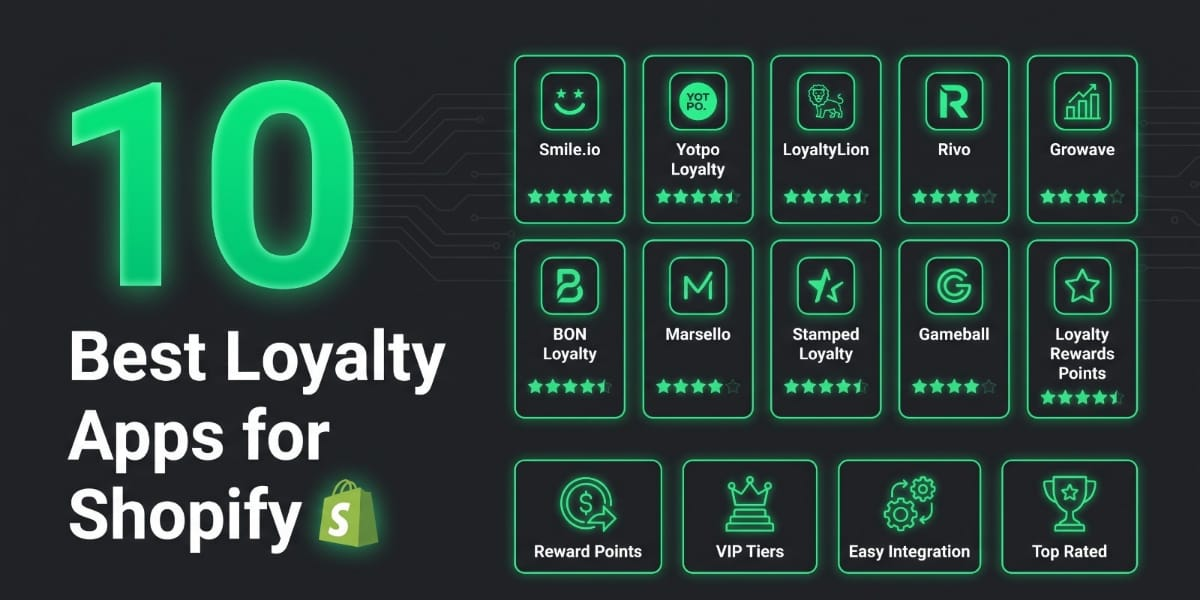
10 Best Loyalty Apps for Shopify
Let’s talk about something every Shopify store owner eventually runs into: the moment you realize getting a new customer is way more expensive than keeping an old one. You spend money on ads, you finally get someone to buy, they’re happy with the product… and then they never come back. Sound familiar?
That’s where loyalty apps come in. A good loyalty program turns your one-time buyers into repeat customers who actually stick around, refer their friends, and spend more with you over time. But here’s the thing not all loyalty apps are built the same, and picking the wrong one can mean wasted money and a clunky experience for your customers.
I’ve put together this list of the 10 best loyalty apps for Shopify right now, breaking down what each one does well, who it’s best suited for, and what you should know before you commit. Let’s get into it.
Why Loyalty Apps Actually Matter for Your Shopify Store
Before we jump into the list, let’s quickly talk about why this matters so much, especially if you’re running a store here in Pakistan or selling to international customers.
Repeat customers spend more per order than first-time buyers, they’re more likely to leave reviews, and they cost you almost nothing in marketing compared to cold traffic. When you’re dealing with rising ad costs on Facebook and Instagram, having a loyalty system that keeps your existing customers engaged is honestly one of the smartest investments you can make.
A solid loyalty app lets you reward customers for things like making a purchase, referring a friend, following you on social media, or leaving a review. Over time, this builds a community around your brand instead of just a transaction history.
Now, let’s look at the apps.
1. Smile.io
Smile.io is probably the most well-known loyalty app in the Shopify ecosystem, and for good reason. It’s been around for years and has built a reputation as the go-to option for stores of pretty much any size.
What makes Smile.io stand out is how approachable it is for beginners. You don’t need to be a tech wizard to set up points, referrals, and VIP tiers. The free plan is genuinely useful too, which is rare in this space – most apps lock the good features behind higher pricing tiers right away.
Smile.io lets customers earn points for purchases, account creation, social shares, and referrals. You can also set up a VIP tier system that unlocks perks like free shipping or exclusive discounts for your top spenders. The widget that shows up on your storefront is clean and doesn’t feel like it’s fighting with your theme design.
For Pakistani merchants just starting to build a loyalty program, Smile.io’s free plan is a great low-risk way to test whether loyalty marketing actually moves the needle for your specific audience before you commit to a paid plan.
2. Yotpo Loyalty
Yotpo is a name you’ve probably already heard if you’ve looked into reviews apps, and their loyalty product builds on that same ecosystem. What’s great about Yotpo Loyalty is that it doesn’t work in isolation – it connects with Yotpo’s reviews, SMS, and email tools, so you get a more unified view of your customer relationships.
This is a strong pick if you’re already using other Yotpo products or planning to. The loyalty and referrals features let you reward customers for reviews, social follows, purchases, and birthdays. You can build tiered VIP programs that feel more premium, which works well if you’re selling higher-ticket items rather than cheap impulse buys.
One thing to keep in mind is that Yotpo’s loyalty program tends to make more sense for growing to mid-sized stores rather than very small shops just starting out. The pricing reflects the more robust feature set, so if you’re just testing the waters, this might be more than you need right now.
3. LoyaltyLion
LoyaltyLion is built for stores that want serious customization and data-driven decision making. If you’re the type of store owner who likes digging into analytics and understanding exactly how your loyalty program is performing, this one’s worth a close look.
What sets LoyaltyLion apart is its focus on measurable ROI. It gives you detailed reporting on how loyalty members compare to non-members in terms of spend, order frequency, and lifetime value. This isn’t just a “nice to have” feature – it actually helps you justify the cost of the app to yourself or your team by showing real numbers.
LoyaltyLion also integrates well with a wide range of other apps, including email marketing platforms and subscription tools, so it can slot into a more complex tech stack without a lot of friction.
If you’re running a growing ecommerce business through TheScriptFlow and want a loyalty system that can scale with detailed reporting as you expand into new markets, LoyaltyLion is a strong contender.
4. Rivo
Rivo is one of the newer players on this list, but it’s earned its spot by focusing heavily on ease of use and clean design. If you’ve ever felt overwhelmed setting up a loyalty program because the backend dashboard looks like a spreadsheet exploded, Rivo is a breath of fresh air.
The onboarding process is simple, and the visual builder for your loyalty widget lets you customize the look and feel without touching any code. Rivo covers the usual bases – points, referrals, and VIP tiers – but it also puts a lot of emphasis on the customer-facing experience, making sure the loyalty widget actually looks good on both desktop and mobile.
Rivo is a good choice if you want something that looks polished right out of the box without spending hours tweaking settings. For stores focused on a younger, mobile-first audience, this kind of clean design can make a real difference in whether customers actually engage with your program.
5. Growave
Growave takes a slightly different approach by bundling loyalty with reviews, wishlists, and social login all in one app. If you’re trying to keep your app stack lean and avoid paying for five different tools that each do one small thing, Growave is worth considering.
The loyalty piece works the way you’d expect – points for purchases, referrals, social actions, and reviews – but having wishlists and social login bundled in means customers get more reasons to create an account and stay engaged with your store. Wishlists especially are underrated for encouraging repeat visits, since customers come back to check on items they’ve saved.
Growave tends to work well for stores that want an all-in-one engagement solution rather than piecing together separate apps for reviews, loyalty, and wishlists. It can also help keep your monthly app costs more predictable since you’re consolidating tools.
6. BON Loyalty
BON Loyalty has built a solid following, particularly among smaller and mid-sized stores looking for a budget-friendly option that doesn’t feel stripped down. It covers the core loyalty features – points, VIP tiers, referrals – along with a rewards page that’s fully customizable to match your branding.
What a lot of merchants appreciate about BON is the responsiveness of the support team and how straightforward the setup process is. You’re not left guessing about how to configure your points system or referral rewards.
BON also supports things like birthday rewards and points expiry settings, giving you a bit more control over how your program runs day to day. If you’re a Pakistani merchant selling internationally and need a program that’s easy to manage without a dedicated team handling it full time, BON is worth a serious look.
7. Marsello
Marsello stands out because it bridges the gap between online and offline retail, which matters if you sell through Shopify but also have a physical store or plan to expand into one. It connects loyalty and email marketing in a way that feels genuinely integrated rather than bolted together.
With Marsello, customers can earn and redeem points whether they’re shopping online or in person, assuming you’re using a compatible POS system. This is a huge advantage for hybrid retailers who don’t want two separate loyalty systems running in parallel.
Beyond the omnichannel piece, Marsello also includes built-in email and SMS marketing tools, so you can send automated campaigns based on loyalty activity – like reminding a customer they have points about to expire, or congratulating them on hitting a new VIP tier.
8. Stamped Loyalty
Stamped is another brand you might recognize from the reviews app world, and their loyalty product follows the same pattern of tying together reviews, ratings, and loyalty rewards. This creates a nice loop where customers are incentivized to leave reviews, which then builds social proof for future shoppers.
Stamped’s loyalty features include points, VIP tiers, and referrals, with solid customization options for how the rewards widget looks on your storefront. The app is generally praised for being reliable and not causing conflicts with other apps or theme customizations, which is more important than people realize until they’ve dealt with an app that breaks their checkout flow.
If reviews and social proof are already a big part of your marketing strategy, pairing Stamped’s loyalty program with their reviews tool creates a nice combined effect where customers are rewarded for the exact actions that help your store grow.
9. Gameball
Gameball brings a bit of a different flavor to loyalty programs by leaning into gamification. Instead of just “earn points, redeem points,” Gameball lets you build more engaging mechanics like challenges, badges, and tiered achievements that make the whole loyalty experience feel more like a game than a transaction log.
This approach can be particularly effective for brands targeting younger audiences or ones with a playful brand voice. Gamified elements tend to increase engagement because they tap into people’s natural interest in progress and achievement, not just discounts.
Gameball also offers strong automation tools, letting you trigger rewards based on specific customer behaviors without manually managing every campaign. If your brand personality leans fun and energetic, Gameball’s approach might resonate better with your audience than a more traditional points system.
10. Loyalty Rewards Points
Rounding out the list is Loyalty Rewards Points, a straightforward and accessible app that focuses on doing the basics really well without overwhelming you with features you’ll never use. It’s a solid entry point for smaller stores that want to launch a points based rewards program without a steep learning curve.
The app covers points for purchases, sign-ups, and referrals, with simple customization for your rewards page. It’s not going to compete with LoyaltyLion on advanced analytics or Marsello on omnichannel features, but for a store that just wants to get a loyalty program up and running quickly and affordably, it does the job.
This kind of app is a good fit if you’re testing loyalty marketing for the first time and don’t want to invest heavily before you know it’ll work for your audience.
How to Choose the Right Loyalty App for Your Store
With all these options, how do you actually pick one? Here’s how I’d think about it.
Start with your store size and budget. If you’re just starting out, something like Smile.io’s free plan or Loyalty Rewards Points lets you test the waters without a big financial commitment. As you grow, you can always upgrade to something more robust like LoyaltyLion or Yotpo.
Think about what else you’re already using. If you’re already running Yotpo reviews or Stamped reviews, sticking with the same brand’s loyalty app often creates a smoother experience and can save you money through bundled pricing.
Consider your customer base. If your audience skews younger and responds well to gamified experiences, Gameball might outperform a traditional points app. If you’re selling premium products to a more mature audience, a clean VIP tier system from Rivo or LoyaltyLion might land better.
Factor in offline sales. If you have or plan to have a physical retail presence alongside your Shopify store, Marsello’s omnichannel approach is worth prioritizing over apps that are online only.
For Pakistani Ecommerce Merchants Specifically
If you’re running a Shopify store from Pakistan and selling either locally or internationally, a few extra things are worth thinking about. Currency display matters make sure whichever app you choose can show point values and rewards clearly whether you’re pricing in PKR or USD. Also check how the app handles your payment gateway setup, especially if you’re relying on manual payment methods or COD alongside standard gateways, since some loyalty apps calculate point rewards based on completed orders and refund status.
It’s also worth testing how the loyalty widget performs on mobile, since a huge chunk of Pakistani ecommerce traffic comes through mobile devices. An app that looks great on desktop but loads slowly or looks cramped on a phone screen is going to hurt your conversion rate more than help it.
Final Thoughts
There’s no single “best” loyalty app that works for every store it really depends on your size, budget, existing tech stack, and what kind of relationship you want to build with your customers. What matters most is picking one and actually committing to running the program consistently. A half set up loyalty program that nobody promotes won’t move the needle no matter how good the app is.
If you’re not sure which of these fits your specific store, or if you want help setting one up and integrating it properly with your Shopify theme, that’s exactly the kind of thing TheScriptFlow can help with. We work with Shopify stores across Pakistan and internationally to build out systems loyalty programs included that actually drive repeat business, not just look nice on paper.