10 Best Sales Channels for Shopify app Growth all the time
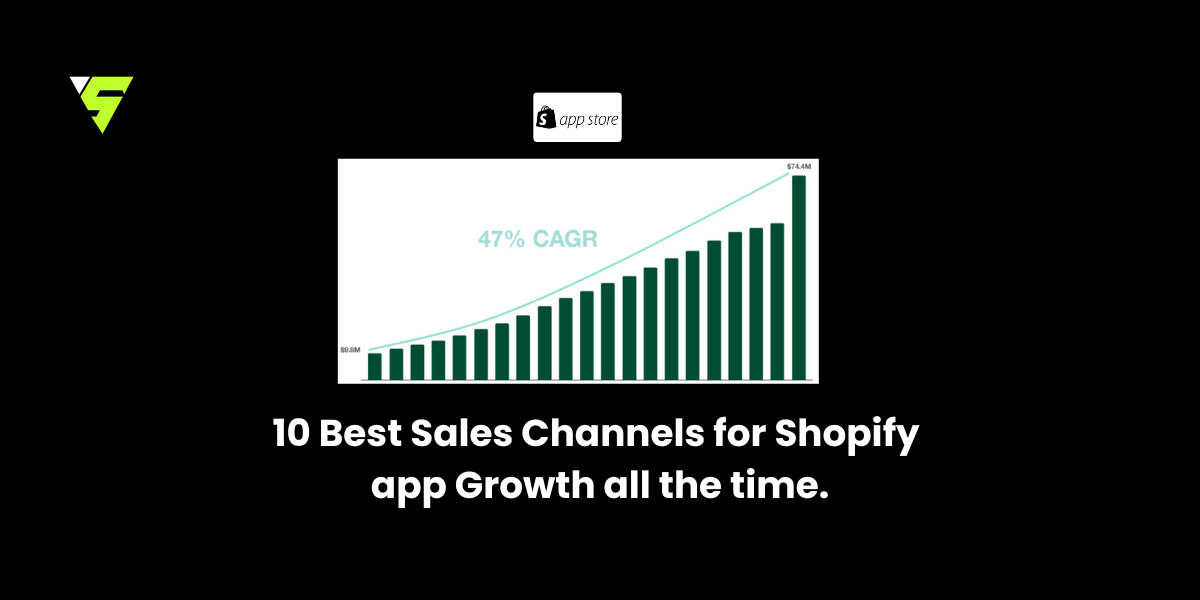
The Shopify app store receiving over 2,000 new application submissions every month, and competition continues to intensify. While most app developers view the Shopify marketplace as their primary distribution channel, the reality is that app store alone won’t sustain your growth in 2025.
According to the recent data from the Shopify ecosystem, only 10% of the newly launched apps gain traction organically through the store. This creates a challenging landscape for app makers who depend entirely on Shopify’s algorithm for customer acquisition.
But here’s what successful app creators know:
Owning your distribution is non negotiable.
In this comprehensive guide, we’ll explore the 10 best sales channels for Shopify app Growth, breaking down both long-term marketing assets and immediate direct-response tactics. Whether you’re building a Shopify Checkout app, an AI-powered merchant tool, or a niche ecommerce solution, these strategies will help you reach merchants who are actively searching for your exact solution.
What You’ll learn in this Blog?
- Strategic marketing channels that build sustainable growth.
- Direct outreach tactics that generate immeditate leads.
- How to leverage partnerships and integrations for viral growth.
- Platforms and tools for reaching Shopify merchant as scale.
- Real-world case studies from successful app makers.
- Step-by-step implementation roadmap for 2026 and go beyond.
Let’s dive in.
Part 1: Long-Term Marketing Assets (The Compound Growth Engine)
1. YouTube & Video Content Marketing
Why It Works: YouTube is the second-largest search engine globally, and merchants actively search for solutions to their problems on video platforms.
The Strategy:
Video content marketing has become one of the most underutilized channels by Shopify app makers. While 89% of marketers agree that video provides strong ROI, only 42% of SaaS companies maintain consistent video production. This is your competitive advantage.
Successful app creators like Zipchat have built full-time content teams dedicated to creating genuine, valuable content for ecommerce audiences—not branded promotional material. The approach focuses on solving real problems that Shopify merchants face daily.
Implementation Steps:
- Create an “Ecommerce Tips” Channel – Focus on solving merchant problems (conversion optimization, customer retention, AI automation)
- Build a Content Calendar – 1-2 videos per week addressing specific pain points
- Invest in Production Quality – A full-time editor ensures videos look professional and polished
- Optimize for Discovery – Use merchant-focused keywords in titles, descriptions, and tags
- Embed in Blog Posts – Cross-promote with your SEO content for maximum reach
Expected Timeline: 6-12 months before significant awareness lift Resource Requirement: 1 full-time creator + 1 part-time editor Cost Estimate: $3,000-$8,000/month
Key Metrics to Track:
- Monthly views and watch time
- Click-through rates to your website
- Subscribers gained per video
- Conversion rate from viewers to free trial
2. Content Marketing & SEO (Search Engine Optimization)
Why It Works: 60% of merchants use search engines to find business solutions. SEO-optimized content captures this demand at zero marginal cost per customer.
The Modern SEO Strategy:
Traditional SEO focuses on ranking for keywords. Modern SEO (2025) adds a layer of complexity: optimizing for LLM citation. As merchants increasingly use AI assistants to solve problems, your content needs to be structured in a way that appeals to both search engines and language models.
Implementation Framework:
Keyword Research & Targeting:
- Primary keywords: “Shopify app marketing,” “how to grow a Shopify app,” “Shopify app distribution channels”
- Secondary keywords: “Shopify checkout customization,” “merchant acquisition strategy,” “app store optimization”
- Long-tail keywords: “best sales channels for ecommerce apps,” “how to market Shopify apps without paid ads”
Content Structure for LLM Optimization:
1. Clear Topic Headers (H2/H3)
2. Concise explanations (150-250 words per section)
3. Numbered lists and bullet points
4. Data-backed claims with sources
5. Actionable steps and examples
6. Internal linking to related articles
Content Pillars to Develop:
- Marketing & Growth – Articles about acquisition, retention, and scaling
- App Development – Technical guides for building marketable apps
- Case Studies – Real merchant success stories using your app
- Trends & Industry Insights – What’s working in 2025
- Tools & Resources – Guides to complementary platforms
On-Page SEO Checklist:
- Target keyword in title (appears within first 60 characters)
- Descriptive meta description (150-160 characters)
- H1 tag matches primary keyword intent
- Internal links (3-5 relevant articles)
- Image alt text with keywords
- Word count: 2,000+ for authority articles
- Mobile-responsive formatting
- Page load speed under 3 seconds
- Structured data markup (schema.org)
Backlink Strategy:
- App Partnership Features – Get mentioned on partner app websites
- Industry Press – Pitch to Shopify blogs, ecommerce publications
- Resource Pages – Find “best Shopify apps” roundup articles and request inclusion
- Competitor Analysis – See who’s linking to competitors, reach out with better content
- Interview Features – Get featured on podcasts and interview-style content
Expected Timeline: 3-6 months for initial rankings, 12+ months for authority Resource Requirement: 1 full-time copywriter/SEO specialist Cost Estimate: $4,000-$10,000/month
3. Social Media & Personal Brand Building
Why It Works: Merchants don’t just follow brands—they follow people. Building founder personal brands creates a moat against competition.
The Platform Strategy:
LinkedIn:
- Regular insights about app growth, merchant trends, and industry changes
- Share lessons learned and failures (not just wins)
- Engage with merchant and developer communities
- Post 3-4 times per week
X (Twitter):
- Real-time commentary on Shopify ecosystem news
- Thread-based educational content about app growth
- Retweet and engage with merchant accounts
- Post daily to maintain visibility
TikTok & Instagram Reels:
- Quick ecommerce tips and hacks
- Behind-the-scenes app development content
- Merchant success stories (30-60 seconds)
- Post 3-4 times per week
Implementation Tactics:
- Founder Incentive Program – Pay team members $50 per 1,000 impressions for quality posts
- Content Batching – Create 4 weeks of content in one session
- Community Engagement – Comment on 10-15 relevant posts daily
- Hashtag Research – Use merchant-focused hashtags (#EcommerceTips, #ShopifyAppDeveloper)
- Cross-Platform Repurposing – Turn one video into 5 social posts
Expected Timeline: Immediate, but compound growth over 6+ months Resource Requirement: Founders (low commitment) + 1 community manager Cost Estimate: $1,500-$3,000/month + incentive payouts
4. Strategic App Partnerships & Integrations
Why It Works: Your competitor’s app could become your distribution channel.
The Ecosystem Play:
The most underutilized growth channel for app makers is building integrations within other popular apps. Zipchat’s strategy of building “skills” within other applications unlocks:
- Access to existing user bases
- Reduction in customer acquisition cost
- Long-tail use case discovery
- Reduced dependency on single channels
Partnership Categories:
- Complementary Tools – Integrate with apps that solve adjacent problems
- Distribution Hubs – Partner with popular platform apps (email, SMS, analytics)
- Vertical Integrations – Work with industry-specific apps (jewelry, dropshipping, print-on-demand)
- API Partnerships – Build SDKs for platforms your merchants use (Zapier, Make, n8n)
Implementation Steps:
- Audit Your Competitors – Who is integrating with whom?
- Create an Integration Roadmap – Prioritize by merchant overlap
- Develop API Documentation – Make integration easy for partner developers
- Launch Partnership Program – Revenue share, co-marketing, integration marketplace listing
- Track Integration Metrics – Users, activation rate, revenue attribution
Success Metrics:
- Number of active partnerships
- Users coming through integrations
- Revenue per integration channel
- Partner satisfaction score
Expected Timeline: 2-3 months per integration, compound benefits over 12+ months Resource Requirement: 1 partnerships manager + 1 technical integrations engineer Cost Estimate: $3,000-$6,000/month
Part 2: Direct Response Channels (Immediate Lead Generation)
5. Cold Email Outreach at Scale
Why It Works: Merchants are reachable, and many haven’t heard of your app yet.
The System:
Successful app makers send 1M+ cold emails per month using data from services like:
- Store Leads – Shopify store directory with contact data
- Similarweb – Website visitor and demographic data
- Apollo.io – B2B prospecting database
- Hunter.io – Professional email finder
- Clearbit – Company and contact intelligence
Cold Email Structure for App Growth:
Subject Line Formulas:
Quick question about [Merchant's Store Name][Store Name] + [Problem] = [Solution]We helped [Similar Store] with [Result]Thought of [Store Name] when [Context]
Email Body Template:
Hi [First Name],
I've been looking at stores in [industry], and [Store Name] caught my attention
because [specific observation about their site/products].
We built a tool that [solves specific problem you observed].
[Store Name similar to them] saw [specific result] in [timeframe].
Worth a quick conversation?
[Your Name]
[Signature]
Campaign Structure:
- Segmentation – Divide contacts by industry, store revenue, traffic
- Personalization – Reference specific details about their store
- Follow-up Sequence – 3-5 follow-ups over 2-3 weeks
- A/B Testing – Test subject lines, copy angles, sending times
- Measurement – Track open rate, click-through rate, reply rate
Expected Response Rates:
- Open Rate: 25-35% (with personalization)
- Reply Rate: 2-5% (with relevant angle)
- Demo Rate: 20-30% of replies
- Close Rate: 10-15% of demos
Scaling Cold Email:
- Month 1: 50,000 emails to test messaging
- Month 2: 200,000 emails with winning angles
- Month 3: 1,000,000 emails across segments
- Ongoing: A/B testing and list rotation
Implementation:
- Use email service: Lemlist, Smartlead, or Apollo
- Hire 1 full-time cold email specialist
- Use dedicated sending domain and IP
- Maintain sender reputation (avoid spam folder)
Expected Timeline: 2-4 weeks to optimize, ongoing system Resource Requirement: 1 full-time email specialist Cost Estimate: $2,000-$5,000/month (including data and tools)
6. Cold Calling & Sales Development
Why It Works: Live conversation converts better than cold emails, especially for enterprise apps.
The Cold Calling Strategy:
High-potential merchants (stores doing $50k+ monthly revenue) often have decision-makers accessible by phone. A dedicated sales team can:
- Qualify leads faster than emails
- Build relationships and rapport
- Answer objections immediately
- Move merchants to demo faster
Calling Framework:
Day 1-2: Research & Preparation
- Identify merchant’s pain points
- Find social proof (competitors using your app)
- Prepare custom talking points
Day 3: Initial Call
- 30-second hook addressing specific pain point
- Ask for permission to continue (don’t pitch)
- Schedule next step or deeper conversation
Day 4-5: Follow-up
- Send information referenced on call
- Request demo or follow-up conversation
- Timeline to decision
Scaling Cold Calling:
- Full-Time Rep 1: 20 dials/day = 100 calls/week = ~2-3 demos
- Full-Time Rep 2: Same output
- Team Performance: 4-6 demos/week = 1-2 customers/month per rep
Tools & Resources:
- Calling Platform: Aircall, Freshcaller, or Google Voice
- CRM: HubSpot, Pipedrive, or Salesforce
- Recording: Document calls for training and quality assurance
Expected Timeline: 2-3 months to find calling rhythm and convert Resource Requirement: 2 full-time SDRs + 1 sales manager Cost Estimate: $6,000-$12,000/month
7. Conferences, Trade Shows & Events
Why It Works: Face-to-face meetings with 500+ merchants in a single day.
The Event Strategy:
Shopify conferences (Shopify Unite, regional summits) and ecommerce events gather thousands of target merchants. Strategic event participation includes:
Pre-Event (3 months out):
- Sponsor or exhibit (small booth, cost-effective)
- Reach out to known attendees for meetings
- Prepare demo stations and pitch materials
- Create contest or giveaway for booth traffic
During Event:
- Conduct 20-30 meetings per day
- Collect contacts from attendees
- Get social media follows and LinkedIn connections
- Gather feedback and pain points
Post-Event (1-2 weeks):
- Follow up with every contact within 24 hours
- Personalize follow-ups with event context
- Schedule demos and trials
- Share highlights on social media
Event ROI Analysis:
Typical Investment:
- Booth rental: $1,500-$3,000
- Travel/accommodation: $1,500-$2,500
- Materials (banners, swag): $500-$1,000
- Staffing: 2 people x $1,000 travel
Expected Returns:
- 100-200 qualified leads
- 20-40 demo bookings
- 3-8 new customers
- 10-15 partnerships initiated
Event Calendar Recommendations:
- Shopify Unite (June) – Flagship Shopify event, highest ROI
- Emerging Brands Summit – Direct B2C merchant audience
- IRCE (Internet Retailer Conference) – Major ecommerce event
- Local Shopify Meetups – Lower cost, local merchant focus
- Industry Vertical Events – Focus on your merchant niche
Expected Timeline: 2-3 months between major events Resource Requirement: 2 team members to staff booth + 1 coordinator Cost Estimate: $5,000-$10,000 per event
8. Shopify App Store Optimization (ASO)
Why It Works: For merchants already searching the app store, good ranking = more installs.
The ASO Strategy:
While the app store shouldn’t be your only channel, optimizing your presence is crucial for:
- Merchants actively searching for solutions
- Closing people who already heard about you
- Building social proof and reviews
ASO Checklist:
App Listing Optimization:
- Clear, benefit-focused app name
- Compelling 80-character subtitle
- Professional app icon (256x256px minimum)
- Descriptive app description (highlight key features)
- Screenshots with captions (first 3 are critical)
- Video demo (30-60 seconds)
- Clear pricing information
Review Generation Strategy:
- Email post-installation: “How’s your experience? 1-click feedback”
- In-app prompts at milestone moments
- Follow up with churned users asking for feedback
- Respond to every review (positive and negative)
- Aim for 4.5+ star average
Keyword Optimization:
- Target 3-5 primary keywords in app description
- Use long-tail keywords (less competitive)
- Refresh keywords quarterly based on search trends
Expected Timeline: Ongoing optimization Resource Requirement: 1 part-time ASO specialist Cost Estimate: $500-$1,500/month
Part 3: Paid Acquisition Channels
9. AppSumo & Product Launch Platforms
Why It Works: Bundled distribution to hundreds of thousands of qualified buyers.
The AppSumo Strategy:
AppSumo operates as a deal marketplace that offers customers 80%+ discounts on software. It’s not a permanent channel (you can run 1-2 campaigns/year), but the results can be transformative:
AppSumo Campaign Results (Real Example):
- Duration: 2-4 weeks
- Cost: Typically 40% commission on sales
- Average Revenue: 3-5x normal monthly revenue
- New Customer Base: 100-500+ new merchants
- Compounding Effect: Those customers refer others, provide testimonials, boost reviews
AppSumo Campaign Setup:
- Application & Approval – Apply 6-8 weeks in advance
- Discount Structure – Offer tiered pricing (3+ tiers recommended)
- Creative Assets – Professional product photos, video demo, copy
- Launch Promotion – Email to your list, social media, PR
- During Campaign – Optimize listing, respond to Q&A, monitor trends
- Post-Campaign – Convert trial users, gather testimonials, analyze ROI
Similar Platforms to Explore:
- Siftery – Comparison and review site with “deals” section
- G2 – Software reviews with promotional campaigns
- Capterra – Business software reviews and comparisons
- ProductHunt – Tech product launches (organic and paid)
Expected Timeline: 3-6 months lead time for approval and launch Resource Requirement: 1 partnerships manager + content team
Cost Estimate: Commission-based (typically 40%)
10. Paid Advertising (Google Ads & Facebook/Meta Ads)
Why It Works: Immediate visibility to merchants actively searching for solutions.
Google Search Advertising:
High-Intent Keywords for Shopify App Makers:
- “Shopify checkout optimization”
- “ecommerce conversion rate optimization tools”
- “[Competitor name] alternative”
- “Best Shopify [specific feature] apps”
- “How to improve Shopify store performance”
Google Search Campaign Structure:
Ad Group 1: Checkout Optimization
- Keywords: Shopify checkout, checkout customization
- Ad Copy: Highlight conversion improvements
- Landing Page: Checkout feature page
Ad Group 2: Competitor Keywords
- Keywords: [Competitor] alternative, better than [competitor]
- Ad Copy: Direct comparison benefits
- Landing Page: Comparison page or case study
Ad Group 3: Problem-Focused
- Keywords: Shopify [problem], how to [solution]
- Ad Copy: Quick solution pitch
- Landing Page: Benefit-focused landing page
Google Ads Performance Targets:
- Click-Through Rate (CTR): 3-5%
- Cost Per Click (CPC): $0.50-$2.00
- Conversion Rate: 5-10%
- Cost Per Lead: $5-$15
- Cost Per Customer: $50-$150
Facebook & Instagram Advertising:
Audience Targeting:
- Custom audiences (existing customers, website visitors)
- Lookalike audiences (similar to existing customers)
- Interest targeting (ecommerce, Shopify, business growth)
- Behavior targeting (online shopping activity, tech adoption)
Facebook Ad Creative Strategy:
- Video ads: 15-30 seconds showing app in action
- Carousel ads: 3-5 benefits/features
- Lead gen ads: Capture email in-app
- Testimonial ads: Real merchant success stories
Performance Targets:
- Cost Per Lead: $2-$8
- Lead Quality Score: 7+/10
- Video View Rate: 50%+
- Click-Through Rate: 1-3%
Implementation:
- Hire agency or in-house specialist (recommend agency for testing phase)
- Start with $1,000-$2,000/month budget
- Test 3-5 audiences and creative variations
- Scale winning combinations to $5,000-$10,000/month
Expected Timeline: 2-4 weeks to optimize, ongoing testing Resource Requirement: 1 PPC specialist or $2,000/month agency fee Cost Estimate: $2,000-$10,000/month advertising spend + management fees
Integrating All Channels: Your Growth Framework
The most successful app makers don’t succeed with a single channel—they succeed with a diversified, integrated approach where channels compound each other.
Monthly Growth Metrics Dashboard:
| Channel | Monthly Leads | Conv. Rate | New Customers | CAC |
|---|---|---|---|---|
| YouTube (organic) | 50 | 5% | 2-3 | $500 |
| SEO (organic) | 200 | 8% | 16 | $100 |
| Social media | 100 | 3% | 3 | $1,000 |
| App partnerships | 150 | 6% | 9 | $250 |
| Cold email | 500 | 2% | 10 | $300 |
| Cold calling | 200 | 10% | 20 | $400 |
| Conferences | 100 | 15% | 15 | $500 |
| App store | 300 | 5% | 15 | $200 |
| AppSumo | 400 | 8% | 32 | $75 |
| Paid ads | 300 | 6% | 18 | $350 |
| Total | 2,300 | 5.8% | 140 | $315 |
At this scale, you’re acquiring 140 new customers monthly at ~$315 cost per customer—sustainable and scalable.
Building Your Channel Strategy: Step-by-Step Implementation
Phase 1: Foundation (Months 1-3)
Focus: Establish credibility and gather data
- Start SEO & Content Marketing
- Publish 2-3 high-quality blog posts/week
- Target long-tail keywords with lower competition
- Begin backlink outreach
- Launch Social Media Presence
- Founders post 3-4x/week on LinkedIn and X
- Join relevant communities (Shopify Partner Slack, Reddit)
- Build initial audience foundation
- Begin Cold Email Outreach
- Start with 50,000/month test campaign
- Refine messaging based on responses
- Track metrics religiously
- Optimize App Store Listing
- Hire ASO consultant (quarterly check-ins)
- Launch review generation campaign
- Get initial traction
Phase 2: Scale (Months 4-8)
Focus: Increase volume while maintaining quality
- YouTube Channel Launch
- Hire content creator + editor
- Publish consistent 2-3 videos/week
- Build to 5,000-10,000 subscribers
- Scale Winning Channels
- Increase cold emails to 200,000+/month
- Add 1-2 full-time SDRs for phone outreach
- Scale paid ads to $5,000/month if profitable
- Build Partnerships
- Launch first 2-3 app integrations
- Begin partnership discussions with complementary apps
- Create partner program documentation
- Plan First Event
- Book booth at Shopify Summit or regional event
- Plan pre-event outreach campaign
- Prepare demo materials
Phase 3: Optimization & Compounding (Months 9-12)
Focus: Leverage accumulated assets and data
- Content Authority
- 50+ published blog posts building SEO authority
- 50+ YouTube videos with growing audience
- Getting cited in industry publications
- Integrated Campaigns
- Email → Social → Cold calls (same leads, multiple touchpoints)
- Content → Ads → Partnership mentions (awareness + conversion)
- Event → Follow-up campaigns → Customer success
- First Major Wins
- Run AppSumo campaign (if ready)
- Launch 5+ app partnerships
- Reach 100+ monthly customer acquisition
- Refine & Optimize
- Double down on best-performing channels
- Cut underperforming tactics
- Prepare for next year’s growth
Case Study: Real Results
Zipchat AI – Multi-Channel Growth Strategy
Zipchat, an AI-powered customer assistant app, faced an unusual challenge: they weren’t allowed on the Shopify App Store initially (product conflict with native checkout). This forced them to build distribution from scratch.
Their Approach:
- Content Machine: Full-time YouTube creator producing weekly ecommerce content
- Massive Cold Email: 1M+ emails/month to qualified merchants
- Founder Personal Brands: Founders building massive followings on X and LinkedIn
- App Partnerships: Building “Zipchat skills” inside partner apps
- Paid Acquisition: Strategic use of AppSumo and direct ads
- App Store: Leveraging reviews and word-of-mouth when eventually approved
Results:
- $10M+ ARR (estimated)
- 5,000+ active Shopify stores
- Multiple app integrations with 1,000+ merchants each
- Founders with 50k+ follower audiences
- Became a finalist in Shopify’s capital program
Key Lesson: No single channel built this. It was the combination and consistency across all channels over 2+ years.
Tools & Resources for Implementation
Essential SaaS Tools
| Tool Category | Recommended Tools | Monthly Cost |
|---|---|---|
| Email Marketing | Lemlist, Smartlead, Apollo | $500-$2,000 |
| CRM & Sales | HubSpot, Pipedrive, Close | $500-$2,000 |
| Content Management | WordPress, Webflow, Sanity | $100-$500 |
| SEO Tools | Ahrefs, Semrush, Moz | $200-$500 |
| Analytics | Google Analytics 4, Mixpanel | $0-$500 |
| Video Editing | Adobe Premiere, CapCut, Descript | $50-$500 |
| Social Media | Buffer, Later, Hootsuite | $100-$500 |
| Paid Ads | Google Ads, Meta Ads | Variable |
| Data & Prospecting | Store Leads, Similarweb, Apollo | $500-$2,000 |
Recommended Resources
- Shopify App Marketing Playbook – Shopify official guide
- The Lean Startup by Eric Ries – Product-market fit framework
- Traction by Gabriel Weinberg – Go-to-market channels
- Jobs to Be Done by Clayton Christensen – Customer research methodology
- Copywriting for Conversion by Joanna Wiebe – Sales page optimization
Common Mistakes to Avoid
1. Over-Reliance on Single Channel
Mistake: Putting all eggs in the Shopify App Store basket
Solution: Diversify across 5+ channels immediately
2. Inconsistent Content Production
Mistake: Publishing 3 blog posts then stopping for 2 months
Solution: Build systems for consistent publishing (calendar, templates, process)
3. Ignoring Merchant Data
Mistake: Guessing what merchants want based on assumptions
Solution: Survey customers, analyze support tickets, conduct interviews
4. Neglecting Email List Building
Mistake: Getting customers but not capturing their email
Solution: Build email list from day one (convert to retained customers)
5. Poor Attribution & Measurement
Mistake: Not knowing which channel actually acquired each customer
Solution: Implement UTM tracking, CRM tagging, and attribution reporting
6. Cheap Traffic Over Quality
Mistake: Running aggressive discount campaigns that attract price-sensitive customers
Solution: Focus on merchant quality and lifetime value
7. Impatience & Premature Scaling
Mistake: Scaling channels before validating they work
Solution: Test small, prove ROI, then scale profitably
Your Action Plan for Next 90 Days
Week 1-2: Planning & Setup
- Audit your current distribution channels
- Define your target merchant persona in detail
- Identify your most important pain point to solve
- Set up Google Analytics, UTM tracking, and basic CRM
- Create content calendar for next 8 weeks
Week 3-4: Quick Wins
- Publish first 2 long-form blog posts (2,000+ words each)
- Optimize your app store listing
- Send first cold email test campaign (10,000 emails)
- Post 4 LinkedIn posts (1 per week from founder)
- Book first 3 conference speaking slots
Week 5-8: Build & Scale
- Publish 8 more blog posts (build to 10 total)
- Scale cold emails to 50,000/month
- Post YouTube videos (4 videos published)
- Build 1 partnership agreement
- Host first webinar or online event
Week 9-12: Analyze & Optimize
- Analyze which channels generated actual customers
- Double down on top 2-3 performers
- Cut underperforming channels
- Plan Q2 growth strategy
- Prepare for larger campaigns (events, partnerships)
Conclusion: Own Your Distribution
The message is simple: you cannot rely on the Shopify App Store alone in 2025.
The ecosystem is too crowded. Competition is increasing. Algorithm changes affect your visibility. Instead, the most successful app makers build owned distribution channels that they control directly.
This guide covered 10 proven channels for Shopify app growth:
- YouTube – Long-term awareness and authority
- Content Marketing & SEO – Organic customer acquisition
- Social Media – Community and founder brand building
- App Partnerships – Viral, integration-driven growth
- Cold Email – Scalable, direct outreach
- Cold Calling – High-conversion personal sales
- Conferences – In-person relationship building
- App Store Optimization – Capturing existing searchers
- AppSumo & Deal Platforms – Rapid customer acquisition
- Paid Ads – Immediate visibility and lead generation
The winning strategy uses all of them together, creating a compound growth system where:
- YouTube gets merchants’ attention
- Content builds trust and credibility
- Social media creates familiarity
- Partnerships unlock new customer bases
- Cold outreach captures immediate demand
- Conferences seal relationships
- Paid ads close conversions
You don’t need to be perfect at all 10 immediately. Start with 3-4, prove the concept, then scale. By next year, you’ll have a diversified growth engine that’s recession-proof, scalable, and independent of any single platform.
The future belongs to app makers who own their distribution. Start building today.
Next Steps
Ready to implement these strategies?
TheScriptFlow offers complete solutions for Shopify app marketing:
- SEO Content Services – Hire our content team for your app blog
- Cold Email Automation – Set up your outreach system with our tools
- App Store Optimization – Get expert ASO review and implementation
- Video Content Production – Produce YouTube videos for app growth
- Strategic Consulting – Work with our growth specialists
Or, join our community of 500+ Shopify app makers learning growth strategies together: Subscribe to TheScriptFlow Newsletter
Questions about growth channels for your specific app? Book a free 30-min strategy call