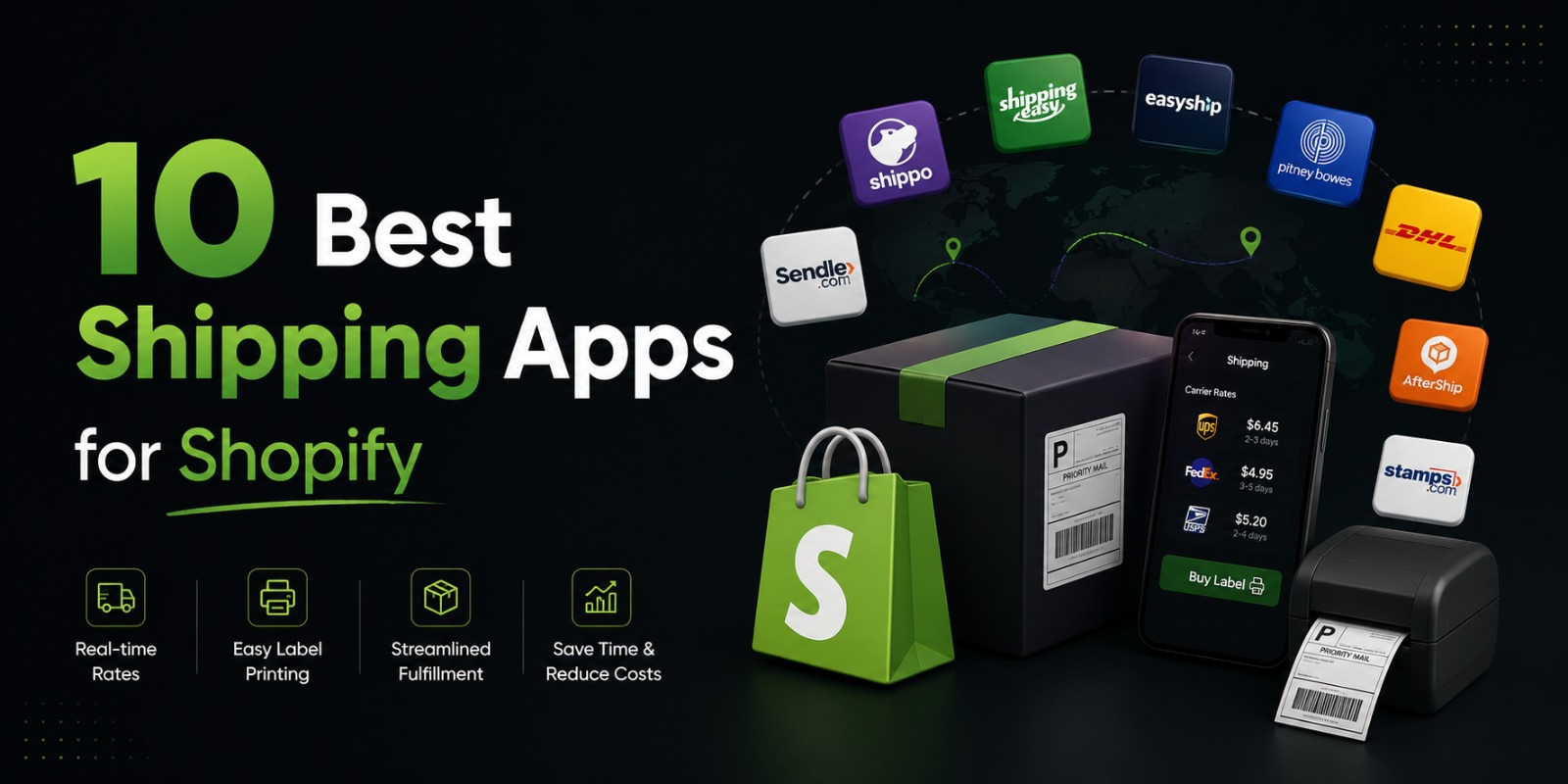
10 Best Shipping Apps for Shopify: The Only List You Need in 2025
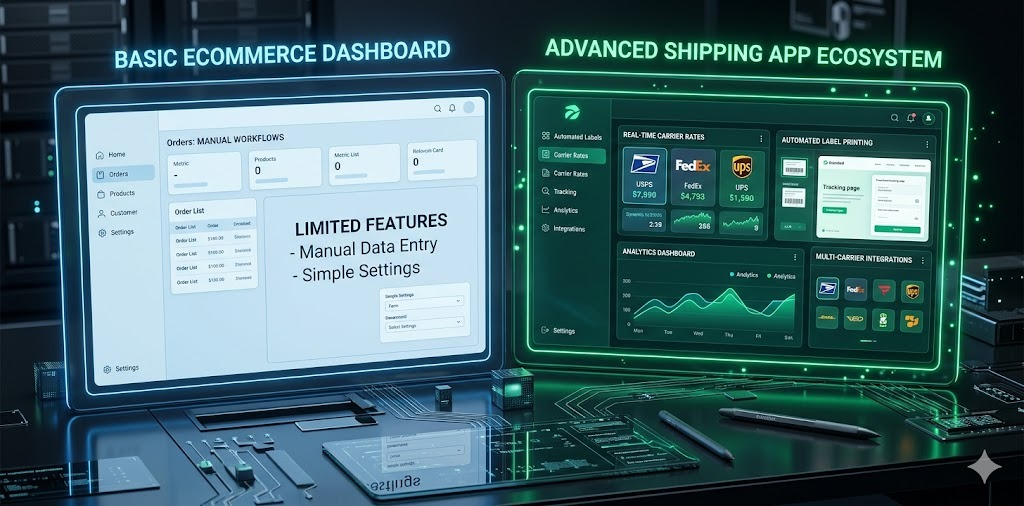
If you’re running a Shopify store, you already know that shipping is one of those things that can make or break your customer experience. And while Shopify’s built-in shipping tools are solid, there comes a point where you need something more powerful.
That’s where shipping apps come in.
The right shipping app can save you hours every week, cut your shipping costs significantly, automate your label printing, give customers real time tracking, and make returns feel effortless. The wrong one just adds confusion and monthly fees you don’t need.
So let’s cut through the noise. Here are the ten best shipping apps for Shopify right now what they do, who they’re best for, and whether they’re worth your money.
1. ShipStation
ShipStation is probably the most well known shipping app in the ecommerce world, and for good reason. It’s been around for years and has earned its reputation as the go-to solution for stores that are scaling fast.
What makes ShipStation stand out is how much it centralizes. If you’re selling on Shopify, Amazon, eBay, Etsy, and your own website all at once, ShipStation pulls all your orders into one dashboard. You manage everything from one place instead of jumping between platforms.
The automation rules are where ShipStation really shines. You can set up rules like “if the order weighs less than 1 pound, use USPS First Class” or “if the customer paid for express, assign UPS Next Day Air.” Once you set those rules up, the system applies them automatically. You’re barely touching individual orders.
ShipStation connects to all the major carriers USPS, UPS, FedEx, DHL, Canada Post, Australia Post, and more. You get discounted rates through ShipStation’s carrier partnerships too.
It also handles batch label printing beautifully. Instead of buying labels one at a time, you select fifty orders and print all fifty labels at once. For stores doing high volume, this is a game changer.
The downside is price. ShipStation starts at around $9.99 a month for up to 50 shipments and goes up from there. High-volume plans can get expensive. But if you’re shipping hundreds of orders a month, the time it saves you is worth far more than the subscription fee.
Best for: Medium to high-volume stores, multi channel sellers, stores that want serious automation.
2. Shippo
Shippo is a fantastic option if you want powerful shipping features without a steep learning curve. It’s cleaner and simpler than ShipStation, which makes it a better fit for newer store owners or smaller operations.
The biggest selling point of Shippo is its pay as you go pricing. You don’t have to commit to a monthly subscription. You pay a small fee per label around 5 to 10 cents and that’s it. For stores that don’t ship enough to justify a monthly plan, this is perfect.
They also have a monthly plan starting at around $19 a month that removes the per-label fee and gives you access to more features.
Shippo gives you access to discounted rates from USPS, UPS, FedEx, DHL Express, and a bunch of other carriers globally. The rate comparison tool lets you see all available options side by side and pick the best one for each order.
The interface is clean and easy to navigate. You can import orders from Shopify with one click, buy labels, and send tracking info back to your customers automatically.
Shippo also has solid international shipping support, which is important if you’re selling to customers outside your home country.
Best for: Small to medium stores, new store owners, stores that want flexible pricing without monthly commitments.
3. AfterShip
AfterShip takes a different angle than most shipping apps. Instead of focusing on label buying and carrier rates, AfterShip specializes in post-purchase tracking and customer communication.
Here’s the problem AfterShip solves. After a customer places an order, the most common question you’ll get is “where is my package?” That question takes up a huge chunk of customer support time. AfterShip eliminates most of those questions.
It creates a branded tracking page on your own domain. So instead of sending customers to a generic USPS or FedEx tracking page, they land on a beautiful page that looks like your store. Your branding, your colors, your logo with real time tracking information right there.
AfterShip also sends proactive tracking notifications via email and SMS. Customers get updates at every stage order shipped, out for delivery, delivered. They stay informed without having to reach out to you.
The platform supports over 1,100 carriers worldwide, which is honestly impressive. No matter what carrier you’re using, AfterShip can track it.
There’s also a returns management feature called AfterShip Returns that lets customers initiate returns through a self-service portal. They pick their return reason, get a return label, and you get notified. Clean and simple for everyone.
The free plan covers 50 shipments a month, which is enough for small stores. Paid plans start at around $11 a month.
Best for: Any store that wants to reduce “where is my order” support tickets, improve customer experience after purchase, and manage returns more efficiently.
4. EasyShip
EasyShip is the app you want if you’re serious about international shipping. If you’re selling globally or planning to, this one deserves a serious look.
What EasyShip does really well is compare rates across a massive network of couriers over 250 shipping solutions worldwide. You enter your package details and destination, and EasyShip shows you all available options sorted by price and delivery time. You pick what works best for that order.
But the standout feature is duties and taxes calculation. International shipping gets complicated fast because every country has different import rules and duty rates. EasyShip calculates duties and taxes at checkout so customers know exactly what they’ll pay — no surprise charges when the package arrives at customs.
This alone reduces a huge source of customer frustration and dispute tickets.
EasyShip also handles customs documentation automatically. When you ship internationally, you need to fill out customs forms. EasyShip generates these for you based on your product information. One less thing to worry about.
The dashboard is intuitive and the Shopify integration is seamless. Orders pull in automatically and you can manage everything in one place.
Pricing starts with a free plan for up to 50 shipments monthly, with paid plans starting around $29 a month.
Best for: Stores with significant international sales, anyone tired of dealing with customs paperwork manually, global brands.
5. Route
Route is unlike any other app on this list because it doesn’t focus on shipping rates or label printing. Route focuses on shipping protection and it’s brilliant at it.
Here’s how it works. At checkout, customers see an option to add Route package protection for a small fee usually a percentage of the order value. If their package is lost, stolen, or damaged, Route covers the replacement or refund.
For you as the store owner, this is huge. Instead of eating the cost of a lost or stolen package out of your own pocket, Route handles it. The customer files a claim through Route, and Route takes care of the resolution.
This is especially valuable if you’re shipping high value products or if you’re in an area with high package theft. It also reduces the stress of holiday shipping season when carrier mistakes and delays are more common.
The customer experience is also really good. Route has a mobile app where customers can track their order and file claims if something goes wrong. It’s smooth and professional.
Route is free to install. You make money because you can choose to pass the protection cost to customers or absorb it yourself. Many stores that use Route actually make a small margin on the protection fee.
Best for: Stores selling high value products, stores with customers in areas prone to package theft, any store that wants to stop absorbing the cost of lost or damaged shipments.
6. Easypost
EasyPost is a developer friendly shipping API that gives you access to multiple carriers from one integration. If you have technical resources or work with a developer, EasyPost gives you an incredible amount of control.
You connect once to EasyPost and get access to USPS, UPS, FedEx, DHL, Canada Post, and dozens of other carriers. No need to set up separate accounts and integrations with each one.
The rate shopping feature lets you compare rates across all connected carriers in real time and automatically select the cheapest or fastest option based on rules you define.
EasyPost also has address verification built in. Before you print a label, EasyPost validates that the shipping address is real and correctly formatted. This reduces delivery failures and returned packages significantly.
Tracking is also solid. EasyPost normalizes tracking events across different carriers so you get consistent tracking data regardless of which carrier is handling the shipment.
Pricing is usage based you pay per API call and per label. For high volume stores, EasyPost can work out to be very cost effective.
Best for: Technically savvy store owners, stores with developer resources, high-volume operations that need carrier flexibility and automation.
7. Shipbob
ShipBob is a completely different category from the other apps on this list. It’s not just a shipping app it’s a full fulfillment service.
When you use ShipBob, you send your inventory to one of their fulfillment centers. When an order comes in on your Shopify store, ShipBob picks the product from their shelves, packs it, and ships it out. You don’t touch the order at all.
This is essentially outsourcing your entire fulfillment operation. And for stores that have grown beyond what one person or a small team can handle, it’s a lifesaver.
ShipBob has multiple fulfillment centers across the US, Canada, Europe, and Australia. By storing inventory in multiple locations, they can ship to any customer in two days or less without paying for expensive express shipping. The product is already close to the customer.
Their Shopify integration is excellent. Orders flow in automatically, inventory levels sync in real time, and tracking information goes back to your customers without any manual work on your end.
The trade-off is that ShipBob isn’t cheap. You pay for storage space, fulfillment per order, and shipping. It works out to be cost-effective only once you’re shipping a significant volume. But at that scale, the time you get back is worth it.
Best for: High-volume stores that have outgrown in-house fulfillment, stores that want to offer fast shipping without paying express carrier rates, brands focused on growth and not operations.
8. Parcel Panel
Parcel Panel is one of the best order tracking apps specifically built for Shopify, and it’s especially popular among dropshipping stores.
Like AfterShip, Parcel Panel creates a branded tracking page for your customers. But it’s known for being particularly clean, fast, and conversion-optimized. The tracking page can include product recommendations, so while a customer is checking their order status, they’re seeing other things they might want to buy.
Parcel Panel supports over 1,100 carriers globally, which makes it a strong choice for stores with international customers or suppliers.
The notification system is very customizable. You can set up automated emails and SMS messages that trigger at specific tracking events. Customer gets a notification when the order ships, when it’s out for delivery, and when it’s delivered. You can customize every message to match your brand voice.
One feature store owners love is the ability to hide the origin country in tracking information. For dropshipping stores sourcing from China, this means customers don’t see their package coming from overseas they just see it moving toward them.
Parcel Panel has a free plan with basic features and paid plans starting at around $11 a month.
Best for: Dropshipping stores, stores with international suppliers, any store that wants a polished branded tracking experience.
9. Sendcloud
Sendcloud is hugely popular in Europe and is the go-to shipping solution for Shopify stores based in the EU. If you’re shipping within or to Europe regularly, this app is built for you.
Sendcloud connects to over 80 carriers across Europe including DPD, PostNL, Hermes, GLS, Colissimo, and many more. You get discounted rates and can compare options across carriers for each shipment.
The checkout delivery widget is one of Sendcloud’s best features. It lets customers choose their preferred delivery method home delivery, parcel locker, pickup point right at checkout. In Europe especially, pickup points are very popular and Sendcloud integrates with thousands of them.
Returns are also handled beautifully. Sendcloud generates return labels and manages the entire return flow through a self service portal. Customers can initiate returns without contacting you.
The automation rules save a lot of time. You set conditions and Sendcloud automatically assigns the right carrier and service for each order. Once set up, most orders require zero manual intervention.
Sendcloud has a free plan for up to 25 shipments a month. Paid plans start at around €25 a month.
Best for: European Shopify stores, international brands shipping heavily into Europe, stores that want carrier choice and checkout delivery options.
10. Veeqo
Veeqo rounds out this list and it’s one worth paying attention to especially because Amazon owns it and it’s completely free.
Yes, free. No monthly fee, no per-label charge. You get access to heavily discounted rates from UPS, USPS, FedEx, and DHL. In some cases, the rates are even lower than what you’d get through Shopify Shipping directly.
Veeqo handles multi-channel inventory management brilliantly. If you’re selling on Shopify, Amazon, eBay, and Etsy simultaneously, Veeqo keeps your inventory synced across all platforms in real time. Overselling becomes a thing of the past.
The picking and packing features are designed for warehouse operations. You can generate pick lists, scan barcodes to confirm items, and print labels in batches. If you’re running any kind of organized fulfillment space, Veeqo makes that process much more efficient.
Reporting is also solid. You get visibility into your shipping costs, carrier performance, fulfillment times, and more. Data that helps you make smarter decisions about your shipping setup.
Given that it’s free, the value is hard to beat. The main thing to keep in mind is that Amazon owns it, so if you have concerns about data privacy or don’t want any connection to Amazon’s ecosystem, that’s worth considering.
Best for: Multi-channel sellers, stores wanting free access to discounted carrier rates, operations with a physical fulfillment setup.
How to Choose the Right Shipping App for Your Store
Now that you know what’s out there, how do you pick the right one?
Start by thinking about your biggest pain point right now. Is it that shipping takes too long? Look at automation-focused apps like ShipStation or Veeqo. Is it that customers keep emailing you about their orders? AfterShip or Parcel Panel will solve that. Are you losing money on lost or damaged packages? Route is what you need. Are you shipping internationally and dealing with customs headaches? EasyShip is your answer.
Think about your volume too. If you’re shipping fewer than 50 orders a month, a free plan or pay-as-you-go option like Shippo makes more sense than a $50/month subscription. If you’re shipping hundreds of orders a day, the economics flip completely and a more powerful platform pays for itself easily.
Consider your technical comfort level. Apps like EasyPost give you a lot of power but require some technical knowledge. Apps like Shippo and AfterShip are designed for anyone to use without any coding knowledge at all.
Finally, think about where your customers are. Selling primarily in Europe? Sendcloud is purpose built for you. Selling globally? EasyShip or AfterShip with their wide carrier networks make the most sense.
Can You Use More Than One Shipping App?
Absolutely. In fact, many stores use two or three apps that serve different purposes.
A very common combination is ShipStation for label buying and automation, AfterShip for tracking and customer communication, and Route for shipping protection. Each app handles one specific part of the shipping experience and they all work together without conflict.
Just be careful not to stack too many apps without a clear purpose for each one. Every app adds a monthly cost and a small amount of complexity to your tech stack. Make sure each one is earning its place.
Final Thoughts
Shipping apps are one of those investments that pay off quickly. The right app saves you time, reduces support tickets, cuts your shipping costs, and makes your customers happier. All of that translates directly into more revenue and a better business.
You don’t have to get this perfect on day one. Start with one app that solves your biggest current problem. Get comfortable with it, see the results, and then add more tools as your needs grow.
The stores that win on shipping aren’t necessarily the ones with the most complex setup. They’re the ones that have the right tools in place and use them consistently.
Pick one app from this list, install it today, and start making your shipping experience something your customers actually remember for the right reasons.