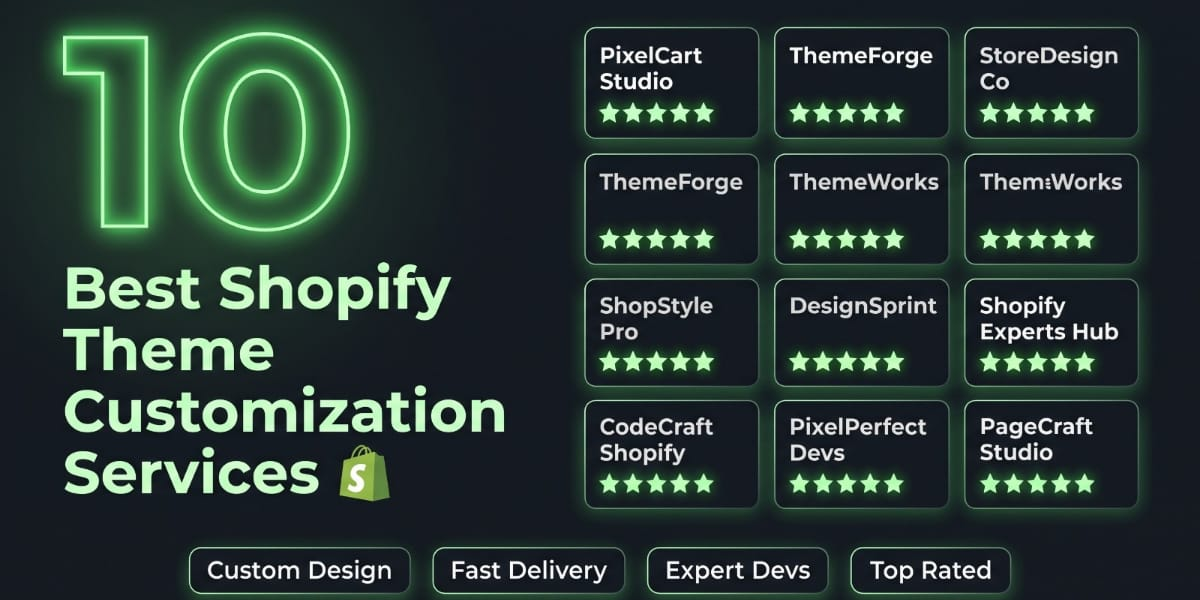
10 Best Shopify Theme Customization Services
If you’ve tried customizing your Shopify theme yourself and hit a wall, or you simply don’t have the time to learn Liquid and CSS on top of running your actual business, hiring a theme customization service makes a lot of sense. But the market is crowded, and figuring out who’s actually good at this versus who just says they are takes some digging.
This list breaks down ten services worth considering, what makes each one stand out, and what kind of store owner they’re best suited for. Whether you’re running a small boutique store or a large catalog with complex functionality, there’s likely an option here that fits.
What to Look For Before You Start Comparing
Before jumping into the list, it helps to know what actually separates a good theme customization service from a mediocre one. Look for a portfolio with real, live examples you can click through and interact with, not just static screenshots. Check whether they specialize in Shopify specifically or treat it as one of many platforms they dabble in. Ask about their process for testing changes on staging before pushing to your live store. And pay attention to how clearly they communicate, since theme customization often involves back and forth revisions that go smoother when communication is straightforward.
With that in mind, here’s the list.
1. PixelCart Studio
PixelCart Studio has built a reputation around clean, conversion focused product page design. Their approach leans heavily on visual merchandising, meaning they pay close attention to how products are displayed, how galleries flow, and how the overall shopping experience feels rather than just making surface level color and font changes.
Store owners who care deeply about how their catalog looks and feels tend to gravitate toward this kind of service, especially fashion, beauty, and lifestyle brands where visual presentation directly drives purchase decisions.
2. ThemeForge
ThemeForge takes a broader development first approach, handling everything from small section tweaks to fully custom built theme features. They’re a solid pick for store owners who know they’ll eventually need something beyond what the standard theme editor offers, since their team is comfortable working deep in Liquid code rather than sticking purely to drag and drop customization.
This makes them a good fit for stores with more complex functionality needs, like custom filtering systems or unique product configurators that off the shelf apps can’t fully handle.
3. StoreDesign Co
StoreDesign Co positions itself as a full service option, combining design and development under one roof rather than splitting the work across separate specialists. For store owners who want a single point of contact managing the entire customization process from concept to launch, this kind of integrated service cuts down on the back and forth that happens when design and development are handled by different teams.
They tend to work well with store owners who have a general vision but want guidance shaping it into something concrete, rather than arriving with a fully detailed spec already in hand.
4. ThemeWorks
ThemeWorks focuses specifically on theme performance alongside visual customization, meaning they pay attention to load speed and Core Web Vitals while making design changes rather than treating those as separate concerns. This matters more than people realize, since a beautifully customized theme that loads slowly still hurts conversions and search rankings.
Store owners who’ve had performance issues with previous customization work, where a theme looked great but got noticeably slower afterward, often find this dual focus valuable.
5. ShopStyle Pro
ShopStyle Pro leans into brand identity work, helping store owners translate an existing brand style guide into a fully realized Shopify theme. If you’ve already got established brand colors, fonts, and visual guidelines from other marketing materials, this kind of service focuses on making sure your Shopify store matches that identity precisely rather than looking like a generic template with your logo dropped on top.
This is particularly useful for store owners expanding from an existing brand presence, like moving from a physical retail business or another sales channel into ecommerce for the first time.
6. DesignSprint
DesignSprint operates on a faster turnaround model, which suits store owners who need customization work done quickly without sacrificing too much on quality. Their process tends to be more structured and time boxed compared to open ended customization engagements, which works well for smaller, clearly defined projects rather than sprawling full site overhauls.
If your customization needs are focused and specific, like refreshing a homepage layout or updating a handful of key sections before a seasonal campaign, this kind of service can move faster than a more comprehensive engagement.
7. Shopify Experts Hub
Shopify Experts Hub functions more like a curated network than a single agency, connecting store owners with vetted developers based on the specific type of customization needed. This model offers some flexibility, since you’re not locked into one team’s particular style or specialty, and can be matched with someone whose past work aligns closely with what you’re trying to achieve.
The tradeoff is that consistency can vary more than working with a single established team, so reviewing the specific developer you’re matched with matters just as much as the platform’s overall reputation.
8. CodeCraft Shopify
CodeCraft Shopify leans heavily into the development side of customization, making them a strong choice for stores that need custom functionality built from scratch rather than just visual adjustments. Things like custom checkout logic, advanced product bundling, or integrations with external systems tend to fall squarely into their wheelhouse.
This is a good option for store owners who already know their customization needs go beyond what any existing app or theme setting can handle, and who need someone comfortable building custom solutions rather than working within existing constraints.
9. PixelPerfect Devs
PixelPerfect Devs is known for precision focused work, particularly around pixel level design consistency across devices. For store owners who’ve been frustrated by customization that looks great on desktop but slightly off on mobile, or vice versa, this attention to cross device consistency addresses a genuinely common pain point.
Their process tends to involve more thorough testing across screen sizes before considering a project complete, which adds time but reduces the chances of post launch surprises.
10. PageCraft Studio
PageCraft Studio specializes in landing page and campaign specific customization, which suits store owners who regularly run promotions, product launches, or seasonal campaigns needing unique page layouts outside the standard store template. Rather than customizing your entire theme, this kind of service often works well as a complement to your core store design, building out specific high impact pages as needed.
This makes them a useful option for store owners who already have a solid base theme but need extra support building out campaign specific pages throughout the year.
How to Decide Between These Options
With this many choices, the right pick really depends on your specific situation. If your priority is deep custom functionality, development focused services like ThemeForge or CodeCraft Shopify make more sense. If visual identity and brand consistency matter most, ShopStyle Pro or PixelCart Studio are worth a closer look. Store owners juggling frequent campaigns might get the most value from something like PageCraft Studio, while those needing a fast, scoped turnaround should consider DesignSprint.
Think honestly about your budget, your timeline, and how complex your customization needs actually are before deciding. A simple color and branding update doesn’t need the same level of service as building fully custom product page functionality from scratch.
Questions to Ask Any Service Before Hiring
Regardless of which option from this list you’re considering, a few questions apply universally. Ask to see live examples of Shopify stores they’ve customized, not just screenshots. Ask whether they test changes on a staging environment before pushing anything live. Ask about their revision process and how many rounds of changes are included before additional costs apply. And ask directly about their experience with any specific functionality your store needs, whether that’s subscriptions, wholesale pricing, or local payment gateway integration.
Getting clear answers to these questions before committing will save you from mismatched expectations down the line, regardless of which service you ultimately choose.
A Word on Pricing Expectations
Pricing for theme customization varies dramatically depending on scope. Small, focused tasks like adjusting colors, fonts, or a single section might run anywhere from a modest one time fee up to a few hundred dollars with more established services. Full theme customization projects involving multiple custom sections, mobile optimization, and functionality changes typically run into the higher hundreds or low thousands depending on complexity and who you’re working with.
Be wary of quotes that seem dramatically lower than everyone else for the same scope of work, since this often signals corners will be cut somewhere, whether that’s skipped testing, rushed mobile optimization, or reused generic code rather than genuinely custom work built for your store.
Why Local Market Expertise Matters More Than People Realize
If you’re serving customers in Pakistan, working with a service that genuinely understands the local ecommerce landscape makes a real difference beyond just aesthetics. Payment gateway integration, cash on delivery display, courier tracking, and PKR currency formatting are details that international agencies without local experience frequently overlook or handle poorly, leading to a store that looks great but creates friction at checkout for local customers.
Before committing to any of the services above, it’s worth asking directly whether they’ve worked with Pakistani stores before and how they’ve handled these local specific requirements, since not every service on this list will have that experience baked in.
Final Thoughts
There’s no single best option for everyone on this list, since the right choice depends entirely on your store’s size, complexity, and specific needs. What matters most is doing proper due diligence regardless of which service you lean toward, checking real portfolio examples, confirming their process includes proper testing, and making sure they understand any specific functionality or market considerations unique to your business.
If you’d rather work with a team that combines strong Shopify theme customization skills with genuine understanding of the Pakistani ecommerce market, from COD checkout display to local payment gateways and courier integrations, TheScriptFlow would be glad to walk you through exactly how we’d approach your store’s customization. Reach out and let’s talk about what your store actually needs to stand out.