10 Must Have Shopify Apps for New Stores
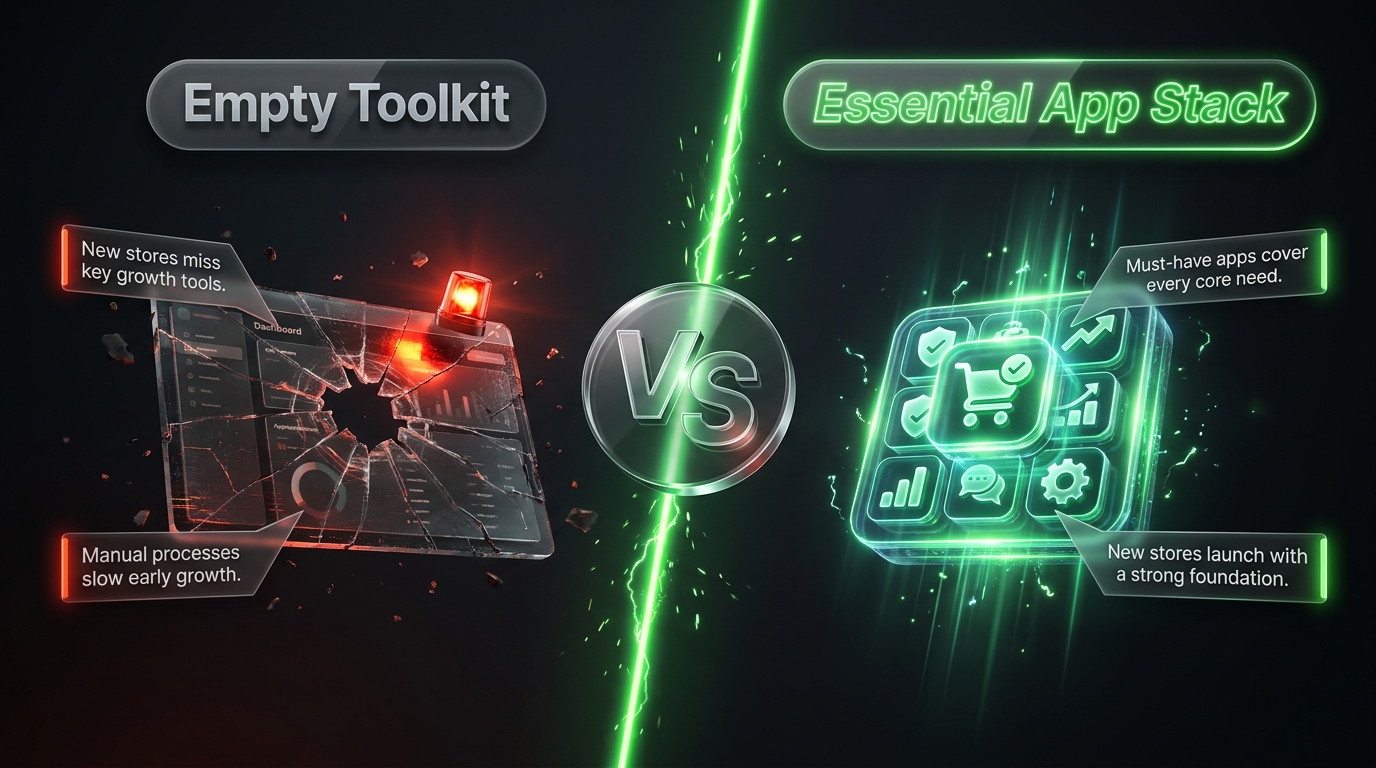
Opening a brand new Shopify store is exciting, but it’s also the moment where a lot of merchants make an expensive mistake. They either install nothing and try to run everything manually, or they go the opposite direction and install thirty apps in their first week because every blog post promises each one is “essential.” Neither approach works. What actually works is knowing exactly which categories matter most when you’re just starting out, and picking one strong, well reviewed app for each of them.
This list covers the ten app categories that genuinely move the needle for a brand new Shopify store, along with specific app recommendations for each one, why they matter, and what to watch out for. Think of this less as a shopping list and more as a starter framework you can build your entire tech stack around as your store grows.
Why New Stores Need A Different App Strategy Than Established Ones
Before jumping into the list, it’s worth understanding why “best Shopify apps” lists written for established six figure brands don’t always apply to a store that just launched. A brand new store has no traffic history, no customer data, no reviews, and usually a limited budget. That means your priorities should be building trust fast, capturing every visitor you can, and keeping your monthly software costs as close to zero as possible while you figure out what’s actually working.
This is why almost every app on this list has a genuinely useful free plan. You shouldn’t need to spend hundreds of dollars a month on software before you’ve made your first hundred sales. As your store grows and you have real revenue and real customer data to work with, you can graduate to paid tiers or more advanced tools. But in month one, free and functional beats expensive and feature rich every time.
1. Judge.me For Product Reviews
New stores have a trust problem before they have a traffic problem. A visitor landing on a store with zero reviews is far less likely to convert than one landing on a store with even a handful of genuine reviews, because reviews are the single fastest way to signal that real people have bought and been happy with what you’re selling.
Judge.me has become one of the most widely used review apps on Shopify, largely because of its free plan, which includes unlimited review requests along with photo and video review collection, something many competitors charge for. It automatically emails customers after their order arrives asking for a review, displays star ratings directly on your product pages, and supports rich snippets so your star ratings can even show up in Google search results, which helps your click-through rate before someone has even landed on your site.
For a brand new store, the free plan is genuinely enough to get started. You can always upgrade later to unlock features like review widgets on collection pages or more advanced customization, but day one, Judge.me alone will solve your biggest trust problem at zero cost.
2. Omnisend For Email And SMS Marketing
Every visitor who doesn’t buy on their first visit is not a lost sale, they’re a missed opportunity to capture and follow up with later, and email is still the highest ROI marketing channel available to ecommerce stores. The problem for new stores is that most powerful email platforms are built with established brands in mind and price accordingly.
Omnisend is a strong starting point because its free plan includes a real automation builder, not a stripped down version, covering welcome series, abandoned cart recovery, and order confirmation flows right out of the gate, along with a limited number of monthly SMS messages included. This matters because abandoned cart recovery alone can recover a meaningful percentage of sales that would otherwise be lost entirely, and it’s one of the very few marketing activities that essentially runs itself once it’s set up.
As your subscriber list and order volume grow, you’ll likely want to explore more advanced platforms like Klaviyo, which offers deeper segmentation and customer profile data. But for a store just getting off the ground, starting with a genuinely free, genuinely automated tool means you’re not paying for capacity you don’t need yet.
3. PageFly For Landing Pages And Product Pages
Your default Shopify theme is a reasonable starting point, but it’s built to be generic enough to work for every kind of store, which means it’s rarely going to make your specific products or brand story shine the way a custom page could. This is where a drag-and-drop page builder becomes valuable, especially for new stores that don’t have the budget to hire a developer for custom theme work.
PageFly lets you build custom landing pages, product pages, and even your homepage using a visual drag and drop editor, with a free plan that covers the core building blocks most new stores need. You can create a proper “About Us” page that actually tells your story, build a dedicated landing page for a specific ad campaign, or redesign your product pages to include better social proof sections and comparison tables, all without touching a line of code.
This becomes especially important if you’re running paid ads, since a generic product page converts noticeably worse than one built specifically around the offer and audience you’re targeting from that ad.
4. Tidio For Live Chat And Customer Support
New stores don’t have an established reputation yet, which means potential customers are naturally more hesitant and more likely to have questions before they commit to a purchase. If those questions go unanswered, that hesitation turns into an abandoned cart. Live chat closes that gap in real time, right at the moment someone is deciding whether to trust you with their money.
Tidio offers a genuinely useful free plan that includes live chat functionality, letting you respond to visitor questions instantly rather than making them wait for an email reply that might not come until the next day. It also includes basic chatbot automation, so common questions about shipping times, return policies, or sizing can get answered instantly even when you’re not online, which matters a lot for a solo founder or small team that can’t staff live chat around the clock.
Beyond the direct support benefit, having a visible chat widget on your store also signals legitimacy. A store with a working chat option simply looks more established and trustworthy than one that offers no way to ask a question before buying.
5. Smile.io For Loyalty And Referrals
It’s tempting to think loyalty programs are only relevant once you have an established repeat customer base, but the opposite is actually true. Building loyalty mechanics into your store from day one means every early customer becomes part of your growth engine instead of a one-time transaction, and word of mouth referrals are dramatically cheaper than paid acquisition.
Smile.io lets you set up a points based rewards program along with a referral system on its free plan, so customers can earn points for purchases, account creation, and social follows, then redeem those points for discounts on future orders. For a new store, even a simple version of this, where customers get a small reward for referring a friend, can meaningfully lower your cost per acquisition over time, especially compared to constantly paying for cold traffic through ads.
The key for a new store is keeping the program simple at first. You don’t need VIP tiers and complex point multipliers on day one. A clean, easy-to-understand points and referral system is enough to start building the habit loop that keeps early customers coming back.
6. TinySEO For Search Engine Optimization
Paid traffic can get expensive fast, especially for a new store with no historical data to optimize ad targeting against. Organic search traffic, by contrast, is essentially free once it starts flowing, which makes SEO one of the highest leverage investments a new store can make, even though the results take longer to show up than a paid campaign.
TinySEO is built specifically to catch the technical SEO issues that new stores commonly miss, including broken links, missing alt text on product images, slow loading pages, and missing meta descriptions, all of which quietly hurt your ability to rank in search results even if your content itself is great. Since most new store owners aren’t SEO specialists, having a tool that flags these issues automatically instead of requiring you to audit your own site manually saves an enormous amount of time and catches problems you likely wouldn’t know to look for.
Getting the technical SEO foundation right in your first few months means your product and collection pages have a real chance to rank as Google indexes your new site, rather than fighting an uphill battle later trying to fix years of accumulated technical debt.
7. Vitals For Upsells, Cross Sells, And Average Order Value
Increasing how much each customer spends per order is almost always cheaper and faster than trying to acquire an entirely new customer, which is exactly why average order value tools matter so much for new stores working with limited ad budgets. Rather than installing five separate apps for upsells, cross-sells, bundles, and countdown timers, an all in one tool consolidates that functionality into a single, more affordable package.
Vitals bundles together upsell offers, product bundles, frequently bought together recommendations, and conversion tools like countdown timers and trust badges into one app, which is particularly useful for a new store that wants meaningful AOV boosting functionality without paying for and managing five separate subscriptions. Since new stores are especially sensitive to app costs stacking up, consolidating several conversion tools into one subscription keeps your monthly software spend predictable while still giving you the features that actually move average order value upward.
8. AfterShip For Order Tracking And Shipping Updates
One of the most overlooked sources of customer anxiety after a purchase is simply not knowing where their order is. New stores especially need to get this right, since a customer’s first experience with your brand often determines whether they ever buy from you again, and a confusing or absent tracking experience creates unnecessary doubt right after you’ve earned their trust.
AfterShip provides branded order tracking pages and automated shipping notification emails, so customers get proactive updates about their order status instead of having to email you asking where their package is. This reduces support ticket volume significantly for a new store that likely doesn’t have a dedicated support team yet, while also giving you a branded touchpoint after the sale that can include upsell offers or reviews requests, turning a purely functional page into another small marketing opportunity.
9. EasySell For COD Order Verification And Checkout Upsells
Fake and unverified cash on delivery orders are one of the most frustrating problems a new store can run into, since they consume inventory, shipping labels, and courier fees for orders that never actually get delivered or paid for. This is a bigger issue than most first-time store owners expect, and it can quietly eat into thin early stage margins.
EasySell offers a genuinely useful free plan covering a customizable order form, quantity discount tiers, and basic upsell offers, along with phone number verification designed specifically to catch and block fake COD orders before they ever get fulfilled. For a new store still figuring out its fulfillment process, having order verification and upsell functionality bundled into a single free tool prevents you from having to stack two or three separate paid apps just to solve two connected problems.
10. Peek! For Behavior Analytics And Session Replay
You can guess why visitors aren’t converting, or you can actually watch them shop and see exactly where they hesitate, get confused, or give up. For a new store still figuring out its layout and messaging, this kind of direct behavioral insight is far more valuable than assumptions based on industry best practices alone.
Peek! lets you watch live and recorded shopper sessions on your store, tracing exactly how visitors move through your pages, where they click, and where they abandon the process entirely, with a free plan available for lower traffic volumes. Watching even a handful of real sessions often reveals friction points you’d never have guessed at, whether that’s a confusing navigation menu, a checkout field that’s scaring people off, or a product page that simply isn’t answering the questions visitors actually have.
Choosing Apps When You’re Selling In Pakistan
New stores selling to Pakistani customers have a few extra priorities that international focused app lists usually skip over entirely. Cash on delivery remains the preferred payment method for a large share of shoppers here, which makes an app like EasySell particularly valuable for a new store, since verified COD orders directly protect your margins from day one rather than after you’ve already absorbed losses from fake orders.
For payments beyond COD, make sure whatever checkout setup you use supports JazzCash and Easypaisa alongside standard card processing, since a meaningful share of your customers will look for at least one local wallet option before completing a purchase. On the fulfillment side, confirm your order tracking and shipping apps integrate cleanly with couriers merchants actually use day to day, including Leopards Courier, TCS, and M&P, so tracking updates flow automatically instead of requiring manual entry for every single order, which becomes unmanageable fast as your order volume grows.
WhatsApp also deserves a place in your new store’s app stack from the very beginning. A large portion of Pakistani shoppers still prefer confirming orders or asking quick product questions over WhatsApp rather than email or a chat widget, so pairing a WhatsApp-based order confirmation flow with your COD verification process can meaningfully cut down on both fake orders and customer support back-and-forth, letting you run a leaner operation while your store is still finding its footing.
Building Your Stack The Smart Way
The apps above cover the ten categories that matter most for a brand new Shopify store: trust and reviews, email and SMS retention, page design, customer support, loyalty, SEO, average order value, shipping communication, order verification, and behavioral insight. You don’t need all ten on day one if your budget or bandwidth doesn’t allow for it, but knowing which category each app solves for means you can prioritize based on where your specific store’s biggest gap actually is.
Start with reviews and email, since those two alone address the two biggest early conversion killers: lack of trust and lost traffic that never comes back. Add the rest as your traffic and order volume grow enough to justify them, and revisit this list every few months, since app pricing, features, and even company ownership change often enough that what’s the best free option today may not be in six months.
If putting this stack together, configuring it correctly, and keeping it optimized as your store grows sounds like more than you want to manage on your own, that’s exactly the kind of setup work TheScriptFlow handles for Shopify merchants across Pakistan and internationally. From choosing the right apps for your specific niche to configuring them so they actually work together instead of against each other, the team at thescriptflow.com can get your new store’s tech stack right from day one. Reach out to TheScriptFlow and let’s build a store that’s set up to grow, not just to launch.