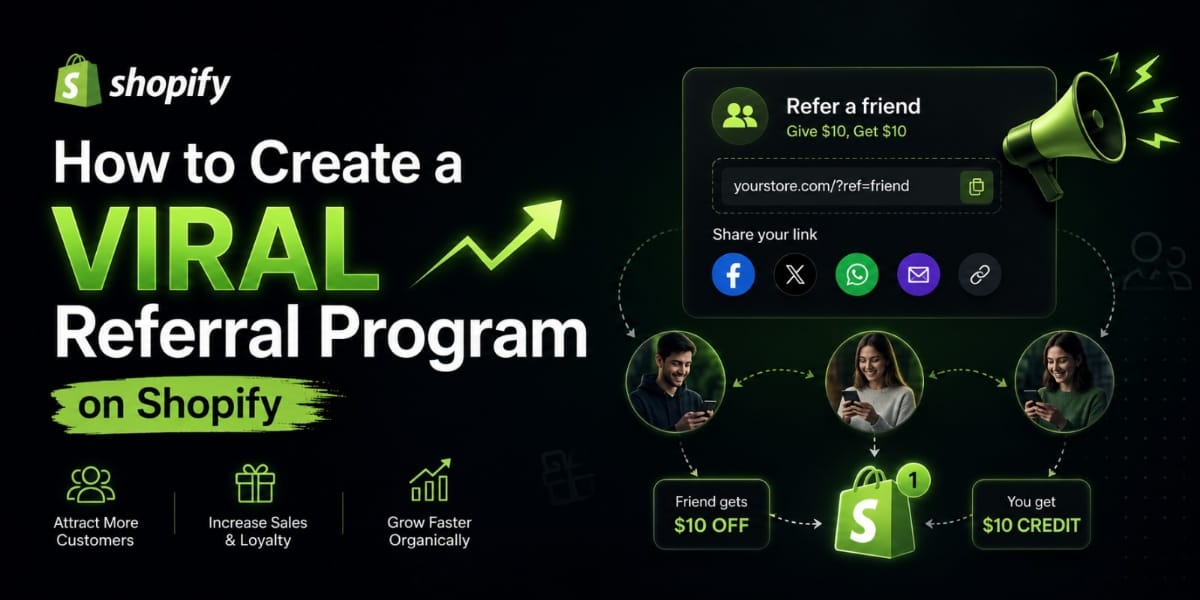
How to Create a Viral Referral Program on Shopify
Here is something most Shopify store owners already know but rarely act on.
Your happiest customers are your best marketers.
Think about it. When someone genuinely loves a product, they talk about it. They tell their friends, their family, their coworkers. They post about it. They recommend it without being asked. That word of mouth is happening whether you have a referral program or not.
A referral program takes that natural behavior and puts a system around it. It gives your happy customers a reason to recommend you on purpose, a simple way to do it, and a reward when their recommendation turns into a sale.
The result is new customers who already trust you before they ever land on your store because someone they trust sent them there.
That is one of the most powerful acquisition channels available to any e-commerce business. And it costs you nothing until it actually works.
This guide is going to walk you through everything you need to know to build a referral program on Shopify that actually drives results — not just one that sits quietly in the corner of your website that nobody uses.
What Makes a Referral Program Go Viral
Before we get into the how, it is worth understanding what separates a referral program that spreads and grows from one that gets ignored.
Most referral programs fail for the same reasons. The reward is not compelling enough to motivate action. The sharing process is too complicated. The program is not visible enough for customers to even know it exists. Or the timing is wrong the ask comes before the customer has had a chance to actually experience the product.
A viral referral program gets four things right.
The reward is genuinely attractive to both sides. The person referring needs to feel like they are giving their friend something valuable, not just a marketing pitch. And the person being referred needs to feel like they are getting a real benefit for trying something new. Both sides of the equation matter equally.
The sharing process is effortless. If it takes more than thirty seconds to share a referral link, most people will not do it. The simpler you make it — one click to copy a link, one tap to share to WhatsApp or Instagram the higher your participation rate will be.
The program is visible at the right moments. Your customers need to know the program exists. And they need to be reminded of it at moments when they are most likely to share right after a great purchase experience, when they are already feeling positive about your brand.
The referral feels genuine. People share things they are proud of. If your product is genuinely good and your brand is one people feel good about being associated with, referrals happen naturally. Your referral program just makes them easier and more frequent.
Step One: Choose the Right Referral App for Shopify
Shopify does not have a built-in referral program tool, so you will need an app to power it. The good news is there are several excellent options designed specifically for Shopify stores.
Here are the main ones worth knowing about.
ReferralCandy is one of the most popular referral apps for Shopify. It handles everything automatically unique referral links for each customer, reward fulfillment, fraud detection, and analytics. It integrates cleanly with Shopify and with email marketing platforms like Klaviyo and Mailchimp. The setup is straightforward and the dashboard is easy to manage.
Smile.io is primarily a loyalty and rewards platform but it includes a referral program feature that works very well alongside its points and VIP tier systems. If you want a referral program as part of a broader loyalty strategy, Smile.io is worth considering. It is one of the most widely used customer loyalty apps in the Shopify ecosystem.
Yotpo Loyalty and Referrals combines referrals with reviews, loyalty points, and visual UGC in one platform. If you want all of your customer retention and advocacy tools in one place, Yotpo is a strong choice.
Referral Hero is a simpler, more affordable option that works well for stores that are newer to referral marketing and want to get something live quickly without a lot of complexity.
Growave combines referrals with wishlist, reviews, loyalty, and Instagram UGC tools. Good for stores that want multiple customer engagement features without subscribing to several different apps.
When choosing, consider your budget, the size of your customer base, what other marketing tools you are already using and need to integrate with, and how much customization you want over the program design.
Most of these apps have free trials. Install one, configure a basic program, and see how it works with your store before committing.
Step Two: Decide on Your Reward Structure
This is the most important decision you will make about your referral program. Get the reward right and everything else becomes much easier. Get it wrong and even the best-designed program will underperform.
You have two sides to reward the referrer and the referred friend. Think about both carefully.
Rewards for the Referrer
This is the person who already bought from you and is recommending you to someone else. They are doing you a favor. The reward needs to feel proportionate to that.
Store credit or account credit tends to work well because it brings the customer back to spend more with you. A $15 store credit is worth $15 to the customer but it also brings them back for another purchase, which increases their lifetime value.
Percentage discounts on their next order are another common option. Simple, easy to understand, and valuable.
Free products work extremely well as referral rewards for the right type of store. If your product has a low cost but high perceived value, offering a free product as a referral reward feels very generous to the customer.
Cash rewards via PayPal or bank transfer work well for high-ticket items where a $10 coupon feels insignificant compared to the purchase price. For a store with a $300 average order value, a $30 cash reward for a successful referral is compelling.
Rewards for the Referred Friend
This is the new customer being introduced to your store for the first time. Their reward serves two purposes it gives them a reason to try you, and it makes the referrer feel good about what they are offering their friend.
A welcome discount is the most common option. Ten to twenty percent off their first order is clean, simple, and effective. Free shipping on the first order is another option, especially if shipping costs are a common barrier to purchase on your store.
A free gift with their first purchase works beautifully for certain product categories. It adds surprise and delight to the first experience and gets them trying multiple products at once.
Make sure the friend’s reward is genuinely valuable not a token gesture that feels more like a marketing trick than a real benefit. The referred friend is evaluating your brand for the first time. Starting that relationship with a reward that actually impresses them sets the tone for everything that follows.
Choosing Your Reward Amounts
How generous should you be?
Think about your customer acquisition cost. What do you currently pay to acquire a new customer through paid advertising? If Facebook Ads cost you $30 to acquire a new customer, then a referral reward that costs you $20 in total $10 to the referrer and $10 to the friend is a bargain. You are getting a warm, pre-sold customer for less than what cold advertising costs.
Think about your margins. Your reward needs to fit within your margin structure. A reward that is so generous it erodes your profit on every referred sale is not sustainable.
Think about your average order value. The reward needs to feel significant relative to what customers are spending. A $5 discount for referring someone to a store where the average order is $200 feels like an afterthought. A $5 reward on a $20 product feels generous.
A general starting point that works for many Shopify stores is offering something in the range of 10 to 20% of your average order value to the referrer, and a similar value welcome discount to the referred friend.
Step Three: Set Up the Program in Your Chosen App
Once you have chosen your app and decided on your reward structure, it is time to set everything up.
Most referral apps follow a similar setup flow. Here is what you will be configuring.
Referral Link Generation
The app will automatically generate a unique referral link for each customer. This is what they share with their friends. When someone clicks the link and makes a purchase, the referring customer gets credited automatically.
Make sure the link format is clean and easy to share. Some apps let you customize the URL structure take advantage of this to make your referral links look professional rather than like a string of random characters.
Reward Triggers
Configure exactly when rewards are issued. You have a few options here and the right choice depends on your business.
Reward on purchase means the referrer gets their reward as soon as the referred friend makes a purchase. This is the most straightforward approach and tends to generate the highest participation because the feedback loop is fast.
Reward after the return window closes means you wait until the order is no longer eligible for a return before issuing the reward. This protects you from fraud where someone refers themselves using a different email address, collects the reward, and then returns the order.
Reward after minimum order value ensures that referred purchases meet a threshold before triggering the reward. This prevents tiny purchases that cost you more in reward value than they generate in revenue.
Fraud Prevention
Every referral app includes some level of fraud detection. Review these settings carefully. Common fraud patterns include people referring themselves using multiple email addresses, people gaming the system to collect multiple rewards, and fake accounts created purely to exploit the program.
Most apps detect these patterns automatically flagging suspicious activity, preventing the same email domain from receiving multiple referral rewards, and requiring new customers to enter payment information before referral rewards are issued.
Enable whatever fraud protection your app offers. Referral fraud is real and can cost you significant money if not monitored.
Email Templates
Your referral app will send automated emails to both the referrer and the referred friend. Customize these emails so they sound like your brand, not a generic template.
The email to the referrer should confirm that their referral was successful, tell them exactly what reward they earned, and explain how to use it. Keep it warm, personal, and on-brand.
The email to the referred friend should introduce your brand compellingly, present their welcome discount clearly, and make it easy for them to shop. This is their first communication from you — make it a good impression.
Step Four: Make Your Referral Program Visible
A referral program that nobody knows about is a referral program that does not work.
This is where a lot of store owners drop the ball. They set up the program, add a small link in their website footer, and wonder why nobody is participating. Visibility is everything.
Here are the touchpoints where you should be promoting your referral program.
Post-Purchase Page
The moment right after someone completes a purchase is the single best moment to introduce them to your referral program. They are feeling good about their decision. They are excited about their order. Their enthusiasm for your brand is at its peak.
Add a referral program prompt to your order confirmation page in Shopify. This is the page people see immediately after checkout. A simple message — “Love what you just ordered? Share it with a friend and you both get a reward” — with a button to get their referral link right then and there is extremely effective.
Thank You Email
Your post-purchase email sequence should include a mention of your referral program. Ideally within the first one or two emails after purchase — when the customer is still in the honeymoon phase with your brand.
Do not lead with the referral ask. Lead with genuine appreciation, useful product information, or an exciting brand story. Then introduce the referral program naturally toward the end of the email as an added benefit of being a customer.
Dedicated Referral Program Page
Create a page on your Shopify store dedicated entirely to your referral program. Explain how it works, what the rewards are, and how to get started. Link to this page from your navigation menu, your footer, and your email campaigns.
This page should be clear, compelling, and easy to act on. Someone landing on this page should be able to understand the program in thirty seconds and get their referral link in one click.
Navigation Menu
Add a link to your referral program in your store’s main navigation or at minimum in your footer. Your loyal customers actively look for ways to get more value from brands they love. Make it easy for them to find the program.
Account Dashboard
If your store has customer accounts and it should add referral program information to the customer account dashboard. When a logged-in customer visits their account page, they should see their unique referral link, how many referrals they have made, and what rewards they have earned. This visibility encourages ongoing participation.
Social Media
Post about your referral program on your social channels. Explain the benefits, share the rewards, and make it easy for followers to sign up. You can also ask existing participants to share their experience social proof about the referral program itself can be very motivating for people who are on the fence about participating.
Packaging Inserts
If you include any physical materials in your orders a thank you card, a small booklet, a sticker add a mention of your referral program with a URL or QR code. The moment a customer unpacks a beautiful order is another peak enthusiasm moment. Catch them there.
Step Five: Promote the Program to Your Existing Customers
Your existing customer base is the starting point for your referral program. These are the people most likely to participate — they already bought from you, they already have an opinion about your product, and they already have relationships with potential new customers.
Send a dedicated email campaign to your entire customer list announcing the referral program. Make it feel like a special announcement, not a generic promotional email. Tell them you are launching something new. Explain the rewards clearly. Give them their unique referral link. Make sharing easy with one click sharing buttons for WhatsApp, email, and social media.
Segment your customer list and prioritize your best customers. Your repeat buyers, your VIP customers, your highest spenders these are the people most likely to be enthusiastic advocates for your brand. Send them a personalized version of the announcement that acknowledges their loyalty and makes them feel like insiders getting early access to something special.
Follow up. Not everyone acts on the first email. A reminder email a week later shorter, punchier, with a clear call to action can significantly increase participation rates. Then periodic reminders in your regular email newsletters keep the program top of mind for customers who have not yet participated.
Step Six: Create a Referral Flow That Converts
Getting someone to click a referral link is only half the battle. Once they arrive on your store, you need to convert them into a buyer.
The referred friend’s experience when they land on your store matters enormously. Here is how to optimize it.
Landing Page Experience
When someone clicks a referral link, they should land on a page that immediately acknowledges their referral and presents their welcome offer prominently. Do not let them land on your homepage with no context about why they are there or what offer they have access to.
Most referral apps handle this automatically they create a landing page or pop up that greets the referred visitor with their discount and a clear call to action to start shopping.
Make sure this landing page or pop-up is working correctly and looks good on mobile. Most referrals are shared and clicked on mobile devices.
Trust Signals
A referred visitor is coming from a trusted recommendation but they are still visiting your store for the first time. Make it easy for them to trust you quickly.
Make sure your product pages have strong reviews and social proof visible. Have clear information about your return policy and shipping times. Show real customer photos. These trust signals reduce the hesitation a first-time visitor feels and increase the likelihood they complete their first purchase.
Clear Path to Purchase
Remove any unnecessary friction between landing on your store and completing a purchase. Your referral discount should be automatically applied or very easy to apply. Your checkout process should be streamlined. Guest checkout should be available for people who do not want to create an account.
The easier and more seamless the purchase experience, the higher your referral conversion rate will be.
Step Seven: Track Performance and Optimize
Once your program is live and running, you need to measure how it is performing and continuously improve it.
Here are the key metrics to track.
Referral Participation Rate what percentage of your customers are actively sharing referral links? If this number is low, your rewards might not be compelling enough or your program is not visible enough.
Referral Conversion Rate of the people who receive a referral link and visit your store, what percentage make a purchase? If this is low, your landing experience or your product-market fit with referred audiences might need work.
Cost Per Referred Customer how much are you spending in rewards for each new customer acquired through referrals? Compare this to your paid acquisition costs to understand the ROI of your program.
Referred Customer Lifetime Value do referred customers have a higher or lower lifetime value than customers acquired through other channels? Most research shows that referred customers have significantly higher lifetime values. Tracking this helps you understand the true ROI of your program.
Top Referrers who are your most active referrers? These are your brand advocates. Consider recognizing them with additional rewards, early product access, or personal thank-you messages. Nurturing your top referrers keeps them engaged and participating.
Review these metrics monthly. Test different reward structures, different messaging, different placements of your referral prompts. Small improvements in participation rate or conversion rate compound significantly over time.
How to Make Your Referral Program Go Viral
Getting from “a working referral program” to “a viral referral program” requires a few extra ingredients.
Make sharing feel social and fun. Give customers a referral experience that feels like they are doing their friends a favor rather than marketing on your behalf. The framing matters. “Give your friend $15 off” feels generous. “Earn $10 when a friend buys” feels transactional. Lead with the benefit to the friend.
Create a referral leaderboard. Some referral apps support leaderboards that show your top referrers. Gamification drives competition. When customers can see how they rank against other referrers, those who are competitive will push to refer more people. Offer a special reward for your top referrer each month — early product access, a significant store credit, or a public shoutout on social media.
Use social proof about the program itself. If you have customers who have earned significant rewards through referrals, share those stories. “Sarah earned $150 in store credit just by sharing her referral link” is a compelling story that makes other customers think “I could do that too.”
Time your referral asks around peak enthusiasm moments. We mentioned the post-purchase page but there are other peak moments too. When a customer leaves a five-star review, that is a moment of peak enthusiasm — follow up immediately with a referral ask. When a customer contacts support and has a great experience, that is another peak moment. When a customer hits a loyalty milestone, they are feeling valued — that is a great time to remind them about referrals.
Make the referral message easy to customize. Some referral apps let customers add a personal message alongside their referral link. People are much more likely to share something if they can put it in their own words. “I’ve been using this for three months and honestly it’s changed my routine — here’s 15% off if you want to try it” is far more compelling than a generic brand message.
Common Mistakes to Avoid
There are a few pitfalls that trip up a lot of Shopify store owners when building referral programs.
Launching before you have a strong product and customer base. Referral programs amplify what already exists. If your product is mediocre or your customer experience is inconsistent, a referral program will spread that reputation. Make sure your product and service are genuinely strong before you ask customers to stake their personal reputation on recommending you.
Setting rewards too low. Stingy rewards signal to customers that you do not really value their advocacy. If your reward is a $3 discount on a $150 order, nobody is going to get excited about sharing their referral link. Be genuinely generous — the ROI of a referred customer justifies it.
Making it too complicated. Multi-step referral processes, confusing reward structures, and difficult sharing mechanics all reduce participation. Simplicity wins every time.
Not promoting it enough. Launching a referral program and then mentioning it once in a single email is not a marketing strategy. Promote it consistently, across multiple channels, at multiple points in the customer journey.
Ignoring fraud. Without proper fraud prevention, referral programs attract gaming and abuse. Enable the fraud protections in your app and review suspicious activity regularly.
Final Thoughts
A well-designed referral program is one of the best investments a Shopify store can make.
It turns your happiest customers into a growth channel. It brings in new customers who already have a reason to trust you. It costs you nothing until it actually delivers a sale. And the customers it brings in tend to be more loyal, spend more, and refer even more people themselves.
The stores that do this well do not overcomplicate it. They pick a compelling reward. They make sharing simple. They promote the program consistently. They optimize based on data.
That is the whole playbook.
Start with one app. Choose a reward your customers will genuinely get excited about. Launch it to your existing customer base this week.
Then let your happiest customers do what they were already going to do anyway — just now with a system behind them that makes it easier, more frequent, and more rewarding for everyone involved.