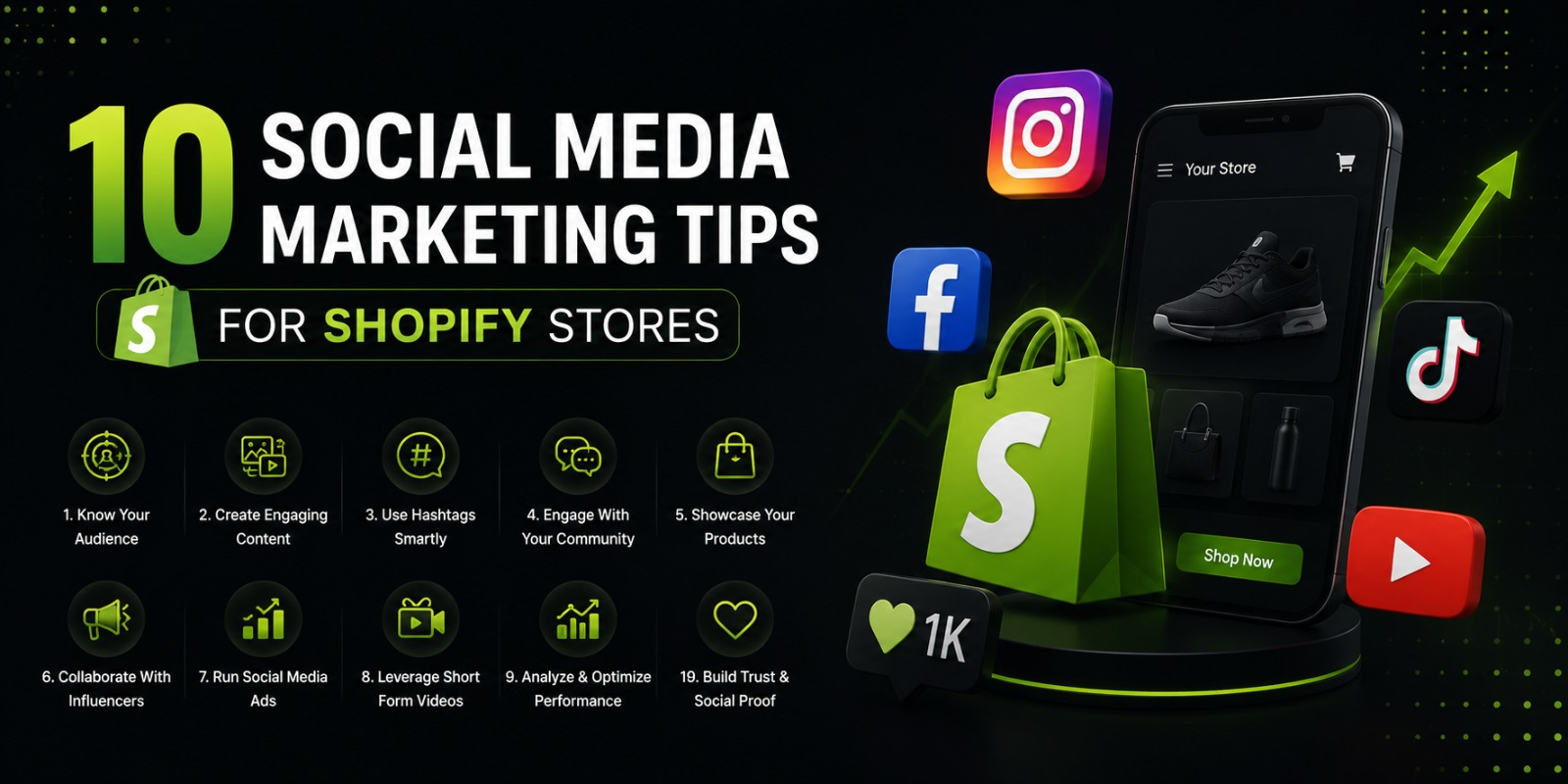
10 Social Media Marketing Tips for Shopify Stores
If you’re running a Shopify store and not taking social media seriously, you’re leaving a massive chunk of sales on the table.
Social media is where your customers spend hours every single day. It’s where they discover new brands, get influenced by people they trust, and make buying decisions before they ever land on a product page. If your store isn’t showing up in those moments, someone else’s is.
But just having an Instagram account or posting occasionally isn’t enough anymore. You need a strategy. You need to show up consistently, connect with the right people, and give your audience a reason to buy from you specifically.
These 10 tips will help you do exactly that.
1. Pick the Right Platforms Instead of Trying to Be Everywhere
The biggest mistake Shopify store owners make on social media is trying to be on every platform at once. They spread themselves thin across Instagram, TikTok, Pinterest, Facebook, Twitter, and LinkedIn and end up doing a mediocre job on all of them.
That’s not a strategy. That’s chaos.
The smarter move is to figure out where your specific customers actually spend their time and focus your energy there.
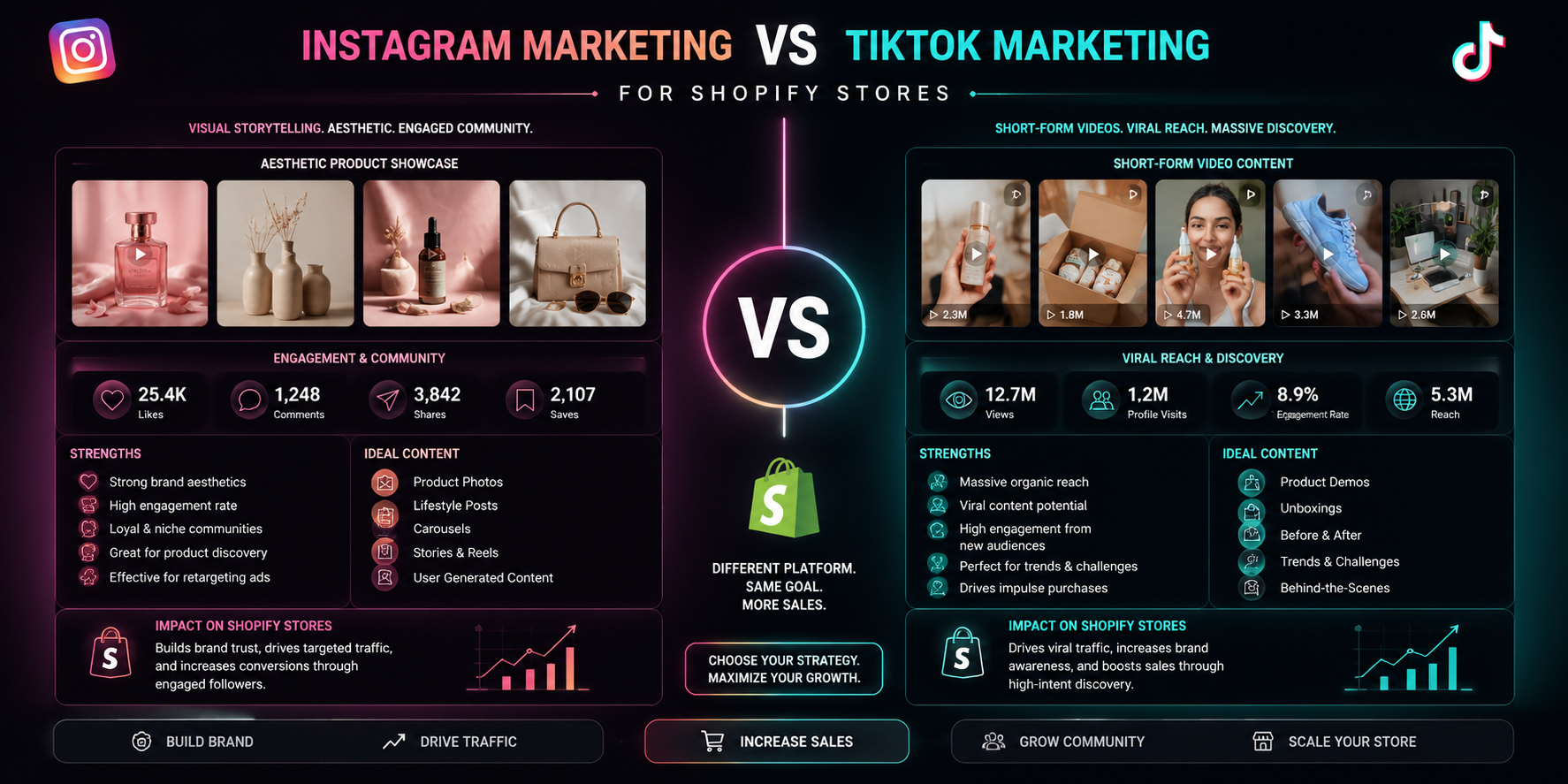
If you sell fashion, beauty, home décor, or anything visual, Instagram and Pinterest are your best friends. If your audience is younger and you sell trendy or lifestyle products, TikTok is where you need to be. If you’re in B2B or sell professional services alongside your products, LinkedIn makes sense. If you sell to a broad audience and want to use paid ads, Facebook still has unmatched targeting.
You don’t need to master every platform. You need to master the one or two where your buyers already are. Do that well before you even think about expanding.
2. Set Up Shopify’s Social Media Sales Channels
This one is non-negotiable if you’re running a Shopify store.
Shopify lets you connect your product catalog directly to Instagram, Facebook, TikTok, and Pinterest. Once you set up these sales channels, your products become shoppable directly on those platforms.
On Instagram, customers can tap a product tag in your post or Story and buy without ever leaving the app. On TikTok, your products appear in a shop tab on your profile. On Pinterest, product pins show real-time pricing and link straight to your store.
This removes friction from the buying process. The fewer steps between discovery and purchase, the higher your conversion rate.
To set it up, go to your Shopify admin, click on Sales Channels, and add the platforms you want. You’ll connect your accounts, sync your catalog, and you’re live.
If you haven’t done this yet, stop what you’re doing and go set it up today. It’s one of the highest leverage things you can do as a Shopify store owner on social media.
3. Create Content That Educates, Entertains, or Inspires Not Just Sells
Here’s the truth about social media content that most brands don’t want to hear.
Nobody follows you to be sold to.
People follow brands because those brands make them feel something. They learn something useful, they get entertained, they feel inspired, or they see themselves reflected in the content. The selling happens as a byproduct of that connection not the other way around.
A good rule of thumb is the 80/20 split. About 80% of your content should provide value tips, behind the scenes, relatable moments, storytelling, inspiration. The remaining 20% can be direct promotion product launches, sales, offers.
What does value look like for a Shopify store? It depends on what you sell.
A skincare store can share skincare routines, ingredient breakdowns, and morning and evening ritual ideas. A fitness brand can share workout tips, nutrition advice, and transformation stories. A home décor store can share styling tips, room makeovers, and seasonal décor ideas.
Think about what your customer is interested in beyond just buying your product. Create content around that. Build the relationship first. The sales follow naturally.
4. Use User Generated Content as Your Most Powerful Marketing Asset
User generated content or UGC is content your customers create about your products. Photos of them wearing your clothes, videos of them using your skincare, unboxing videos, reviews posted publicly.
It’s the most credible marketing content that exists because it’s not coming from you. It’s coming from real people who bought your product and loved it enough to share it.
Studies consistently show that people trust recommendations from other customers far more than they trust brand advertising. UGC is word of mouth at scale.
The good news is you can actively encourage it.
After every order, send a follow up email asking customers to share a photo or video with a specific hashtag. Offer a small incentive a discount on their next order, a chance to be featured on your page. When people do share, repost it to your Stories and feed. Give them credit. Make them feel seen.
Over time you build a library of authentic content you didn’t have to create yourself. It builds social proof, fills your content calendar, and converts new visitors who see real people using and loving your products.
Make UGC a core part of your social strategy. It’s free, it’s credible, and it works.
5. Work with Micro Influencers in Your Niche
You don’t need to partner with a celebrity or a mega influencer with millions of followers to see results from influencer marketing.
In fact, micro influencers people with audiences between 5,000 and 50,000 followers almost always outperform big influencers for Shopify stores. Their audiences are smaller but far more engaged and trusting. Their followers actually listen to their recommendations.
The key is finding micro influencers whose audience matches your customer profile exactly. If you sell organic baby products, a parenting micro-influencer with 15,000 highly engaged followers is worth more to you than a general lifestyle influencer with 500,000 passive ones.
To find them, search hashtags related to your product on Instagram or TikTok. Look for creators who already make content about topics your product fits into. Check their engagement rate comments and saves matter more than likes, and likes matter more than follower count.
Reach out with a genuine message. Explain why you think their audience would love your product. Offer to send them something for free in exchange for an honest review or a mention.
Many micro influencers are very open to gifting partnerships, especially if you approach them respectfully and make it easy for them.
Done right, one good micro influencer partnership can bring in more sales than months of posting on your own.
6. Post Consistently and at the Right Times
Consistency is the thing that separates brands that grow on social media from the ones that stall.
The algorithm on every platform rewards accounts that post regularly. When you go quiet for weeks and then post a burst of content, the algorithm doesn’t know what to do with you. Your reach suffers. Your engagement drops. You essentially have to start building momentum again from scratch.
You don’t need to post every day. But you do need a schedule you can actually stick to.
For most Shopify stores, three to five posts per week on your main platform is a solid starting point. Add daily or near daily Stories on top of that if you’re on Instagram. Consistency in Stories builds habitual viewers people who check your profile regularly because you always have something there.
Timing matters too. Post when your specific audience is most active. Instagram and TikTok both have analytics tools that show you when your followers are online. Use that data to schedule your posts rather than guessing.
A content calendar is the most practical tool for staying consistent. Plan your content a week or two in advance. Know what you’re posting and when before the week starts. This removes the daily stress of figuring out what to put up and keeps you on schedule even during busy periods.
7. Use Short Form Video to Drive Attention and Traffic
Short form video is the highest reach content format on social media right now. Reels on Instagram, videos on TikTok, Shorts on YouTube these formats get dramatically more reach than static images or carousels, especially for accounts that are still growing.
The good news is you don’t need a professional camera, a studio, or a video production team. The most effective short form videos are shot on a phone, feel natural, and get to the point quickly.
For a Shopify store, some of the best performing video formats include product demonstrations that show the product in use, before and after transformations, packing order videos, day in the life content from behind the scenes of running your store, and responding to common customer questions.
TikTok in particular rewards authenticity over polish. Raw, real, personality driven content often outperforms highly produced ads. If you’ve been avoiding video because it feels too complicated, start with a simple product demo on your phone. Post it. See what happens.
Short-form video is also how new audiences find you. Unlike your regular posts that mostly reach your existing followers, Reels and TikToks get pushed to non-followers through the discovery algorithm. It’s one of the most effective free tools for growing your reach and bringing new potential customers into your world.
8. Run Targeted Paid Ads to Scale What’s Already Working
Organic social media is essential, but paid advertising is what lets you scale.
The key word there is scale what’s already working. Don’t start with paid ads if you don’t know what content resonates with your audience yet. Figure that out organically first. When you find a post that performs unusually well high engagement, lots of shares, comments from people asking where to buy that’s your signal. Boost it.
Facebook and Instagram ads are still the most powerful paid social channels for most Shopify stores. The targeting options are incredibly detailed. You can reach people based on age, location, interests, online behavior, and even purchase intent.
Retargeting is where paid social gets especially powerful for e commerce. You can show ads specifically to people who visited your website but didn’t buy, people who added something to their cart and abandoned it, or people who bought from you before and might be ready to buy again.
Shopify’s integration with Meta makes this simple. Once you install the Meta pixel on your store, Shopify tracks all of that behavior and feeds it back to your ad campaigns automatically.
Start with a small budget. Test different audiences and creative formats. Double down on what works. Cut what doesn’t. Paid social isn’t about spending more — it’s about spending smarter.
9. Build Community Around Your Brand, Not Just an Audience
There’s a difference between having followers and having a community.
Followers passively consume your content. A community engages with it, talks to each other about it, defends your brand, and buys from you repeatedly because they feel genuinely connected to what you stand for.
Building community on social media takes more effort than just posting content, but the payoff is enormous. Loyal community members become your best marketers. They refer friends, leave reviews, create UGC, and stick around through price increases and product changes because the relationship goes deeper than a transaction.
How do you build community?
Reply to every comment, especially in your early stages. Ask questions in your captions rather than just making statements. Create content that sparks conversation. Share your brand story why you started, what you believe in, what you’re building. Let people see the human behind the business.
If you have the capacity, consider creating a Facebook Group or a dedicated space where your most engaged customers can connect with each other. Brands that have built private communities around their product categories often see extraordinary retention and word of mouth.
The more your audience feels like they belong to something, the more powerful your marketing becomes.
10. Track Your Numbers and Actually Use the Data
None of these tips matter if you’re not measuring what’s working and adjusting based on the data.
Every platform gives you free analytics. Instagram Insights shows you reach, impressions, profile visits, and how each post performed. TikTok Analytics breaks down video views, watch time, and audience demographics. Pinterest Analytics shows which pins are driving traffic to your store.
But beyond platform analytics, you should be tracking what actually drives sales.
Connect your social channels to Google Analytics or use Shopify’s built-in analytics to see which platforms are sending traffic to your store and how that traffic converts. A post might get thousands of likes but send zero buyers. Another post might get modest engagement but consistently drive purchases. You want to know the difference.
Look at your numbers at least once a week. Which content types get the most reach? Which ones get the most saves and shares? Which ones actually drive clicks and sales? Do more of what works. Stop doing what doesn’t.
Over time, your data tells you exactly what your audience wants. That information is worth more than any trend or best practice you’ll read about online.
Putting It All Together
Social media marketing for your Shopify store doesn’t have to be overwhelming.
You don’t need to be on every platform. You don’t need to go viral. You don’t need a massive budget or a professional content team.
What you need is consistency, clarity about who you’re talking to, and a genuine effort to connect rather than just sell.
Start with one platform. Set up your shoppable catalog. Post valuable content regularly. Engage with your audience. Use video. Partner with a small influencer or two. Track what works and do more of it.
Build from there.
The brands winning on social media right now aren’t necessarily the ones with the most followers. They’re the ones with the most trust. And trust is built one post, one reply, one honest interaction at a time.
Your store can get there. Start this week.