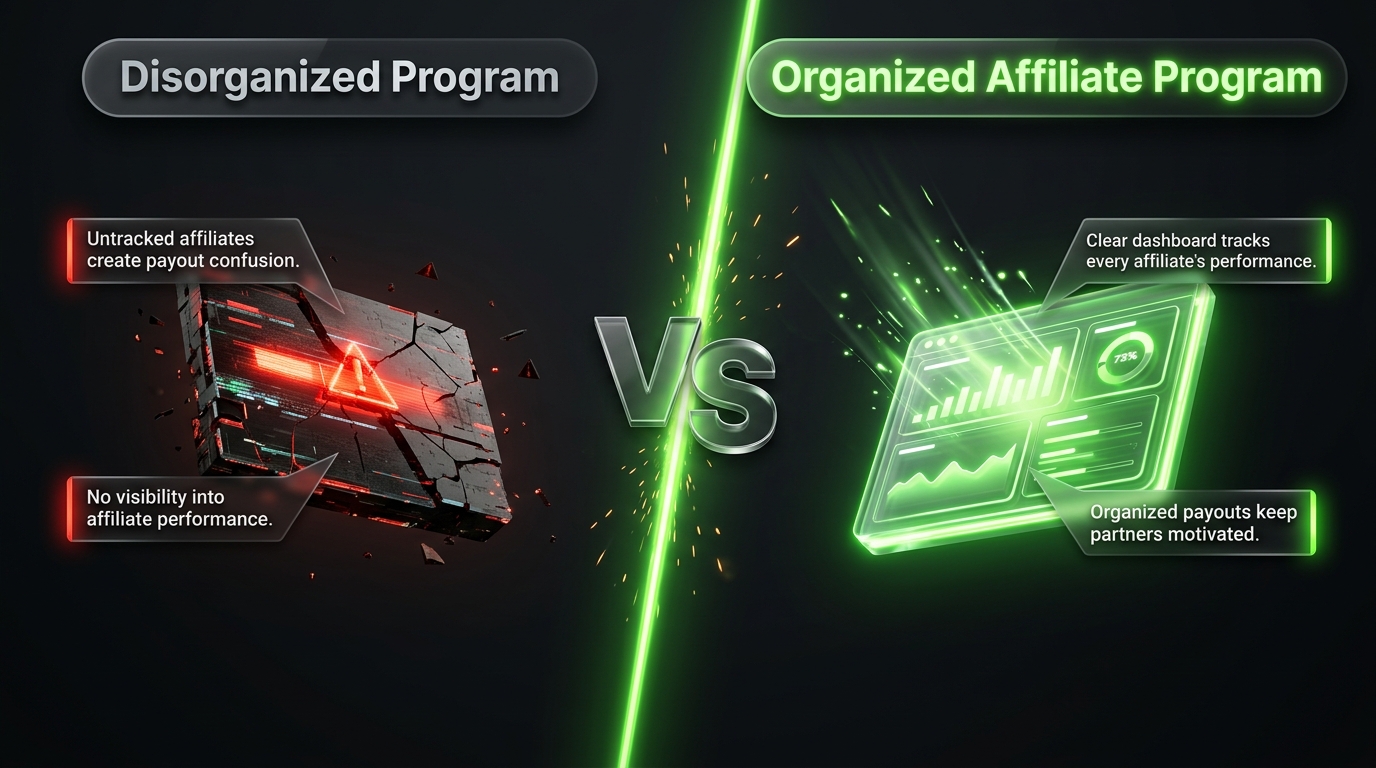
How to Manage Your Shopify Affiliate Program: The Complete Guide
Running a Shopify store is only half the battle. Once you have a solid product and a functioning storefront, the next big growth lever is word of mouth marketing at scale and that’s exactly what an affiliate program delivers. Instead of paying for expensive ads with uncertain returns, you pay real people a commission only when they actually generate a sale. It’s performance marketing in its purest form.
But launching an affiliate program is the easy part. Managing it well so it actually drives revenue instead of becoming a neglected corner of your marketing stack is where most store owners struggle. In this guide, we’ll walk through everything you need to know to build, run, and grow a thriving Shopify affiliate program, from the initial setup to long-term optimization.
Why a Shopify Affiliate Program Matters
Before diving into management tactics, it’s worth understanding why affiliate marketing is such a powerful channel for Shopify merchants specifically.
Affiliate marketing is inherently low risk. You’re not paying for impressions or clicks that may never convert you’re paying a commission on completed sales. This makes it one of the most cost efficient customer acquisition channels available, especially for small and mid sized brands that can’t compete with larger competitors on ad spend.
It also taps into trust that you, as a brand, haven’t built yet. When a beauty influencer recommends your skincare line, or a niche blogger reviews your outdoor gear, their audience already trusts them. That borrowed trust converts far better than a cold ad ever could.
Finally, affiliate programs create a flywheel effect. Happy customers become affiliates. Affiliates bring in new customers. Those new customers become affiliates. Over time, this compounds into a self sustaining growth engine that requires less and less paid acquisition spend.
Step 1: Choose the Right Affiliate Management Tool
Shopify doesn’t have a native affiliate program feature, so you’ll need a third party app from the Shopify App Store. Popular options include UpPromote, Refersion, Social Snowball, Affiliatly, and GoAffPro, among others. Each has its own strengths, so consider the following when choosing:
- Tracking method: Cookie based tracking, referral links, discount codes, or a combination.
- Payout automation: Does it integrate with PayPal, Stripe, or other payment processors for automatic payouts?
- Commission flexibility: Can you set flat rates, percentage based commissions, tiered structures, or product specific rates?
- Affiliate portal: Does it give affiliates a dashboard to track their own clicks, sales, and earnings?
- Fraud protection: Does it flag suspicious activity like self referrals or coupon code abuse?
- Integration depth: Does it sync smoothly with your existing email marketing, loyalty program, and analytics tools?
Take time to trial two or three apps before committing, since migrating affiliates from one platform to another later can be a headache. Read reviews specific to your store’s size and industry, since a tool built for enterprise brands may be overkill for a solo founder, and vice versa.
Step 2: Design a Commission Structure That Actually Motivates
Your commission structure is the single biggest factor in whether affiliates put in real effort or ignore your program entirely. Get this wrong, and you’ll either bleed margin or fail to attract quality partners.
Percentage based commissions are the most common approach, typically ranging from 10% to 30% of the sale value depending on your industry and margins. Higher margin products (like digital goods, apparel, or beauty) can support higher percentages, while lower margin categories (like electronics or grocery) usually stick to single digits.
Flat rate commissions work well when your average order value is consistent and you want predictable payout math. For example, paying $15 per sale regardless of cart size.
Tiered commission structures reward your top performers with higher rates as they hit sales milestones. This is one of the most effective ways to keep high performing affiliates engaged long term, since it gives them something to strive for rather than a flat, static reward.
Recurring commissions make sense for subscription based Shopify stores, where affiliates earn a percentage every time a referred customer’s subscription renews, not just on the initial sale.
Whatever structure you choose, benchmark it against your industry. Research your competitors’ affiliate programs (many publish their rates publicly) and make sure your offer is competitive enough to win over affiliates who could just as easily promote someone else.
Step 3: Recruit the Right Affiliates
A common mistake new affiliate program managers make is casting too wide a net. Quality matters far more than quantity. Ten highly engaged affiliates who genuinely love your product will outperform a thousand inactive sign ups every time.
Here’s where to find strong affiliate candidates:
- Your existing customers: Your most loyal, repeat buyers are often your best potential affiliates because they already believe in your product.
- Micro influencers: Creators with 1,000 to 50,000 followers in your niche often have higher engagement rates than mega influencers and are more affordable to work with.
- Bloggers and content creators: Niche bloggers who write reviews or “best of” roundup articles can drive consistent, long term organic traffic.
- YouTubers and podcasters: Especially valuable for products that benefit from demonstration or in-depth explanation.
- Complementary businesses: Brands that serve the same audience but aren’t direct competitors can be excellent affiliate partners.
- Affiliate networks and marketplaces: Some apps have built in directories where affiliates can discover and apply to your program.
When recruiting, make your affiliate program page easy to find (link it in your website footer, About page, and post purchase emails) and make the value proposition crystal clear: commission rate, cookie duration, payout schedule, and any perks.
Step 4: Build a Strong Onboarding Experience
Once affiliates join, don’t leave them to figure things out alone. A structured onboarding process dramatically increases the odds that a new affiliate actually becomes active rather than signing up and forgetting about you.
A good onboarding sequence typically includes:
- A welcome email confirming their acceptance, explaining how tracking works, and linking to their dashboard.
- A welcome kit with brand guidelines, product images, banners, sample captions, and key selling points.
- Clear terms of service, covering prohibited promotional methods (like bidding on your branded keywords in paid search, unless explicitly permitted), disclosure requirements, and payout terms.
- A first 30-days check in, either automated or personal, to answer questions and encourage first efforts.
The easier you make it for an affiliate to start promoting immediately, the faster you’ll see results. Many affiliates lose momentum simply because they don’t know where to start solve that friction proactively.
Step 5: Equip Affiliates With Marketing Assets
Don’t assume your affiliates will create high-quality promotional content from scratch. Give them a toolkit that removes friction and ensures brand consistency:
- Product photography and lifestyle images
- Pre written social media captions and email swipe copy
- Banner ads in multiple sizes for blog placements
- Demo or explainer videos they can embed or reference
- A simple one page product fact sheet highlighting key benefits
- Seasonal or promotional assets tied to sales events
The more professional and ready to use these assets are, the more likely affiliates are to actually deploy them rather than procrastinate on content creation.
Step 6: Track Performance and Set Clear KPIs
You can’t manage what you don’t measure. At minimum, track these metrics for your program as a whole and for individual affiliates:
- Click through rate (CTR) on affiliate links
- Conversion rate from click to purchase
- Average order value (AOV) generated through affiliate traffic
- Total revenue attributed to the affiliate channel
- Customer lifetime value (LTV) of affiliate referred customers versus other channels
- Return on ad spend (ROAS) equivalent essentially, commissions paid versus revenue generated
- Active affiliate rate the percentage of registered affiliates who generated at least one sale in a given period
Most affiliate apps provide dashboards with this data built in, but it’s worth exporting to a spreadsheet or BI tool periodically so you can spot trends over time, not just snapshot numbers.
Segment your affiliates into tiers based on performance: top performers, moderate performers, and inactive affiliates. This segmentation should directly inform how you allocate your time and resources invest heavily in nurturing your top 10 to 20%, since they’ll likely generate the majority of your affiliate revenue (the classic 80/20 rule applies here as much as anywhere else in marketing).
Step 7: Communicate Consistently
Silence kills affiliate programs. If affiliates don’t hear from you regularly, they forget about your brand and move on to promoting someone else’s. Build a regular communication cadence:
- Monthly newsletters highlighting top performers, new products, upcoming promotions, and fresh creative assets.
- Performance updates showing affiliates their personal stats and encouraging friendly competition through leaderboards.
- Exclusive previews of new product launches so affiliates feel like insiders, not just salespeople.
- Personal outreach to your highest value affiliates a quick personal email or call goes a long way in building loyalty that a generic newsletter can’t replicate.
Treat your affiliate relationships the way you’d treat any other important business partnership with genuine care, responsiveness, and appreciation.
Step 8: Handle Payouts Reliably and On Time
Nothing damages affiliate trust faster than late or incorrect payments. Establish a clear, published payout schedule (monthly is standard) and stick to it religiously.
Also clarify:
- Minimum payout thresholds (e.g., affiliates must earn at least $50 before a payout is issued)
- Payment methods offered (PayPal, direct deposit, store credit, gift cards)
- Holding periods to account for returns and refunds before commissions are finalized
- Tax documentation requirements for affiliates earning above certain thresholds, particularly in the U.S. where 1099 forms may be required
Automating payouts through your affiliate app wherever possible reduces administrative burden and virtually eliminates late payment complaints.
Step 9: Protect Your Program From Fraud and Abuse
As your program scales, so does the risk of fraudulent activity. Common issues include:
- Cookie stuffing, where affiliates manipulate tracking to claim credit for sales they didn’t influence
- Self referrals, where affiliates buy from themselves to earn commission
- Coupon code leaking onto deal aggregator sites, cannibalizing full price sales
- Trademark bidding, where affiliates run paid search ads on your brand name, driving up your own ad costs
Mitigate these risks by using an affiliate platform with built in fraud detection, setting clear terms of service that explicitly prohibit these behaviors, monitoring for unusual patterns (like a sudden spike in sales from one affiliate with no corresponding traffic increase), and conducting periodic audits of your top earners.
Step 10: Continuously Optimize the Program
An affiliate program isn’t a “set it and forget it” channel. Review performance quarterly and ask:
- Is our commission rate still competitive against similar programs in our niche?
- Which affiliate types (influencers, bloggers, review sites, coupon sites) are driving the highest-quality traffic and best LTV?
- Are there underperforming affiliates who need re engagement campaigns or, alternatively, should be removed from the program?
- Are there gaps in our creative assets that affiliates have flagged or that are causing low conversion rates?
- Could we introduce seasonal bonus incentives around major shopping events like Black Friday or back-to-school season?
Treat your affiliate program the same way you’d treat a paid ad campaign with regular testing, iteration, and a willingness to cut what isn’t working while doubling down on what is.
Common Mistakes to Avoid
As you manage your program, watch out for these frequent pitfalls:
- Setting commissions too low to attract quality affiliates, then wondering why sign-ups are slow.
- Ignoring affiliates after onboarding, leading to a program full of inactive accounts.
- Failing to provide creative assets, forcing affiliates to do extra work that most won’t bother doing.
- Overcomplicating the terms of service to the point where potential affiliates are scared off before they even start.
- Not tracking ROI properly, making it impossible to know whether the program is actually profitable.
- Neglecting compliance, particularly FTC disclosure requirements in the U.S., which require affiliates to clearly disclose paid partnerships in their content.
Final Thoughts
A well-managed Shopify affiliate program can become one of your most cost-effective and sustainable growth channels — but only if you treat it as an ongoing relationship-building effort rather than a passive, install-and-ignore feature. Choose the right platform, design a commission structure that genuinely motivates partners, recruit thoughtfully rather than broadly, support your affiliates with real tools and communication, and continuously measure and refine your approach.
Done right, your affiliates become an extension of your marketing team enthusiastic brand advocates who bring in customers your paid ads never could. The investment of time and attention you put into managing the program well is what separates a thriving affiliate channel from a forgotten line item in your Shopify app list.