How to Monetize Your Shopify App
Building a Shopify app that merchants actually love is a huge accomplishment on its own, but it doesn’t pay your team’s salaries. Monetization is where a lot of otherwise solid apps quietly struggle, not because the product isn’t good, but because the pricing model doesn’t match how merchants actually derive value from it. In 2026, Shopify has fundamentally changed how app billing works, giving developers more flexibility than ever, but also more decisions to make. This guide walks through everything you need to understand to price and monetize your Shopify app the right way.
Understanding Shopify’s Billing System in 2026
If you built an app a few years ago, the billing landscape has shifted significantly since then, and it’s worth getting current before you make any pricing decisions. Shopify quietly rebranded what used to be called Managed Pricing into Shopify App Pricing, and this rename came with a lot more than a new name attached. It’s now the default billing solution configured during app submission in the Partner Dashboard, and it’s what Shopify actively wants new apps to use going forward.
The old Billing API that developers used to wire up manually still technically works, but it’s now considered legacy. That doesn’t mean you need to panic and rip out existing integrations, but it does mean any new app you’re building should default to Shopify App Pricing rather than rolling your own billing logic from scratch. Shopify handles plan selection, charge approvals, metering, and invoicing for you, which removes a huge amount of engineering overhead that developers used to have to build and maintain themselves.
The Three Billing Models Available to You
Shopify App Pricing supports three core pricing structures, and understanding the difference matters a lot before you commit to one.
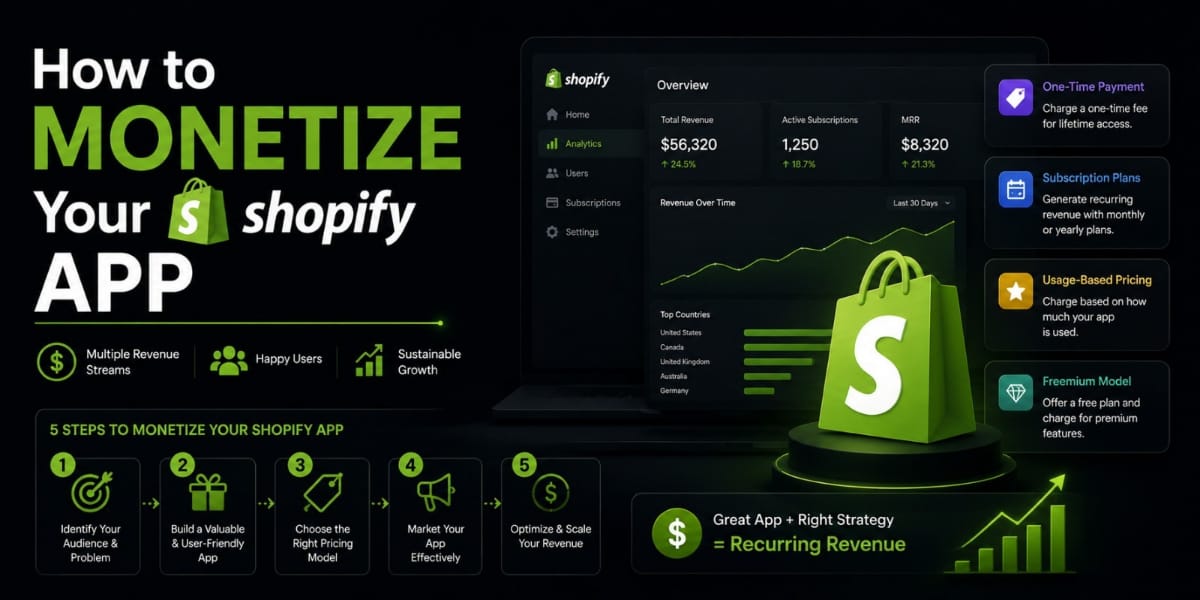
Fixed recurring subscriptions are the simplest and most familiar model. You bill merchants on a regular schedule, whether that’s monthly, yearly, or a monthly plan with a yearly discount built in. This works well for apps with predictable, consistent value delivery, think loyalty programs, review widgets, or basic automation tools where usage doesn’t vary wildly from merchant to merchant.
Usage based billing is where things have gotten genuinely more interesting in 2026. Through the App Events API, you can now charge merchants based on actual usage, per query, per recommendation served, per catalog sync, per quote generated, whatever action reflects real value delivered. Shopify supports three usage structures here: fixed, graduated, and volume pricing, and it even supports negative reporting so you can automatically correct charges if something was over billed. This is a massive shift, because previously, developers wanting usage based pricing had to either bolt on a separate system like Stripe Billing and reconcile two completely different billing systems, or build their own metering logic on top of the older Billing API’s usage record mutations. Now it’s a native, first class option configured directly in the Partner Dashboard.
Combined models let you mix a base subscription fee with usage-based charges on top, which is often the sweet spot for apps where some baseline functionality should always be available, but heavier usage should cost more. Think of it like a starter plan that includes a set number of actions, with overage charged per unit beyond that.
One important limitation worth knowing upfront: Shopify App Pricing doesn’t currently support one time purchase charges. If your monetization strategy depends on selling a one time unlock or setup fee rather than a recurring or usage-based model, you’ll need to build on the older Billing API for that specific use case, since it continues to be supported for exactly this scenario.
Why Shopify App Pricing Is Worth Adopting
Beyond just being the path Shopify is steering developers toward, there are real practical benefits to using their native billing system instead of building your own. Charges get added directly to the merchant’s existing Shopify invoice, which removes a huge amount of friction compared to asking merchants to enter separate payment details for your app specifically. That simplified payment experience translates directly into better conversion, apps using Shopify App Pricing see higher free to paid conversion rates, largely because merchants trust a charge that shows up on their familiar Shopify bill more than a third-party payment prompt from an app they just installed.
There’s also a practical financial upside for you as the developer. You automatically receive a share of the revenue Shopify collects through this system, and Shopify handles all chargeback-related processes on your behalf, which removes a genuinely painful operational burden that a lot of indie developers underestimate until they’re dealing with their first dispute.
Choosing the Right Pricing Model for Your App
This is where a lot of developers get stuck, and honestly, the answer depends heavily on what kind of value your app actually delivers. A useful way to think about it: does your app deliver consistent, predictable value regardless of store size, or does the value scale directly with how much a merchant uses it?
If your app does something like adding a loyalty program, a basic review widget, or a fixed feature set that works roughly the same whether a store does ten orders a month or ten thousand, a flat recurring subscription usually makes the most sense. Merchants understand it, it’s predictable for your revenue forecasting, and it doesn’t punish smaller merchants disproportionately.
If your app’s value scales directly with usage, something like a personalization engine, an AI powered support tool, a search service, or anything processing a variable number of actions per merchant, usage based or combined pricing tends to align much better with actual value delivered. A merchant running a small store shouldn’t pay the same as an enterprise brand processing thousands of queries a day, and usage based billing naturally solves that fairness problem while also giving you upside as your merchants grow.
It’s worth knowing what merchants actually expect to pay across categories too, since pricing too far outside category norms without a clear reason tends to hurt conversion. Review apps in 2026 commonly range anywhere from free up to roughly $300 for premium tiers, loyalty apps can run as high as $999 for enterprise plans, and subscription focused apps often take a percentage cut in the range of 1% to 1.5% of transaction volume rather than a flat fee. These aren’t hard rules, but they’re a useful sanity check before you finalize your own numbers.
Best Practices for Setting Your Pricing Model
A few things are worth building into your pricing strategy from the start, regardless of which model you choose.
Always retrieve the merchant’s local billing currency using the GraphQL Admin API’s shopBillingPreferences query before finalizing charges. Displaying pricing in a currency merchants don’t recognize or expect creates unnecessary friction and erodes trust right at the moment you’re asking them to commit to paying.
Test your billing integration thoroughly before going live. Shopify App Pricing includes a free private test plan specifically designed to let you configure and verify your usage meters, welcome links, and billing events without actually charging real merchants. Skipping this step and discovering a billing bug after merchants are already being charged is a fast way to generate angry reviews and support tickets.
Think carefully about your free tier or trial structure too. A free plan that’s too generous trains merchants to never upgrade, while a free plan that’s too restrictive means merchants never experience enough value to trust paying you. Finding that balance usually takes some iteration based on real usage data rather than guessing upfront.
Migrating Existing Apps to the New System
If you built your app before this shift and you’re currently running on the legacy Billing API, you don’t need to panic, but you should have a plan. Existing integrations continue to work, and Shopify has committed to migration tooling to help developers move over. The practical approach is to map your existing billing model to the new primitives before making any changes, update your pricing pages and onboarding flows to reflect meter oriented billing if you’re moving toward usage based pricing, and loop in whoever handles your finance and legal side, since revenue recognition and terms of service language may need updates when you shift to a platform managed billing model.
It’s also worth noting that the query patterns for checking subscription status have changed. Newer integrations use the Partner API to retrieve both current subscription status and full subscription history, which is a different approach than the old system where subscription status came from the GraphQL Admin API through the Billing API. If you enrolled in the older Managed Pricing system before April 2026, some legacy query patterns still apply to your app, but any new billing work should follow the current documented approach rather than replicating outdated patterns.
Monetization Beyond the Core Billing Model
Pricing structure is only one piece of the monetization puzzle. A few additional levers are worth considering as you grow.
Tiered feature gating, where higher-priced plans unlock more advanced functionality rather than just higher usage limits, can work well alongside usage based billing. This gives merchants a clear upgrade path tied to capability, not just volume, which often feels more justified to a merchant deciding whether to move up a tier.
Annual billing discounts are worth offering even if most merchants start monthly. Locking in annual revenue improves your cash flow predictability significantly, and merchants who commit annually also tend to churn less, since the switching decision becomes more deliberate.
And don’t underestimate the compounding effect of strong reviews and a well maintained App Store listing on your monetization success. Apps with stronger review velocity and Built for Shopify certification consistently see better conversion from install to paid plan, partly because trust signals reduce the hesitation merchants feel before committing to a paid tier.
Monetizing Apps for the Pakistani Merchant Market
If a portion of your app’s user base is based in Pakistan, a few adjustments to your monetization approach are worth considering. Since Shopify App Pricing charges appear directly on the merchant’s Shopify invoice, this actually works in your favor here, it removes the friction of asking Pakistani merchants to add a separate international payment method just for your app, which can otherwise be a real barrier given the mix of local and international banking most small merchants juggle.
Price sensitivity tends to run higher among smaller Pakistani merchants compared to established Western DTC brands, so a generous free tier or a lower entry-level paid plan can meaningfully widen your funnel in this market without necessarily hurting your overall revenue, since your higher usage or enterprise tier merchants will still carry a proportionally larger share of revenue. If your app has any usage based component, being transparent about exactly what drives cost, and giving merchants an easy way to monitor their own usage, builds trust faster with an audience that’s often budgeting tightly and wants predictability over surprises on their monthly bill.
It’s also worth communicating pricing changes or plan updates through channels this audience actually checks regularly, WhatsApp business messaging tends to get read and responded to far faster than an email announcement buried in an inbox, especially for smaller merchant teams managing everything themselves.
Final Thoughts
Monetizing a Shopify app well in 2026 comes down to matching your pricing model to how your app actually delivers value, leaning on Shopify App Pricing rather than building custom billing infrastructure from scratch, and treating your pricing strategy as something that evolves alongside your product rather than a decision you set once and forget. The tools available now, native usage-based billing, combined models, and simplified merchant-facing billing cards, give developers a lot more flexibility than existed even a year or two ago, but that flexibility only pays off if you’re deliberate about which model actually fits your app’s value delivery.