How to Optimize Your Shopify Checkout for Conversions
Getting someone to add a product to their cart is only half the battle. The real moment of truth happens at checkout, and this is where a shocking number of stores quietly lose sales without ever realizing it. Industry data has consistently shown that the majority of online shopping carts get abandoned before the purchase is ever completed, and a huge chunk of that abandonment has nothing to do with the product itself. It comes down to friction, confusion, and a checkout experience that makes people hesitate at the exact moment they were ready to buy.
The good news is that Shopify’s checkout is already one of the most conversion optimized systems in ecommerce out of the box. But “good out of the box” doesn’t mean “fully optimized for your specific store.” There’s a meaningful amount of customization and strategy you can layer on top to squeeze more conversions out of the traffic you’re already getting. In this guide, we’re going to walk through exactly how to do that.
Why Checkout Optimization Deserves Your Attention
A lot of store owners pour their energy into product pages, ad creatives, and email marketing, which absolutely matters, but checkout optimization often gets treated as an afterthought. That’s a mistake, because unlike traffic generation, checkout optimization doesn’t require spending another rupee or dollar on ads. You’re working with people who have already decided they want to buy. Every small improvement you make here has a direct, measurable impact on revenue without needing to acquire a single new visitor.
Think about it from a pure math perspective. If your store gets a thousand people to checkout every month and you improve your checkout conversion rate by even a few percentage points, that’s real additional revenue, every single month, from traffic you were already paying for or already had. Few other areas of your store offer that kind of leverage.
Reduce the Number of Steps
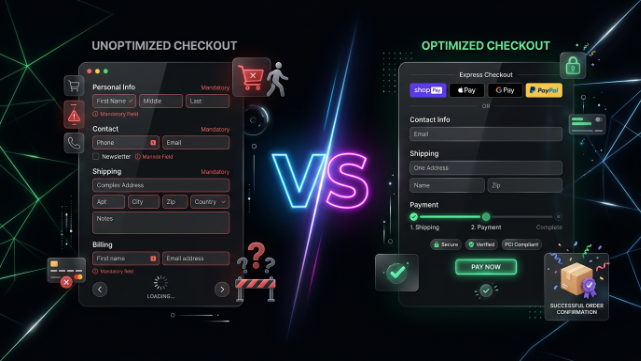
One of the most consistent findings across ecommerce research is that every additional step in checkout increases the chance someone abandons before completing their purchase. Shopify’s checkout is already fairly streamlined, but there are still ways stores accidentally add friction, extra form fields that aren’t necessary, asking for information twice, or requiring account creation before someone can even see the final price.
If you’re using Shopify Plus, you have access to checkout extensibility, which lets you customize the checkout flow more deeply, including combining steps, reordering fields, and adding custom logic based on cart contents. Even without Plus, you can review your checkout settings to make sure you’re not asking for anything you don’t actually need. A shipping address field, a payment field, and a way to review the order should be the core of the experience, everything extra is an opportunity for someone to lose momentum and abandon.
Enable Guest Checkout
This one seems obvious, but it’s shocking how many stores still push customers toward mandatory account creation before completing a purchase. Forcing someone to create a password and set up an account before they’ve even bought anything adds friction at exactly the wrong moment. People are ready to buy, and now you’re asking them to do extra work first.
Shopify makes guest checkout available by default, and it should stay that way for the vast majority of stores. You can still offer account creation as an option after the purchase is complete, many customers will happily create an account once they’ve already had a good experience buying from you. But forcing it upfront is one of the fastest ways to lose an otherwise ready buyer.
Show Shipping Costs Early
Unexpected costs showing up at checkout are consistently ranked as one of the top reasons people abandon their cart. If someone adds a product to their cart expecting a certain total, and then shipping costs appear out of nowhere during checkout, that gap between expectation and reality creates hesitation, and hesitation is where sales die.
The fix here is transparency as early as possible. If you can, display estimated shipping costs on the product page or cart page using a shipping calculator, so the final checkout total isn’t a surprise. If flat rate or free shipping thresholds are part of your strategy, make sure that messaging is visible well before checkout, not just discovered there. For stores running cash on delivery, which is still hugely popular here in Pakistan, being upfront about any COD handling fees before checkout avoids that same last-minute trust hit.
Offer Multiple Payment Options
Payment friction is another major conversion killer, and it’s one that’s especially relevant for merchants serving the Pakistani market. If your checkout only supports one payment method, and it happens to not be one your customer trusts or has access to, you’ve just lost that sale entirely, regardless of how much they wanted the product.
For Pakistani stores, this usually means having a solid mix of options, credit and debit card processing through a supported local gateway, and cash on delivery, which remains one of the most trusted payment methods for online shoppers across the country. If you’re selling internationally as well, Shopify Payments and widely recognized options like PayPal help build trust with customers who are unfamiliar with your brand. The core principle is the same everywhere though, the more familiar and trustworthy your payment options look to a given customer, the more likely they are to complete the purchase.
Display Trust Signals at the Right Moment
Trust signals matter throughout your entire store, but they carry particular weight during checkout, because this is the exact moment someone is deciding whether to hand over their payment information. Small additions like security badges near the payment fields, a clear return policy link, and visible customer support contact information can meaningfully reduce hesitation.
If your store has strong reviews or a notable amount of past orders, subtly reinforcing that social proof near the checkout area, without overwhelming the page, can also help nervous first-time buyers feel more confident. This matters even more for newer Pakistani ecommerce brands that don’t yet have the brand recognition of more established players, since customers are essentially being asked to trust a name they may not have heard of before.
Optimize for Mobile Checkout Specifically
If you’ve read any of our other guides, you already know how much we emphasize mobile optimization, and checkout is no exception. In fact, it might be the single most important place to get mobile right, because a clunky mobile checkout experience directly kills a sale that was already 90% of the way to completion.
Test your checkout flow on an actual phone, not just your browser’s mobile preview. Pay attention to how easy it is to tap buttons, whether form fields trigger the right keyboard type on mobile, for example, a numeric keypad for phone numbers, and whether your page loads quickly on a typical mobile connection. For merchants in Pakistan, where a significant share of shopping happens over mobile data rather than reliable broadband, a slow-loading checkout page can single handedly wreck your conversion rate no matter how well-optimized everything else is.
Use Abandoned Checkout Recovery
Even with a perfectly optimized checkout, some percentage of people will still leave without completing their purchase, that’s simply the nature of ecommerce. What separates well-run stores from the rest is what happens after that abandonment.
Shopify has built in abandoned checkout recovery emails, which you should absolutely have turned on if they aren’t already. These automated emails reach out to customers who left items in their cart, often recovering a meaningful percentage of otherwise lost sales. Beyond the built in feature, many stores layer on SMS or WhatsApp based abandoned cart recovery as well, which tends to perform particularly well in markets like Pakistan where WhatsApp is such a dominant communication channel. A well timed, well written recovery message can genuinely bring back sales that would have otherwise been gone for good.
Add Urgency and Scarcity Where Genuine
Urgency elements like low stock warnings or limited time offers can meaningfully boost checkout conversions, but this only works when it’s genuine. If your store shows “only 2 left in stock” on every single product regardless of actual inventory, customers eventually catch on, and once trust is broken, this tactic backfires completely.
Used honestly, showing real stock levels, genuine limited time discounts, or authentic countdown timers for time-sensitive promotions can create the extra nudge someone needs to complete a purchase they were already considering. The key word here is authentic, urgency should reflect something real about your inventory or offer, not be manufactured purely to pressure people.
Simplify Discount Code Entry
A surprisingly common conversion killer is a poorly placed or confusing discount code field. If a customer doesn’t have a code but sees an empty field prominently displayed, it can trigger doubt, they might pause the purchase to go search for a coupon code elsewhere, sometimes never coming back to complete the original order.
Consider making your discount code field a bit less prominent, or automatically applying eligible discounts rather than requiring manual entry when possible. If you’re running an active promotion, make sure the code is clearly communicated wherever the customer is coming from, so entering it feels like completing a benefit they already know about rather than searching for one they suspect exists.
Review Your Checkout Analytics Regularly
You can’t optimize what you’re not measuring. Shopify’s analytics give you visibility into where customers are dropping off during checkout, whether it’s at the shipping information step, payment step, or order review. Reviewing this data regularly helps you identify exactly where friction is occurring rather than guessing.
If you notice a consistent drop-off at a specific step, that’s a strong signal something about that particular part of the flow needs attention, whether it’s a confusing field, a missing payment option, or an unexpected cost being revealed at that stage. Treating checkout optimization as an ongoing process rather than a one-time setup task is what separates stores that steadily improve their conversion rate over time from ones that set it up once and never revisit it.
Speed Still Matters More Than You Think
We’ve mentioned mobile speed already, but it’s worth calling out specifically in the context of checkout. Every extra second your checkout page takes to load increases the likelihood of abandonment. This becomes especially critical for Pakistani stores where a meaningful portion of customers are browsing on 3G or unstable 4G connections rather than fast, consistent broadband.
Avoid loading unnecessary third-party scripts or heavy tracking pixels directly on your checkout pages if they’re not essential, since these can quietly slow things down without you realizing it. If you’re using Shopify Plus and have access to checkout extensibility, be mindful that every custom app or script you add to checkout has a real performance cost, and it’s worth weighing that cost against the actual value it provides.
Wrapping It Up
Checkout optimization isn’t a single fix, it’s a collection of small, deliberate improvements that compound over time. Reducing unnecessary steps, offering the right payment methods for your specific market, being upfront about costs, building trust at the right moments, and making sure the entire experience holds up on mobile all add up to meaningfully higher conversion rates from the traffic you’re already generating.
If you’ve been focused entirely on driving more traffic to your store without giving your checkout the same level of attention, this is genuinely one of the highest-leverage areas you can improve. And if you’d like a second pair of eyes on your current checkout setup, or want help implementing payment gateways, custom checkout flows, or abandoned cart recovery systems tailored to the Pakistani market, that’s exactly the kind of work we handle at TheScriptFlow. We work with Shopify store owners across Pakistan and internationally to build storefronts that don’t just attract customers, but actually convert them.