How to Recruit Affiliates for Your Shopify Store
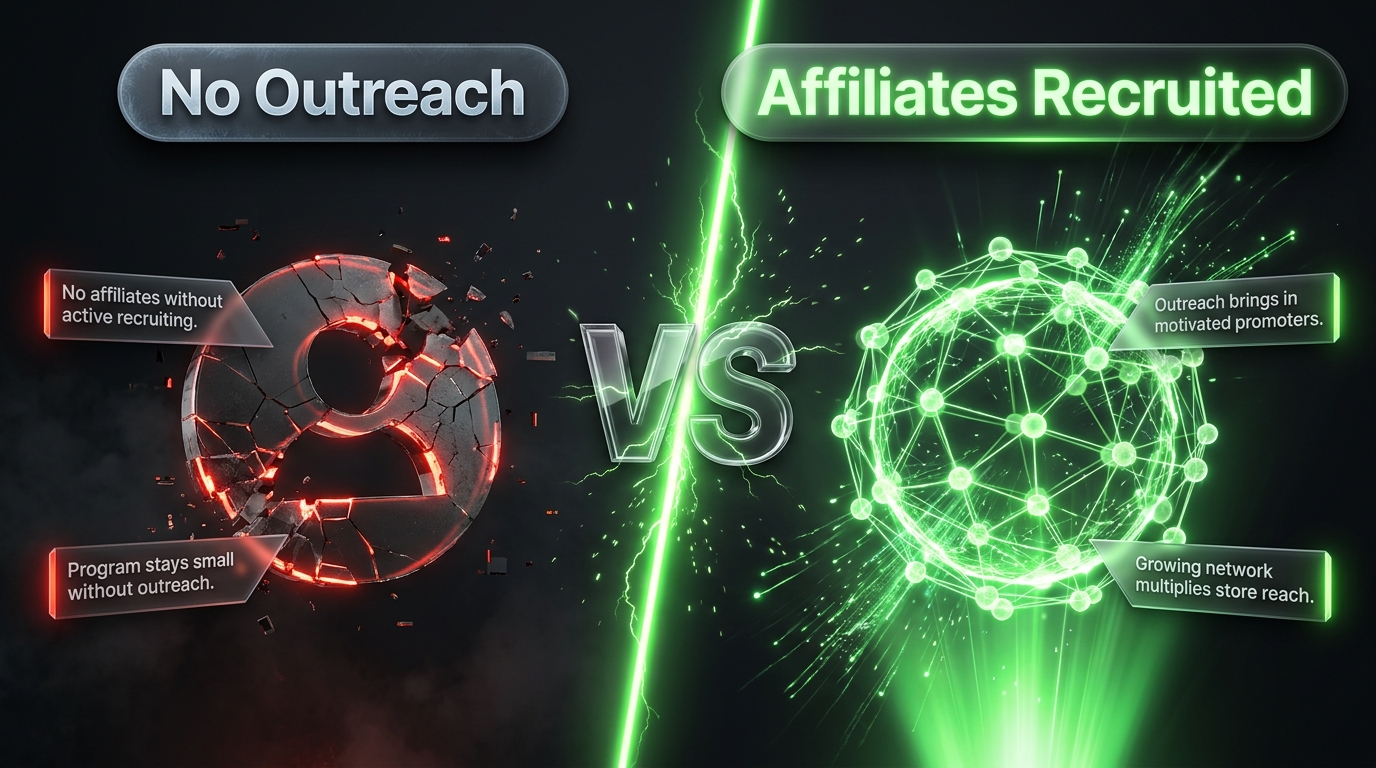
Setting up an affiliate program is the easy part. The commission structure is set, tracking is live, the signup page looks great. And then… nothing happens. This is the point where most Shopify merchants get stuck, because only about 5 to 10% of affiliates ever come from organic signups on your website. The other 90% come from active, deliberate recruitment. If you’re waiting for affiliates to find you, you’ll be waiting a long time. This guide walks through exactly how to recruit them instead.
Recruitment Is a Loop, Not a One Time Task
Before diving into channels and templates, it helps to reframe how you think about recruitment. It’s not “post and pray.” Effective recruitment is a four step loop that repeats throughout the life of your program: outreach, qualify, build trust, and then a cycle that ties it all together over roughly a 90 day plan. The merchants who see real results treat this as an ongoing weekly habit, not a launch day checklist item you complete once and forget about.
You need a system you can run every week in 60 to 90 minutes that consistently produces active partners, rather than a big one time recruitment push followed by silence.
Start With Your Warmest Audience
Before reaching out to a single stranger, look at the people who already trust you. Merchants who recruit from their existing customer base see activation rates 2x higher than those who rely on cold outreach alone. And the data backs this up clearly across every channel: of 12 ranked recruitment channels, customers convert highest at 15 25%, followed closely by social taggers, people who already tag your brand organically, at 12 to 18%.
This means your first recruitment move shouldn’t be a cold DM to an influencer you’ve never spoken to. It should be an email to your best repeat customers, and a direct message to anyone who’s tagged your brand or left a glowing review without being asked.
Build Two Sourcing Tracks: Warm and Cold
A well run recruitment system needs two sourcing tracks running in parallel: warm (high-intent people like existing customers and UGC creators) and cold (a track that gives you predictable volume through niche creator outreach). Relying on just one track either caps your growth too early (warm only) or burns you out chasing strangers with low conversion (cold only).
For your warm track, mine your customer list, your UGC and tagged photos, your email subscribers, and your most engaged social followers. For your cold track, identify niche creators in your product category who are already making content adjacent to what you sell, even if they’ve never mentioned your brand specifically.
Qualify Before You Onboard
Not every applicant deserves a spot in your program. A simple creator scorecard eliminates low quality affiliates early. Without a simple vetting process, approval workflow, or activation plan in place, you end up with coupon only affiliates, off-brand creators, or partners who apply and then never actually post anything.
A basic scorecard doesn’t need to be complicated. Look at their existing content quality, whether their audience actually overlaps with your customer base, and whether they’ve promoted similar products before (a good sign) or seem to be applying to every affiliate program they can find (a red flag). Filtering early saves you from managing a roster full of inactive accounts later.
Writing Outreach That Actually Gets Replies
This is where most merchants either freeze up or send something generic that goes straight into the void. A few principles worth internalizing:
Keep it short and specific. A tier outreach invites should be short, relevant, and specific, not a generic copy-pasted pitch that could apply to literally any brand. Mention their actual content, why you think they’re a fit, and what’s in it for them, in that order.
Competitive research helps your offer land better. Search “[competitor] affiliate program” and note their commission percentage, cookie duration, and sign up bonuses, then match or beat their offer on at least one dimension before you send your first message. Creators talk to each other, and if your offer is noticeably worse than a competing brand’s, it’ll show in your response rate.
Don’t over-promise. Avoid exaggerated income claims in your outreach messaging, and instead lead with honest specifics: your actual commission rate, your cookie duration, and any real early bird incentive you’re offering.
Set a volume target and stick to it. Aim for 25 to 50 new outreach conversations per week when you’re actively building your affiliate base, and don’t overthink the exact wording early on. Begin with a simple, repeatable sequence, and focus on learning what actually gets replies rather than perfecting your message before sending a single one.
A Basic Outreach Structure That Works
You don’t need a polished agency level pitch. A short, warm, specific message consistently outperforms a long, generic one. A working structure looks something like this: open with something specific about their content that shows you actually looked at their page, briefly explain what your brand does and why you think their audience is a fit, state your commission rate and any current incentive clearly, and close with a low friction next step, like a single link to apply rather than a long list of requirements.
Onboarding Determines Whether They Actually Post
Recruiting someone into your program is only half the job. Your offer and onboarding determine whether creators actually post and sell. A creator who applies but never receives a clear next step will simply forget about you within a week.
As soon as creators are approved, send onboarding materials immediately and make it easy for them to take action right away. Prioritize product sampling where possible, and remove any friction around links, codes, or account access.
A comprehensive onboarding process should equip new partners with everything they need to promote your products, including detailed product information, marketing materials, and their unique tracking link generated by your affiliate software. Guide them on best practices for promoting your brand across their website, blog, email list, and social channels, and continue offering ongoing support so they feel valued and motivated rather than left to figure things out alone.
A well-structured welcome email typically confirms their approval, delivers their tracking link and any promo codes immediately, links to your product assets and brand guidelines, and gives them a clear point of contact if they run into questions. The faster this lands in their inbox after approval, the more likely they are to actually post something in that first week while their enthusiasm is highest.
Where to Actually Find Affiliates to Approach
A few channels consistently outperform others for cold and semi warm recruitment:
Conferences, trade shows, and industry events remain surprisingly effective. Use these opportunities to showcase your affiliate program in person, exchange contact information, and follow up afterward with a personalized message to continue building the relationship, rather than treating the in person meeting as the whole interaction.
Your own top affiliates are also a recruitment channel in themselves. Encourage your best performing affiliates to refer other high-quality partners into your program by implementing a referral incentive specifically for that, since strong affiliates tend to know other strong affiliates in the same niche.
Give the System Time to Compound
Don’t expect this to feel effortless in week one. Successful merchants spend around 3 to 5 hours per week on active outreach during their first 90 days. After that initial push, momentum starts compounding: top affiliates begin referring other affiliates, marketplace listings start generating inbound applications on their own, and post purchase enrollment (turning customers into affiliates automatically at checkout) starts running largely on autopilot.
The first month is the hardest simply because you’re doing all the pushing. By month three, if you’ve stayed consistent, a meaningful share of your growth starts happening without you actively chasing it.
Recruiting Affiliates for a Pakistani Shopify Store
If your store is based in or focused on Pakistan, a few adjustments to this playbook are worth making.
Your warmest track here is often even warmer than usual. Pakistani ecommerce buyers tend to be vocal on WhatsApp and Instagram about products they genuinely like, tagging brands, sharing screenshots in group chats, and recommending stores to friends organically. Actively watch for this kind of unprompted engagement and reach out directly; these people already function as informal affiliates and usually just need a formal invitation and a link.
When you do move into cold outreach, be specific about how payouts work early in the conversation. A lot of Pakistani creators are wary of affiliate program invitations because international payout terms (PayPal only, in particular) have historically excluded them. Leading your outreach message with “we pay via JazzCash/Easypaisa” or a similarly clear local payment option removes a major point of hesitation before it even comes up.
Onboarding materials should account for COD driven buying behavior too. If your product page or checkout allows cash on delivery, make sure your affiliate onboarding explains clearly how a sale still gets attributed to them even without an instant online payment, since this is a common source of confusion and lost trust for first time Pakistani affiliates.
Finally, don’t underestimate micro and nano creators here. Someone with 3,000 highly engaged local followers in a specific city or niche often converts far better for Pakistani audiences than a large, generic influencer account, simply because the recommendation feels closer to a friend’s advice than an ad.
Final Thoughts
Recruiting affiliates isn’t a switch you flip once. It’s a weekly habit built on warm outreach first, structured cold outreach second, fast and frictionless onboarding, and enough consistency that the whole system starts generating its own momentum. Start with the people who already love your brand, build a repeatable outreach process, and don’t skip the onboarding step, since that’s usually where good recruits quietly go cold.