How to Reduce Cart Abandonment on Shopify (10 Proven Tactics)
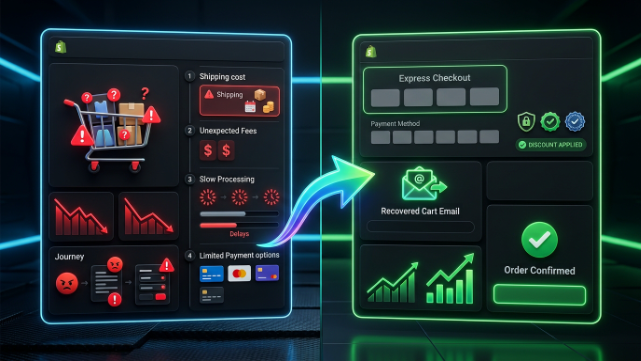
Hey, let’s talk about something that probably keeps you up at night if you run a Shopify store, cart abandonment. You know the feeling. Your analytics show tons of people adding products to their cart, your traffic looks healthy, but then somehow most of those carts just… vanish. No purchase, no email, nothing. Just a whole lot of “what if” sitting in your abandoned checkout report.
Here’s the reality, the average cart abandonment rate across ecommerce sits somewhere around 70 percent. That means for every 10 people who add something to their cart, roughly 7 of them leave without buying. That’s not a small leak, that’s a flood. But the good news is, this is one of the most fixable problems in ecommerce if you know what to actually work on.
Let’s go through 10 proven tactics that can genuinely move the needle on this.
1. Simplify Your Checkout Process
This is the big one, and honestly, it’s where most stores lose the most money. Every extra step, every unnecessary form field, every confusing button is a chance for someone to give up and leave.
Shopify’s checkout is already fairly optimized out of the box, but you can still make improvements. Enable guest checkout so customers aren’t forced to create an account before buying, since that single requirement alone causes a huge chunk of abandonment. Also review your checkout fields and remove anything that’s not absolutely necessary. Do you really need a phone number and a company name field for every single order?
The fewer clicks and fewer fields between “add to cart” and “order confirmed,” the better your completion rate is going to be.
2. Be Upfront About Shipping Costs
Surprise costs at checkout are one of the biggest reasons people abandon their cart. Someone gets all the way to the payment page, sees an extra shipping fee they weren’t expecting, and just closes the tab.
The fix here is transparency, and the earlier the better. Show shipping costs on the product page if possible, or at the very least on the cart page before checkout even begins. If you can offer free shipping over a certain order value, display that prominently across your store so customers know exactly what to expect before they get anywhere near the payment screen.
3. Offer Multiple Payment Options
Not everyone wants to pay the same way, and if your store only supports one or two payment methods, you’re leaving money on the table.
Make sure you’re offering major credit and debit cards, along with digital wallets like Apple Pay and Google Pay where relevant. If you’re running a store here in Pakistan, this is especially important, and we’ll dig into that more in a bit.
The point is, the payment method someone prefers can genuinely be a dealbreaker. If they don’t see an option that works for them, they’ll often just leave rather than figure out a workaround.
4. Send Abandoned Cart Recovery Emails
This one’s honestly a bit of a no-brainer, and if you’re not doing it yet, it should be near the top of your priority list. When someone leaves items in their cart without completing checkout, Shopify captures that information, and you can use it to send targeted recovery emails.
A good abandoned cart sequence usually looks something like this. The first email goes out within an hour or two, gently reminding them what they left behind. The second email, sent a day later, can include a small incentive like a discount code or free shipping offer. A third email a couple days after that can create a bit of urgency, especially if stock is limited.
Apps like Klaviyo or Shopify’s built-in email marketing tools make this pretty straightforward to set up, and this tactic alone tends to recover a meaningful percentage of otherwise lost sales.
5. Use Exit Intent Popups
Exit intent technology detects when a visitor’s mouse movement suggests they’re about to leave the page, usually by moving toward the browser’s close button or address bar, and triggers a popup right at that moment.
You can use this to offer a discount code, remind them their cart is still saved, or simply ask if they have any questions you can help answer. It’s not going to save every single visitor, but it catches a percentage of people who were on the fence and gives them one more reason to stay and complete their purchase.
6. Build Trust With Security Badges and Reviews
Sometimes cart abandonment isn’t about price or shipping at all, it’s about trust. If a customer isn’t fully confident that your store is legitimate and secure, they’ll hesitate to enter their payment details, no matter how much they want the product.
Display security badges near your checkout and payment sections. Show customer reviews and ratings prominently on product pages. If you have any trust signals like media mentions, verified business badges, or clear contact information, make sure those are visible too. All of this adds up to reducing the hesitation that leads to abandoned carts.
7. Optimize for Mobile Users
A massive chunk of ecommerce traffic now comes from mobile devices, and if your store isn’t smooth and easy to use on a phone, you’re losing sales. Slow load times, awkward button placement, and forms that are annoying to fill out on a small screen all contribute to mobile cart abandonment specifically.
Go through your entire purchase flow on your own phone regularly. Add something to cart, go through checkout, and pay close attention to anything that feels clunky or slow. Shopify themes are generally mobile responsive by default, but custom elements you’ve added over time can sometimes break that experience, so it’s worth checking periodically.
8. Add Urgency and Scarcity Where Genuine
People are more likely to complete a purchase when they feel like waiting could mean missing out. This could be showing limited stock messaging like “only 3 left in stock,” or a countdown timer on a limited time discount.
The key word here is genuine. Fake urgency, like a countdown timer that resets every time someone visits, tends to backfire once customers catch on, and it can seriously damage trust in your brand long term. Use real stock levels and real time-limited offers, and this tactic can meaningfully boost conversion without any ethical gray areas.
9. Offer a Live Chat or Easy Way to Ask Questions
Sometimes people abandon their cart simply because they have a question that isn’t answered anywhere on your site, and rather than dig around looking for an answer, they just leave. A visible live chat option, even a simple chatbot that can answer common questions about shipping times, return policies, or product details, can catch these customers before they bounce.
This is particularly useful for higher priced items where customers naturally have more hesitation and more questions before committing to a purchase.
10. Retarget Abandoners With Ads
Not every abandoned cart is recoverable through email alone, especially if the customer didn’t actually enter their email before leaving. This is where retargeting ads come in. Using Facebook, Instagram, or Google retargeting pixels, you can show ads specifically to people who visited your site or added items to cart but didn’t purchase.
Seeing that product pop up again in their Instagram feed a day or two later can be just the reminder they needed. Keep your retargeting ad budget modest at first and monitor performance, since this tactic works best when combined with the other strategies rather than relying on it alone.
Bonus Tip: Actually Look at Your Abandoned Checkout Data
Shopify gives you a full report of abandoned checkouts right in your admin under Orders, then Abandoned Checkouts. Go through this regularly. Look for patterns, are people abandoning at a specific step? Is it mostly happening on mobile? Are certain products more prone to abandonment than others?
This data can tell you exactly where to focus your energy instead of guessing. Sometimes the fix is obvious once you actually look, like realizing a huge chunk of abandonment happens right after customers see the shipping cost, which points you straight back to tactic number two.
A Quick Word for Pakistani Store Owners
Cart abandonment has some specific local flavor here in Pakistan that’s worth addressing directly.
Cash on delivery remains hugely popular, and if your store doesn’t offer COD as a clear, visible option, you could be losing a significant chunk of potential customers who simply aren’t comfortable paying online upfront. Make sure COD is prominently available and clearly explained during checkout.
At the same time, offering JazzCash and Easypaisa as payment options can capture the growing segment of customers who prefer digital payments but don’t necessarily have international credit cards. Having both COD and local digital wallets covers the widest possible range of customer preferences.
Delivery reliability also plays into abandonment more than people realize. If customers aren’t confident in your courier partner, whether that’s Leopards, TCS, or M&P, they may hesitate to complete an order, especially for higher value items. Displaying your courier partnerships and average delivery timeframes clearly can help build the confidence needed to push through checkout.
Lastly, keep pricing displayed clearly in PKR from the very first product view all the way through checkout. Any confusion around currency conversion or unexpected pricing changes at checkout can absolutely tank your conversion rate with local customers.
Wrapping This Up
Cart abandonment isn’t some unsolvable mystery, it’s usually a combination of friction, trust issues, and missed follow up opportunities. The good news is that every single tactic we covered here is genuinely achievable, whether you’re a brand new store or one that’s been running for years.
Start with the basics. Simplify your checkout, be upfront about shipping costs, and get an abandoned cart email sequence running if you don’t have one already. Those three alone will likely recover a noticeable chunk of lost sales. From there, layer in the other tactics over time and keep an eye on your abandoned checkout data to see what’s actually working for your specific store and audience.
If setting up abandoned cart flows, optimizing your checkout, or figuring out the right payment and delivery setup for your Shopify store feels like a lot to juggle, that’s exactly what we help with at TheScriptFlow. We work with Shopify store owners across Pakistan and internationally to build stores that convert better and keep customers coming back. Reach out to us at thescriptflow.com and let’s get your cart abandonment numbers headed in the right direction.