How to Scale Your Shopify Dropshipping Business
Getting your first ten sales on Shopify feels incredible. Getting your first hundred feels like proof you’re onto something real. But somewhere between fifty orders a day and five hundred, a lot of dropshipping stores hit a wall not because demand dried up, but because the systems that worked fine at a small scale start collapsing under real volume. Manual order processing turns into chaos. Customer service tickets pile up faster than you can answer them. Suppliers who were reliable for twenty orders a week suddenly can’t keep up with two hundred.
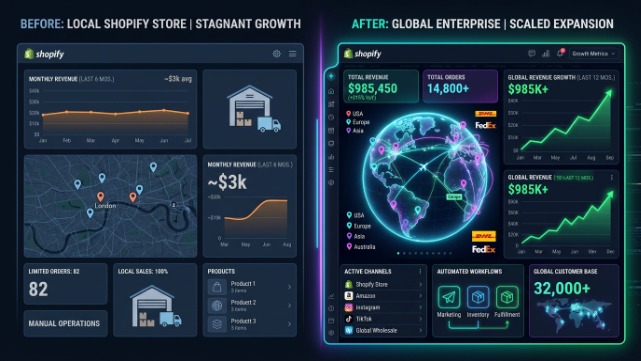
Scaling a Shopify dropshipping business isn’t just “sell more.” It’s a deliberate shift from hustle to infrastructure building the systems, supplier relationships, and marketing channels that let your revenue grow without your workload growing at the same rate. This guide walks through exactly how to do that, step by step.
Know when you’re actually ready to scale
Before pouring more money into ads or expanding your catalog, make sure you’re scaling from a position of strength, not covering for weaknesses. You should have consistent sales over a meaningful stretch of time, positive and predictable profit margins after all your real costs, and clear evidence of product market fit repeat customers, decent organic traffic, and ad campaigns that are actually profitable rather than break-even.
Scaling too early is one of the most common ways dropshipping stores fail. Pouring ad budget into unproven products or expanding your supplier relationships before your fulfillment process is solid just means you’re creating more chaos faster. The right mindset for sustainable scaling is infrastructure before expansion building systems capable of handling ten times your current volume before you actually hit that volume, so growth feels controlled rather than like putting out fires constantly.
Get your unit economics right before you scale spend
Scaling amplifies whatever is already true about your business. If your margins are thin or your numbers are fuzzy, scaling just means losing money faster instead of slower. Before increasing ad spend or expanding your product range, know your core numbers cold: conversion rate, average order value, customer acquisition cost, and customer lifetime value. These four metrics tell you whether you’re actually ready to scale profitably or just scale revenue while your margins quietly bleed out.
Track net profit on every order, not just top line revenue. It’s easy to look at a growing sales dashboard and feel like things are going well while ad costs, returns, and payment processing fees are eating far more of your margin than you realize. The dropshippers who successfully scale into six-figure and beyond monthly revenue are the ones treating profit tracking as a daily discipline, not an afterthought they check once a quarter.
Automate everything that doesn’t need a human decision
This is the single biggest lever for scaling without burning yourself out. Manual processes simply don’t scale what’s manageable at ten orders a day becomes unmanageable chaos at two hundred. Every repetitive task in your operation should be running on autopilot before you push for more volume: order routing to suppliers, inventory syncing so you never oversell an out-of-stock item, tracking number updates, and price adjustments when supplier costs shift.
Tools like DSers, AutoDS, and Zendrop handle the bulk of this automatically, forwarding orders to suppliers the moment they’re placed and keeping your Shopify inventory in sync in real time. Automation should always come before hiring a lot of tasks that feel like they need another team member can actually be handled more cheaply and more reliably by the right software, which keeps your overhead low while your order volume climbs. When you do eventually hire, focus those roles on things that genuinely require human judgment, like supplier relationship management or high level customer experience decisions, rather than repetitive tasks a tool could handle.
Build supplier relationships that can actually handle growth
As your order volume grows, supplier quality becomes one of the most critical factors determining whether you scale successfully or hit a wall. A supplier who was perfectly reliable at twenty orders a week might completely fall apart at two hundred if they don’t have the fulfillment capacity or communication processes to match. Before scaling aggressively, have an honest conversation with your suppliers about their inventory depth, fulfillment capacity during peak periods, and how they handle communication when something goes wrong.
Diversify your supplier base for your best selling products specifically. Relying on a single supplier for your top revenue driver means one stockout, one shipping delay, or one quality issue can take down a meaningful chunk of your business overnight. Having a pre vetted backup supplier ready to step in protects your growth from being derailed by a single point of failure. And where your margins allow it, leaning toward suppliers with US or EU based warehousing Spocket and Zendrop both offer this pays off at scale, since faster shipping consistently produces fewer refunds, better reviews, and stronger customer lifetime value than relying purely on long-haul international shipping.
Diversify your traffic sources
Relying on a single traffic channel is one of the fastest ways to cap your own growth. If Facebook ads are your only source of customers and costs suddenly spike or a campaign gets shut down, your entire revenue stream is at risk. The most sustainable scaling strategy blends short term wins with long term stability paid ads on Meta, TikTok, and Google for immediate traffic, combined with SEO and organic content that compounds over time and gradually lowers your blended customer acquisition cost.
Investing in SEO optimized product pages and blog content specifically pays dividends as you scale, because organic traffic doesn’t disappear when you pause your ad budget, unlike paid channels. Email and SMS marketing deserve real attention too abandoned cart flows, post purchase upsell sequences, and win back campaigns squeeze more revenue out of customers you’ve already paid to acquire, which meaningfully improves your overall unit economics as order volume grows.
Increase average order value before you increase ad spend
One of the most underrated scaling levers is getting more revenue out of the customers you already have, rather than just paying for more new ones. Post purchase upsells offering a complementary product right after someone completes checkout work exceptionally well because the customer has already committed to buying and is in a buying mindset, so there’s no risk of the offer distracting from the original sale. Simple product bundles, quantity discounts, and “frequently bought together” prompts on product pages all nudge average order value up without any additional ad spend at all.
Even a small increase in average order value compounds significantly at scale. If you’re spending real money to acquire each customer through ads, extracting more revenue per transaction directly improves your margin on every single sale, which gives you more room to reinvest in growth.
Protect your customer experience as volume increases
It’s tempting to think customer service becomes less important as you scale, when actually the opposite is true the stakes get higher. Selling an out of stock item or missing a shipping delay at low volume is an annoyance; at high volume, without automated tracking and inventory sync, it becomes a wave of angry emails, negative reviews, and potential chargebacks that can freeze your payment processing.
Fast, transparent shipping communication, easy returns, and quick responses to questions all matter more as your order count grows, not less. Automated order tracking pages and canned response systems help you maintain response quality without needing to scale your support team at the same rate as your order volume. Customers who feel genuinely taken care of don’t just come back they become a source of free, organic marketing through word of mouth and reviews, which is exactly the kind of compounding growth that makes scaling sustainable rather than a constant grind for new customers.
Consider expanding to multiple sales channels carefully
Once you’ve mastered one platform and have a stable, profitable operation, expanding to additional channels like Amazon, Walmart, or TikTok Shop can diversify your revenue and reduce your dependence on any single platform’s algorithm changes or policy shifts. Most successful sellers reach a solid, established revenue level on Shopify first before replicating their systems elsewhere trying to scale across multiple platforms without centralized inventory and order management often creates exactly the kind of operational chaos that undoes the automation work you put in earlier.
If you do expand, make sure your automation and fulfillment systems can actually handle centralized order routing across channels. Selling the same product across Shopify and Amazon without synced inventory is a fast way to oversell and damage your seller metrics on both platforms simultaneously.
Build a brand, not just a store
In a market where thousands of Shopify stores are selling near identical products sourced from the same suppliers, the businesses that scale into serious, sustainable revenue are the ones that feel like an actual brand rather than a generic reseller. Two stores can sell the exact same product one plateaus, one scales to six figures and beyond. The difference is almost always branding, ad creativity, and the trust a customer feels landing on your store versus a competitor’s.
As you scale, invest in original product photography and copywriting, a cohesive visual identity, and a customer experience that feels intentional rather than thrown together. This isn’t a cosmetic nice to have it directly protects your margins, because branded stores can command higher prices and better conversion rates than commodity stores competing purely on who can undercut price the most.
Scaling from Pakistan: what changes
If you’re scaling a Shopify dropshipping business from Pakistan, a few extra layers deserve attention as your order volume grows. If a meaningful share of your orders are Cash on Delivery, scaling without a solid confirmation process before dispatch means your COD refusal rate scales right along with your order volume, quietly eating into margins that look healthy on paper. Building a WhatsApp confirmation step into your automated order workflow rather than trying to handle it manually once volume climbs protects your growth from this specific local risk.
As your local delivery volume increases, courier reliability becomes as important as supplier reliability. Diversifying across Leopards, TCS, and M&P depending on city coverage and product type reduces your exposure to any single courier’s capacity limits during high volume periods. And if a significant share of your growth is coming from international customers rather than the domestic Pakistani market, make sure your payment gateway setup can actually handle that scale currency conversion and gateway limitations catch a lot of growing Pakistani stores off guard right when volume is climbing fastest.
The bottom line
Scaling a Shopify dropshipping business isn’t about doing more of everything at once it’s about building the right systems in the right order so growth doesn’t create more chaos than revenue. Get your unit economics solid, automate the repetitive operational work, diversify both your suppliers and your traffic sources, and protect the customer experience as volume climbs. Sustainable scaling typically takes months of deliberate system building, not a single lucky ad campaign, and the businesses that get there are the ones treating infrastructure as seriously as they treat marketing.