How to Use Exit Intent Popups on Shopify
You and me both know that feeling. You spend money on ads, you get people to your Shopify store, they browse around for a bit, and then they just leave. No purchase, no email signup, nothing. It’s honestly one of the most frustrating parts of running an online store. But here’s something that can help you claw back some of those lost visitors: exit intent popups.
If you have never used them before, don’t worry. This guide is going to walk you through everything, from what they actually are to how you can set them up on your Shopify store, what to say in them, and how to avoid annoying your customers while still getting results.
What Exactly Is An Exit Intent Popup
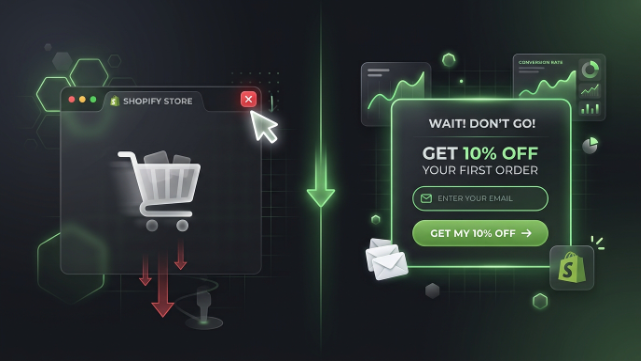
An exit intent popup is basically a message that pops up right when someone is about to leave your website. On desktop, this is usually detected when someone moves their mouse toward the browser’s close button, the back button, or the address bar. On mobile, it’s a bit trickier since there’s no mouse movement to track, so apps usually rely on scroll behavior, time spent on page, or a tap on the back button.
The whole idea behind this is simple. You get one last chance to grab someone’s attention before they disappear, maybe forever. Instead of just letting them go, you show them something that might change their mind. That could be a discount code, a reminder about what’s in their cart, or even just an offer to join your email list so you can follow up later.
Think of it like a salesperson in a physical store who notices you’re about to walk out and says “hey, before you go, did you know we have 20 percent off today?” That little nudge sometimes works, and it works online too.
Why Should You Even Bother With This
You might be thinking, do people really respond to these popups or do they just annoy everyone and make them leave faster. That’s a fair question, and it really depends on how you use them.
When done right, exit intent popups can recover a good chunk of visitors who were about to bounce anyway. These are people who were already leaving without buying, so you’re not really losing anything by showing them one more offer. Worst case, they close the popup and leave like they were going to anyway. Best case, you get a sale, an email address, or a returning customer down the line.
For Shopify store owners specifically, this matters a lot because traffic isn’t cheap. Whether you’re running Facebook ads, Google ads, or getting organic traffic from SEO, every visitor represents time and money spent. Losing them without even trying to convert them is basically leaving money on the table.
Different Types of Exit Intent Popups You Can Use
There isn’t just one way to do this. Depending on your store and your goals, you can use different kinds of popups for different situations.
Discount offer popups are probably the most common. Someone is about to leave, and you offer them 10 or 15 percent off if they complete their purchase right now. This works especially well for first time visitors who were on the fence about buying.
Cart abandonment popups are specifically for people who added something to their cart but are about to leave without checking out. The popup can remind them what’s sitting in their cart and maybe sweeten the deal with free shipping or a small discount.
Email capture popups don’t ask for a sale right away. Instead, they just ask for an email address in exchange for something like a discount code, a free guide, or early access to new products. Even if the person doesn’t buy today, you now have a way to reach them later through email marketing.
Survey or feedback popups ask visitors why they’re leaving without buying. This one doesn’t directly increase sales, but it gives you really useful information about what’s stopping people from converting, which you can then fix.
Free shipping threshold popups let someone know they’re close to qualifying for free shipping if they add a bit more to their cart. This is great for increasing average order value while also keeping someone on your site a little longer.
How to Set Up Exit Intent Popups on Shopify
Now let’s get into the actual how to part, since that’s probably why you’re here.
Shopify doesn’t have a built in exit intent popup feature, so you’ll need to use an app from the Shopify App Store. The good news is there are plenty of solid options, and most of them are pretty easy to set up even if you’re not technical at all.
Some popular apps for this include Privy, OptinMonster, Justuno, Wisepops, and Poptin. Each one has slightly different features and pricing, so it’s worth checking what fits your budget and needs. Privy is often recommended for beginners since it has a generous free plan and is genuinely easy to use.
Once you install an app, here’s generally how the setup process goes. You create a new popup campaign inside the app dashboard. You choose the trigger, which in this case would be exit intent, though most apps let you combine this with other triggers like time on page or scroll depth as a backup for mobile users. You design the popup itself, picking colors, fonts, and images that match your store’s branding. You write your offer and your copy, which we’ll talk about more in a bit. You set targeting rules, like showing it only to first time visitors or only on certain pages. And finally, you publish it and keep an eye on how it performs.
Most of these apps also let you A/B test different versions of your popup, which is honestly something you should be doing from the start rather than guessing what works.
Writing Popup Copy That Actually Converts
This part matters more than people realize. You can have the best looking popup design in the world, but if the words don’t convince anyone, it’s not going to do much.
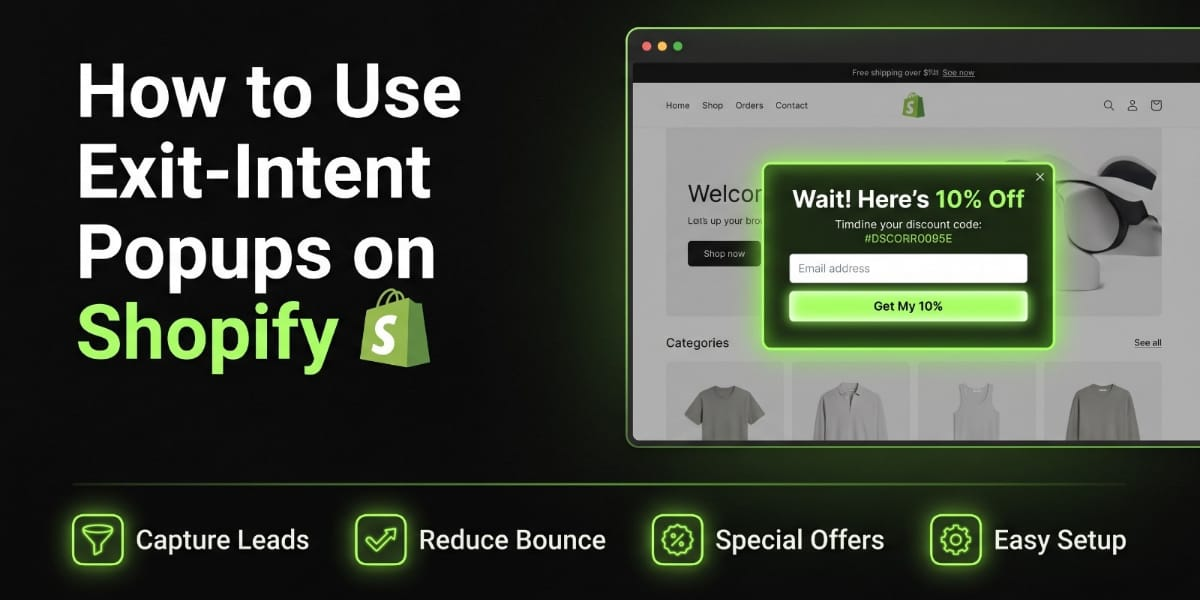
Keep your headline short and to the point. Something like “Wait, don’t go yet” or “Here’s 10 percent off before you leave” works better than a long sentence trying to explain everything.
Make the offer clear immediately. Don’t make people read three lines just to figure out what you’re offering. If it’s a discount, say the percentage right away. If it’s free shipping, say that clearly too.
Create a small sense of urgency without being pushy or dishonest. Phrases like “this offer expires in 10 minutes” can work, but only if it’s actually true. Fake urgency gets noticed by customers these days and can hurt your brand’s trust.
Use a strong call to action button. Instead of a boring “submit” button, try something like “Claim My Discount” or “Yes, I Want 15% Off.” Small changes like this can genuinely improve click through rates.
Always include an easy way to close the popup. Nothing frustrates a visitor more than a popup with a tiny or hidden close button. Make it easy to find so people don’t feel trapped, because that leads to a bad experience even if they don’t buy.
Mistakes to Avoid With Exit Intent Popups
Now let’s talk about what not to do, because there are a few common mistakes that can actually hurt your conversions instead of helping them.
Showing the popup to every single visitor, every single time, is a mistake. If someone already saw your popup and closed it, don’t show it again on their next visit within a short window. Most apps let you set frequency rules for this, so use them.
Making the discount too small to matter is another issue. If you offer just 2 or 3 percent off, it’s not really enough to change someone’s mind. Test different discount levels to see what actually moves the needle for your specific audience.
Overloading the popup with too much text or too many images can overwhelm someone who’s already halfway out the door. Keep it clean and focused on one single offer or message.
Ignoring mobile users is a bigger mistake than people think, especially since a huge chunk of Shopify traffic these days comes from phones. Since exit intent based on mouse movement doesn’t really work on mobile, make sure your app has a mobile specific trigger like scroll behavior or time delay so you’re not missing a big portion of your visitors.
Not testing different versions means you’re basically guessing. Running two or three different popup designs and offers against each other will tell you a lot more than assuming you already know what works.
How to Target the Right Visitors
Not every visitor should see the same popup, and honestly not every visitor should see a popup at all. Smart targeting can make a big difference.
New visitors who have never bought before might respond well to a first purchase discount. Returning customers might respond better to something like a loyalty reward or early access to new arrivals instead of a generic discount, since they’ve already shown they trust your brand.
People who have items sitting in their cart deserve a different message than someone who’s just browsing your homepage without adding anything. And if someone already made a purchase in the same session, you probably don’t want to show them a discount popup on their way out, since it might make them feel like they overpaid.
Most good popup apps let you set these kinds of rules, so take the time to actually configure this instead of using one generic popup for everyone.
Exit Intent Popups for Shopify Stores in Pakistan
If you’re running a Shopify store here in Pakistan, there’s a bit of a different context to think about compared to stores targeting purely international audiences.
A lot of shoppers here still lean toward cash on delivery instead of prepaying online, so your exit intent popup could actually address this directly. Instead of just offering a discount, you could reassure hesitant buyers with a message about cash on delivery being available, which can sometimes be the actual reason someone was about to leave rather than price.
Payment trust is still a real concern for a lot of Pakistani shoppers, especially with newer or smaller stores. A popup that mentions secure payment options through JazzCash or Easypaisa, along with cash on delivery, can help ease some of that hesitation right at the moment someone is about to bounce.
Shipping time and cost is another big one. If you’re using couriers like Leopards, TCS, M&P, Trax, or PostEx, letting people know delivery times or offering a free shipping threshold through your popup can be the nudge that keeps them from leaving, especially in cities outside the major metros where delivery time worries are more common.
Since PKR pricing can feel different from what people are used to seeing on international sites, keeping your discount messaging in clear rupee terms rather than vague percentages sometimes works better for local shoppers who want to see the exact amount they’re saving.
Measuring Whether Your Popups Are Actually Working
Setting up a popup and just leaving it running forever isn’t really a strategy. You need to check how it’s performing regularly.
Look at your popup’s conversion rate, meaning how many people who saw it actually took the action you wanted, whether that’s entering an email or completing a purchase. Compare this against your overall site conversion rate to see if it’s genuinely adding value.
Keep an eye on your bounce rate too. If your popup is annoying people so much that they’re leaving faster than before, that’s a sign something needs to change, whether it’s the design, the offer, or how often it’s showing up.
Most popup apps give you built in analytics, but connecting this with your Shopify analytics or Google Analytics can give you a fuller picture of how these popups are affecting your actual revenue, not just isolated popup metrics.
Wrapping This Up
Exit intent popups are one of those small features that can genuinely make a difference to your Shopify store’s bottom line, especially since you’re targeting people who were already about to leave anyway. The key is doing it thoughtfully. Clear offers, good targeting, mobile friendly triggers, and honest urgency will get you a lot further than just throwing a generic discount popup at everyone who visits.
If setting all this up feels like a lot to handle on your own, or if you want your popups actually integrated well with your Shopify theme instead of looking like an afterthought, that’s exactly the kind of thing TheScriptFlow can help with. From custom Shopify development to full store optimization, TheScriptFlow works with store owners across Pakistan and internationally to make sure every part of the store, including the small details like popups, is working together to bring in more sales. Reach out to TheScriptFlow whenever you’re ready to take your store to the next level.