How to Use Social Proof to Increase Shopify Conversions
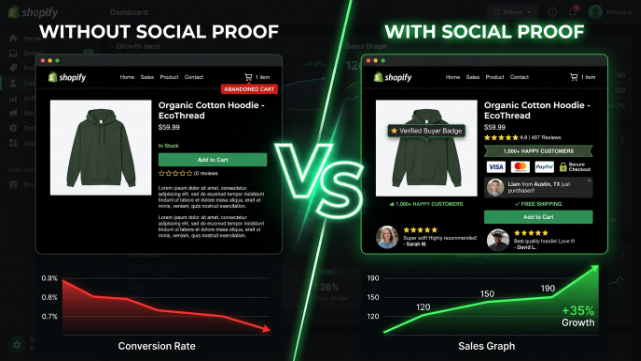
Think about the last time you bought something online from a brand you’d never heard of before. Chances are, before you clicked buy, you checked the reviews. Maybe you looked at the star rating, scrolled through a few comments, or noticed a little popup saying someone in another city just bought the same product. That’s social proof, and it’s one of the most powerful conversion tools available to any Shopify store.
The idea behind social proof is simple. People trust other people more than they trust a brand talking about itself. When shoppers see evidence that real customers bought, loved, and trusted your product, their own hesitation drops significantly. In this guide, I’ll walk you through exactly what social proof is, the different types you can use on Shopify, the best apps for each type, real examples of how it plays out, and how to avoid the mistakes that make social proof backfire instead of build trust.
Why Social Proof Works So Well
Let’s start with the psychology, because it explains why this tactic is so effective across almost every type of store. Humans are naturally wired to look at the behavior of others when we’re uncertain about a decision. This is called social proof or social validation, and it’s the same instinct that makes you choose the restaurant with a line outside over the empty one next door, even if you’ve never eaten at either.
Online shopping amplifies this instinct because customers can’t physically touch, try, or inspect a product before buying. They’re relying entirely on trust, and trust is built through evidence. A five star rating with hundreds of reviews tells a shopper that other people took the risk already and it worked out. A popup showing recent purchases tells them the store is active and legitimate. A photo of a real customer using the product tells them what to expect in real life, not just in a polished product shot.
The famous marketing researcher Robert Cialdini described this well when he explained that people are persuaded more by what others do than by any argument a business makes about itself. That single idea is the foundation of everything in this guide.
Product Reviews And Ratings
This is the most well known and probably the most important form of social proof for any ecommerce store. A product page with genuine reviews, especially ones with photos or detailed feedback, dramatically increases buyer confidence. Shoppers scan for that star rating and review count almost automatically before they even read your product description.
Apps like Okendo, Dadao Product Reviews, and Rivyo Product Reviews let you collect, manage, and display reviews directly on your product pages. Most of these support photo and video reviews, which tend to convert better than plain text since they show the product in a real setting rather than a studio photo. Some also let you import existing reviews from platforms like AliExpress, Amazon, or Etsy if you’re just starting out and don’t have much review history yet, though nothing beats reviews from your own actual customers over time.
A few practical tips here. Always follow up with customers after delivery to request a review, since most people won’t leave one unless asked. Offering a small discount code in exchange for a review with a photo tends to significantly boost participation. And don’t hide negative reviews. A product with all five star ratings and nothing else actually looks less trustworthy to experienced online shoppers, since it feels curated rather than real. A few honest three or four star reviews mixed in, especially ones you’ve responded to professionally, build more credibility than a suspiciously perfect record.
Recent Sales Popups
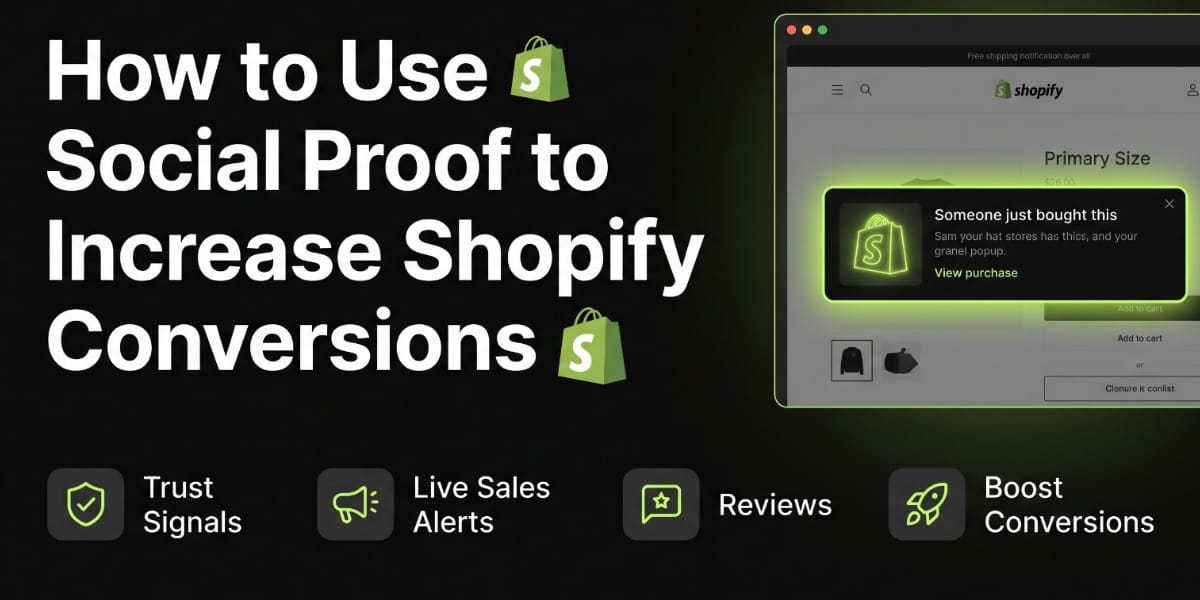
You’ve almost certainly seen this one. A small popup appears in the corner of the screen saying something like “Sarah from Lahore just purchased this product.” This tells browsing visitors that real people are actively buying from your store right now, which reduces the feeling of being the first or only person considering a purchase.
Apps like Fomo, TrustPulse, Nudgify, and Social Proofy specialize in this exact feature. They pull real order data from your Shopify store and display it as a subtle, non intrusive popup as visitors browse. Most of these apps let you customize the design, timing, and which pages the notifications appear on, so you can make sure they match your store’s branding instead of looking like a generic plugin.
Fomo in particular has built a strong reputation in this space, offering features beyond just sales popups, including low stock alerts, review notifications, and live visitor counts, all from one dashboard with detailed analytics showing exactly how much revenue each notification type is driving.
The key here, just like with urgency tactics, is honesty. Only show real purchase data. If your store doesn’t have much sales volume yet, it might be tempting to fake this, but experienced shoppers can often tell when a popup looks scripted or repeats the same fake sounding names over and over. It’s better to have fewer, real notifications than a constant stream of fabricated ones.
Live Visitor Counts
Another common tactic is showing how many people are currently viewing a product or browsing your store. A message like “14 people are viewing this product right now” signals that the item is popular and worth paying attention to. This works especially well on product pages for items that are genuinely getting a lot of traffic, since it reinforces the idea that other shoppers are seriously considering the same purchase.
Several of the apps mentioned above, including Nextsale, Vitals, and ProveSource, include live visitor counters as part of a broader social proof toolkit. These pull actual visitor data from your store analytics, so as long as your traffic is real, the numbers displayed are accurate.
This tactic tends to work best on products that already get decent traffic. Showing “2 people viewing” on a product that rarely gets visitors can actually undercut your credibility rather than build it, so it’s worth setting a minimum threshold before the counter displays at all.
User Generated Content And Social Media Mentions
Reviews and popups are powerful, but nothing beats seeing real customers use your product in their own environment, posted on their own social media. User generated content, often shortened to UGC, includes customer photos, videos, unboxing clips, and social media posts that feature your products organically.
Displaying an Instagram feed or curated UGC gallery directly on your website, especially on product pages, gives shoppers a much more authentic sense of what they’re buying than professional studio photography alone. Apps that pull in Instagram feeds or let you build a shoppable UGC gallery are widely available in the Shopify app store, and many review apps like Okendo and Dadao also support photo and video submissions as part of their review collection flow.
If you want to actively grow your UGC library, consider running a simple incentive, like offering store credit or a small discount to customers who tag your brand in a post featuring their purchase. Over time, this builds a steady stream of authentic content you can repurpose across your website, ads, and social channels.
Trust Badges And Security Signals
This form of social proof is a little different, since it’s less about other customers and more about signaling legitimacy and safety. Trust badges near your checkout button, things like secure payment icons, money back guarantee badges, or “as seen in” media logos, reduce the anxiety shoppers feel about entering their payment details on a store they might not be fully familiar with yet.
Many all in one apps like Vitals and Nextsale include trust badge widgets as part of their broader feature set, so you often don’t need a separate app just for this. Place these badges strategically near your add to cart button and throughout checkout, since that’s exactly where purchase anxiety peaks and shoppers are most likely to hesitate or abandon their cart.
Customer Testimonials And Case Studies
For higher priced products or stores selling something a little more considered, like skincare treatments, electronics, or subscription boxes, a short written testimonial or a longer case study style story can do more convincing than a simple star rating. These work particularly well on your homepage, about page, or dedicated landing pages for specific products.
A good testimonial goes beyond “great product, fast shipping.” It tells a small story, explaining what problem the customer had, how your product solved it, and what changed for them afterward. If you have the resources, even a short video testimonial from a genuine customer can outperform a dozen written ones, since video feels harder to fake and easier to relate to.
Influencer And Expert Endorsements
If you’ve worked with influencers or industry experts, showcasing that relationship is a strong form of social proof, especially for newer brands still building direct customer trust. A quote or short clip from a recognized name in your niche, along with their photo and follower count or credentials, lends borrowed credibility to your brand.
This doesn’t need to be expensive or require a celebrity partnership. Micro influencers with smaller but highly engaged audiences in your specific niche often provide better conversion lift than large influencers with broad but less relevant followings. The key is relevance. A skincare influencer endorsing a skincare product carries far more weight than a general lifestyle influencer with a large but unrelated audience.
Sold Counts And Bestseller Badges
Showing how many units of a product have sold, or simply labeling a product as a “bestseller,” taps into the same psychology as recent sales popups but in a more permanent, always visible way. A badge that says “500+ sold” or “our most popular product” gives shoppers an instant signal about what other customers already trust.
This works especially well on collection pages, where shoppers are comparing multiple products and deciding which one to click into first. A bestseller badge can be the deciding factor that gets a shopper to explore one product over another, especially when the products look otherwise similar.
Combining Multiple Social Proof Elements
The strongest product pages usually don’t rely on just one type of social proof, they layer several together. A well optimized product page might include a star rating near the top, a bestseller badge, a recent sales popup triggered as the shopper scrolls, a handful of photo reviews further down the page, and a trust badge near the add to cart button.
The key is balance. Too many trust signals crammed onto one page can start to feel cluttered or even suspicious, as if the store is trying too hard to convince the shopper. Pick two or three social proof elements that genuinely fit your product and your brand’s tone, rather than stacking every available widget just because you can.
Common Mistakes To Avoid
A few patterns show up repeatedly on stores that get social proof wrong, so it’s worth calling them out clearly.
Faking reviews or purchase notifications is the biggest one. Beyond the ethical issue, experienced online shoppers are increasingly good at spotting fake looking reviews, generic sounding names in sales popups, or suspiciously uniform five star ratings. Once a shopper suspects your social proof isn’t real, they stop trusting anything else on your page too.
Ignoring negative reviews instead of responding to them is another common mistake. A thoughtful, professional response to a negative review often builds more trust than the review itself would have damaged, since it shows future customers that you actually care about resolving issues.
Overloading your page with too many social proof widgets at once is a subtler mistake but still hurts conversions. If your product page has a countdown timer, three different popups, a trust badge carousel, and a review widget all competing for attention, it can feel overwhelming rather than persuasive.
Finally, using stock photos instead of real customer photos in your reviews or testimonials undermines the entire point of social proof. If a shopper recognizes a stock photo, or notices the same face appearing in reviews for completely unrelated products elsewhere online, your credibility takes a serious hit.
A Note For Pakistani Shopify Stores
If you’re running a Shopify store here in Pakistan, social proof plays an especially important role, since trust is often the biggest barrier standing between a shopper and a completed purchase, particularly for newer or lesser known brands.
Local reviews matter more than you might expect. A shopper in Karachi or Lahore is often more reassured by a review from another Pakistani customer, especially one that mentions accurate delivery timelines through couriers like Leopards, TCS, or PostEx, than by a generic five star rating from an unknown location. If you can, encourage reviewers to mention their city or region, since this makes the social proof feel closer to home for other local shoppers.
WhatsApp also plays a bigger role in trust building here than in many other markets. Sharing customer testimonials or unboxing videos through WhatsApp Business broadcasts, or even displaying a screenshot of a WhatsApp conversation with a happy customer on your website, can feel more authentic and relatable to a Pakistani audience than a polished review widget alone.
Since cash on delivery remains a common payment method, reviews or testimonials that specifically mention a smooth COD experience, accurate delivery timing, and good packaging can meaningfully reduce hesitation for shoppers who are still unsure about ordering from an unfamiliar Shopify store. This kind of localized, specific social proof often does more to convert a cautious buyer than generic praise about product quality alone.
Final Thoughts
Social proof works because it removes doubt. Every review, popup, badge, and testimonial you add is essentially telling a hesitant shopper that they’re not taking a risk alone, that real people have already walked this path and had a good experience. The stores that do this well don’t rely on a single trick, they layer honest, relevant social proof throughout the shopping journey, from the homepage all the way through checkout.
If you’re running a Shopify store in Pakistan and want help setting up reviews, sales notifications, trust badges, or a checkout experience that actually converts, that’s exactly what we help with at TheScriptFlow. We work with Shopify stores across Pakistan and internationally on theme development, conversion rate optimization, and building stores that customers genuinely trust. Reach out to us at thescriptflow.com and let’s turn your visitors into confident, repeat buyers.