How to Use Urgency and Scarcity on Shopify
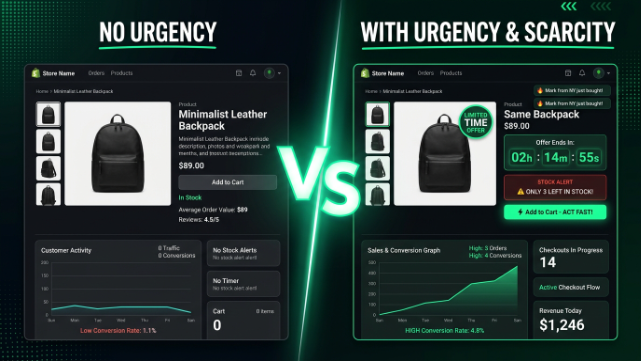
Have you ever bought something just because you saw “only 2 left in stock” or a countdown timer ticking away at the top of the page? Almost everyone has. That’s urgency and scarcity at work, and it’s one of the most powerful psychological triggers you can use on your Shopify store.
The idea is simple. People don’t like missing out. When they feel like time is running out or a product might disappear, they stop overthinking and start buying. Done right, this can genuinely boost your conversion rate. Done wrong, it can feel fake and actually hurt your brand’s credibility. In this guide, I’ll walk you through exactly how urgency and scarcity work, the best ways to apply them across every stage of your Shopify store, which apps can help, real examples by product type, common mistakes to avoid, and how to test what’s actually working for your audience.
Why Urgency and Scarcity Actually Work
Let’s start with the psychology, because understanding this makes everything else make sense. Humans are wired to value things more when they seem limited or temporary. This is called loss aversion. We’re more motivated to avoid losing something than we are to gain something of equal value. When a shopper sees a product might sell out or a discount might expire, the fear of losing that opportunity often outweighs their hesitation about the price.
There’s also something called the scarcity heuristic, which is basically a mental shortcut our brains use. When something appears rare or hard to get, we automatically assume it must be more valuable, even if the actual quality of the product hasn’t changed at all. This is why limited edition sneakers, numbered art prints, and seasonal menu items at restaurants generate so much excitement even when a similar product is available elsewhere without the same hype.
This isn’t a trick or manipulation when it’s done honestly. If a product really is running low, or a sale really does end tonight, you’re just giving the customer accurate information that helps them decide faster. The problem only starts when stores fake this information, which we’ll get into later in detail.
Urgency vs Scarcity: What’s The Difference
These two terms get used together so often that people assume they’re the same thing, but they work slightly differently, and understanding the distinction helps you use them more precisely.
Urgency is about time. It tells the shopper they need to act within a certain window, or they’ll miss the opportunity entirely. A countdown timer on a flash sale is a classic example. So is a message like “sale ends tonight” or “offer valid until Sunday.”
Scarcity is about quantity. It tells the shopper that supply is limited, regardless of how much time they have. A “only 3 left in stock” message is a scarcity trigger. So is “limited edition, only 200 made” or “this size is almost sold out.”
You can use either one on its own, or combine both for a stronger effect. A message like “Only 3 left, sale ends in 2 hours” hits both angles at once, which is often why it converts so well. The two triggers reinforce each other because the shopper now feels pressure from two directions instead of one.
Countdown Timers For Sales And Promotions
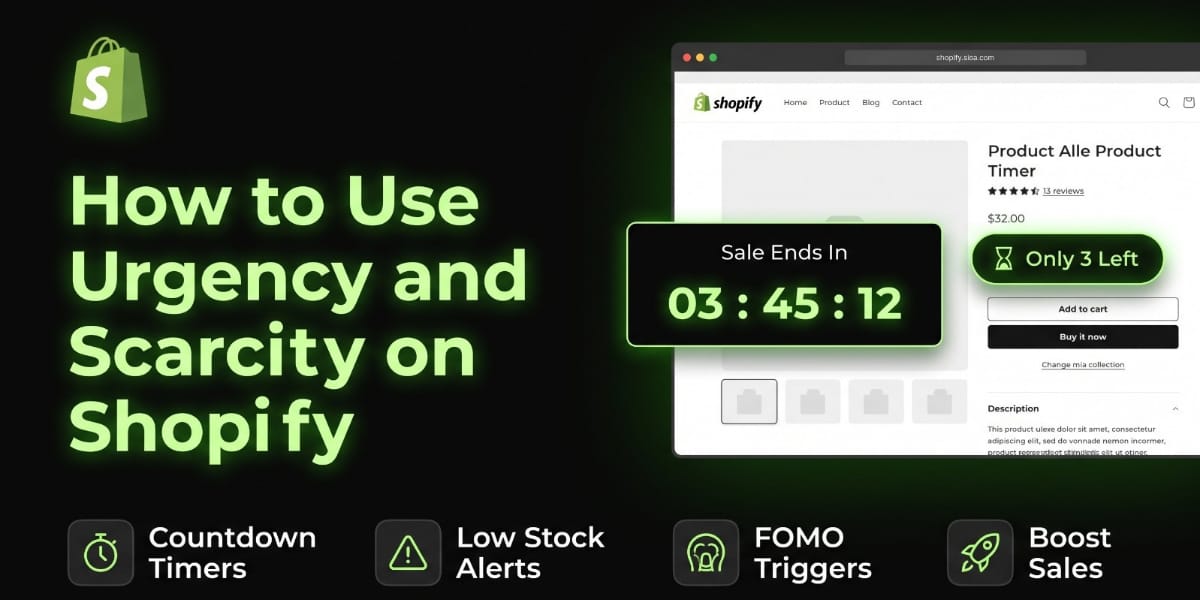
This is probably the most common urgency tactic on Shopify, and for good reason. A visible countdown timer at the top of your homepage, on a product page, or inside the cart tells shoppers exactly how much time they have left before a deal disappears.
Countdown timers on time limited promotions typically increase conversion rates by 10 to 25% compared to running the same promotion without one. That’s a significant lift for something that takes minutes to set up.
You don’t need a developer to add this. Apps like Hurrify, EA Countdown Timer, Essential Countdown Timer Bar, and Hextom Countdown Timer Bar all let you add timers to your announcement bar, product pages, or cart with just a few clicks. Most of these have free plans or free trials, so you can test what works for your store before committing to a paid tier.
There are a few different formats worth knowing about. An announcement bar timer sits at the very top of your site and applies to a store wide promotion. A product page timer sits near the add to cart button and is useful when only certain products are on sale. A cart timer appears once someone adds an item to their cart, which is especially effective for limited drops where stock genuinely moves fast.
A few tips to get the most out of this tactic. Keep your timer honest, meaning the deal should genuinely end when the clock hits zero. Place it somewhere visible but not obnoxious, like a top bar or near your add to cart button. Use contrasting colors so it actually stands out from the rest of your page design. And don’t run a countdown timer permanently, since a timer that never actually expires just teaches customers to ignore it, the same way people eventually stop noticing banner ads.
Low Stock Alerts And Inventory Counters
Showing customers how much stock is left is one of the most effective scarcity tactics, especially for physical products with genuinely limited supply. A message like “Only 4 left in stock” placed near the add to cart button nudges hesitant shoppers to act before checking other options.
Apps like Urgency+ Low Stock Counter and Hey!Scarcity Low Stock Counter pull real inventory data directly from your Shopify store, so the numbers shown to customers are accurate rather than made up. Some of these apps also let you set manual thresholds, so you can decide exactly when the low stock message starts appearing, for example only when inventory drops below 5 units. This matters because you don’t want the warning showing up when you actually have 40 units left, since that would immediately feel dishonest to anyone who’s paying attention.
There’s a real story worth mentioning here. A small skincare brand with a hero product that restocked every 6 to 8 weeks found that customers had learned to just wait for restocks instead of buying immediately. Once they started showing real stock levels, the sellout time for that product dropped from weeks down to just days, because customers stopped assuming the product would always be available whenever they got around to buying it.
Another merchant running a handmade goods store noticed something similar. Customers would favorite items and come back later, only to find them gone, since every item really was one of a kind. Once the store started clearly labeling stock as limited and showing progress bars for remaining quantity, shoppers stopped delaying and started checking out immediately instead of risking losing the item entirely.
Progress bars in particular seem to trigger a stronger response than a plain number. Seeing a bar that’s mostly filled in visually communicates scarcity in a way that feels more immediate than reading “6 left,” even though it’s the same information.
Limited Time Offers And Flash Sales
Flash sales work because they compress the decision window. Instead of giving customers days to think it over, you’re giving them hours. This forces a faster decision and often pushes fence sitters into buying.
The key to a good flash sale is making sure the offer feels genuinely special. If you run a flash sale every single week, customers will start waiting for the next one instead of buying at full price, which defeats the purpose entirely and can actually train your audience to avoid full priced purchases altogether. Reserve flash sales for specific moments, like clearing old inventory, celebrating a launch, or tying into a seasonal moment like Eid or Independence Day if you’re targeting a Pakistani audience.
Pair your flash sale with a countdown timer and a clear headline that states the discount and the deadline. Something like “24 hour flash sale, 30% off, ends tonight at midnight” removes any ambiguity about what the customer needs to do and by when. Vague messaging like “limited time only” without an actual deadline is far less effective, because the shopper has no real reason to act today instead of next week.
It also helps to build anticipation before the flash sale even starts. A short teaser campaign the day before, whether through email, WhatsApp, or an announcement bar saying “24 hour sale starts tomorrow at noon,” gets shoppers primed and ready to buy the moment the sale goes live, rather than discovering it randomly mid sale.
Cart And Checkout Urgency
A lot of stores focus urgency messaging only on the product page, but the cart and checkout stages are just as important, since this is exactly where hesitation leads to abandonment. Some countdown timer apps let you add a cart specific timer that reserves the item for a limited window, reminding shoppers that leaving items sitting in their cart doesn’t guarantee they’ll still be available later.
This works particularly well for stores dealing with limited edition drops or products that genuinely sell out fast. Just be careful with auto emptying cart features. If a cart timer removes items too aggressively, you risk frustrating shoppers who got distracted for a few minutes and come back to find their cart cleared out. A 15 to 30 minute reservation window tends to strike a reasonable balance between creating urgency and not punishing someone for stepping away briefly.
You can also combine cart urgency with a small incentive, like free shipping if checkout is completed within a set window. This reframes the urgency around gaining something rather than only fearing a loss, which can feel less pressuring to some shoppers while still driving the same faster decision.
Social Proof As A Form Of Urgency
Urgency doesn’t only come from timers and stock counts. Showing that other people are actively buying or viewing a product creates a similar psychological push. Messages like “12 people bought this in the last 24 hours” or “8 people are viewing this right now” tap into the same fear of missing out, just from a social angle instead of a purely time or quantity based one.
This works especially well alongside a low stock counter, since the two signals reinforce each other. If a shopper sees that a product is both popular and running low, the urgency to act feels much more real than either signal on its own. It also builds trust in a different way, since a product that others are actively buying feels safer to purchase than one sitting untouched.
Just like with stock counters, keep this data honest. If your store gets genuine traffic, most social proof apps will show real visitor and purchase activity automatically, so there’s rarely a need to fabricate numbers, and doing so risks the same trust damage as fake stock counts.
Limited Editions And Exclusive Drops
Some of the biggest scarcity wins on Shopify don’t come from apps at all, they come from how you structure your product line. Releasing a product as a limited edition, capping the quantity available, or running numbered drops creates built in scarcity that doesn’t need to be manufactured with software.
This approach works especially well for fashion, beauty, and handmade goods, where exclusivity adds to the perceived value of the product. If customers know a design will never be restocked once it sells out, they’re far less likely to delay their purchase. Some brands go a step further and number each unit individually, like “42 of 200,” which adds a collectible feeling that pure discounting can never replicate.
You can also build entire launch strategies around this idea. Announcing a drop date in advance, building an email or WhatsApp waitlist, and then selling out a small first batch quickly creates momentum that carries into future launches, since customers who missed out the first time show up faster the next time around.
How To Use Urgency Without Losing Trust
Here’s the part that separates stores that do this well from stores that end up damaging their reputation. Fake urgency gets noticed. If a shopper sees the same “only 2 left” message every single time they visit your site over several weeks, or a countdown timer that resets right after it hits zero, they’ll stop believing anything you say. Once that trust is gone, urgency tactics stop working entirely, and it can even make customers suspicious of your other marketing claims, including your product quality claims and your reviews.
A few ground rules to keep things honest. Only show stock counts that reflect real inventory, not arbitrary numbers designed to scare people into buying. Let deals actually expire when your timer says they will, and don’t quietly relaunch the same “ending soon” sale the very next day. Don’t run “limited time” sales that are actually permanent fixtures on your site. And avoid stacking too many urgency tactics on a single page, since a product page with five different countdown timers, stock warnings, and pop ups starts to feel desperate rather than persuasive, and can actually make shoppers question why you’re pushing so hard.
Used honestly, urgency and scarcity are simply tools that help customers make faster decisions about products they already want. Used dishonestly, they’re a shortcut that eventually costs you far more in lost trust than the sales lift is worth.
Common Mistakes To Avoid
A few patterns show up again and again on stores that get urgency wrong, so it’s worth calling them out directly.
Running permanent countdown timers is one of the most common mistakes. If your homepage has had the same “sale ends in 2 days” banner for the past three months, customers notice, and it undermines every other urgency signal on your site.
Overloading a single page with too many triggers is another frequent issue. A product page doesn’t need a countdown timer, a stock counter, a “12 people viewing” badge, and a pop up discount all fighting for attention at once. Pick one or two triggers per page and let them do their job cleanly.
Using vague deadlines without specifics also weakens the effect. “Limited time only” doesn’t create nearly as much urgency as “sale ends Friday at midnight.” Be specific whenever you can.
Ignoring mobile design is another one worth mentioning, since a large share of your traffic likely comes from mobile. A countdown bar that looks great on desktop but covers half the screen or breaks your layout on mobile will hurt more than it helps.
Testing What Works For Your Store
Not every tactic will perform the same way for every store, which is why testing matters more than blindly copying what worked somewhere else. Start with one tactic at a time, whether that’s a countdown timer on your next promotion or a low stock counter on your best selling products, and track your conversion rate before and after.
Most countdown timer and scarcity apps come with basic analytics built in, showing you impressions and how many of those turned into add to carts or purchases. Use that data to decide whether a tactic is worth keeping, adjusting, or dropping entirely. What works for a fashion store selling limited drops might not work the same way for a store selling everyday household items, so give yourself permission to experiment rather than assuming one formula fits everyone.
Building A Simple Urgency Strategy For Your Store
If you’re just getting started, you don’t need to implement every tactic at once. Start with one countdown timer app and add a simple bar timer to your homepage for your next sale. Once that’s running smoothly, add a low stock counter to your best selling products, since those tend to see the biggest lift from scarcity messaging. From there, you can layer in cart timers or social proof pop ups if you want to go further.
A reasonable rollout order looks something like this. Begin with a homepage or product page countdown timer for your next promotion. Add a low stock counter to your top 10 best sellers once you’re comfortable with the timer. Introduce cart urgency once you have a sense of how customers respond to the first two tactics. Finally, layer in social proof messaging once the rest of your funnel already has urgency signals working smoothly.
Track your conversion rate before and after adding each tactic, so you actually know what’s working for your specific store rather than assuming a tactic that worked for someone else’s store will automatically work for yours. Different audiences respond differently, and testing is the only way to know for sure.
A Note For Pakistani Shopify Stores
If you’re running a Shopify store here in Pakistan, urgency and scarcity tactics still work well, but they need a bit of local context to land properly.
Tie your flash sales and limited time offers to moments that already carry weight for your audience, like Eid sales, Independence Day promotions, or year end clearance sales. These feel more natural and expected than a random Tuesday flash sale, and customers are already primed to expect deals around those dates. Pairing urgency messaging with culturally relevant timing tends to convert better than generic countdown offers with no context behind them.
Since cash on delivery is still widely used across Pakistan, urgency messaging should also reassure shoppers about the ordering process itself, not just the discount. Mentioning that COD is available, along with expected delivery timelines through couriers like Leopards, TCS, or PostEx, helps reduce the hesitation that often causes cart abandonment even when a shopper is genuinely excited about a deal. Urgency alone doesn’t fix payment hesitation, so pairing the two messages together tends to work best.
WhatsApp is also a great channel to amplify urgency messaging locally. A countdown timer on your website works well, but pairing it with a WhatsApp broadcast reminding customers that a sale ends in a few hours often drives a stronger response than the website timer alone, since most of your customers are checking WhatsApp far more often than they’re browsing your store directly. Sending a short reminder message a few hours before a flash sale ends can recover sales that a website timer alone would have missed.
Frequently Asked Questions
Does urgency actually increase sales or just clicks? When implemented honestly, urgency tends to increase both clicks and completed purchases, since the same trigger that gets someone to click also pushes them to finish checkout faster instead of abandoning halfway through.
How many urgency tactics should I use at once? Generally one or two per page is enough. A countdown timer paired with a stock counter is a strong combination without feeling overwhelming.
Will fake urgency get my store in trouble? Beyond damaging customer trust, several markets have started paying closer attention to misleading scarcity claims from a consumer protection standpoint, so it’s worth staying on the safe side and only showing information that’s actually accurate.
Do I need a developer to set this up? No. Most of the apps mentioned in this guide are built for merchants without coding experience, with drag and drop customization and one click installs.
Final Thoughts
Urgency and scarcity are some of the most effective tools you have for turning browsers into buyers, but they only work long term when they’re built on honesty. A countdown timer that actually counts down, a stock number that reflects real inventory, and a flash sale that genuinely ends when it says it will, these are the things that keep customers acting fast without ever feeling tricked.
If you’re running a Shopify store in Pakistan and want help setting up urgency and scarcity tactics properly, from countdown timers to low stock alerts to a checkout flow that doesn’t lose customers at the last step, that’s exactly what we help with at TheScriptFlow. We work with Shopify stores across Pakistan and internationally on theme customization, conversion rate optimization, and everything in between. Reach out to us at thescriptflow.com and let’s turn your store’s traffic into actual sales.