The Complete Guide to Shopify Local Dropshipping
Dropshipping has long been associated with slow shipping times from overseas suppliers, unpredictable quality, and thin profit margins. But a newer model is changing the game for Shopify entrepreneurs: local dropshipping. By partnering with suppliers based in your own country (or even your own region), you can offer faster shipping, better quality control, and a more trustworthy brand experience all while keeping the low overhead benefits that made dropshipping popular in the first place.
In this guide, we’ll break down everything you need to know about Shopify local dropshipping: what it is, why it works, how to set it up, and how to scale it into a sustainable business.
What Is Local Dropshipping?
Local dropshipping is a fulfillment model where you sell products online through your Shopify store, but instead of sourcing from overseas manufacturers (commonly through platforms based in China), you partner with suppliers, wholesalers, or manufacturers located within your own country or nearby region.
When a customer places an order on your store, the local supplier picks, packs, and ships the product directly to the customer just like traditional dropshipping. The key difference is geography: your supply chain is domestic or regional, not international.
This small shift creates a ripple effect of advantages across shipping speed, customer trust, return handling, and even your marketing messaging.
Why Local Dropshipping Is Gaining Popularity
Several trends have pushed local dropshipping into the spotlight for Shopify merchants:
1. Rising Customer Expectations for Fast Shipping
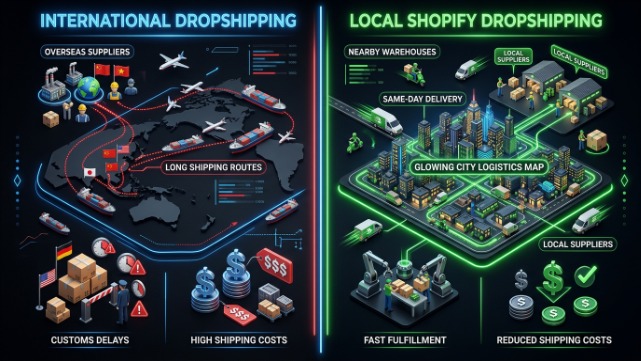
Amazon Prime conditioned online shoppers to expect delivery within two to three days. Traditional dropshipping models, where products ship from overseas, often mean customers wait two to six weeks. That gap in expectations leads to abandoned carts, chargebacks, and negative reviews. Local suppliers can typically deliver within 2 to 5 business days, matching modern shopper expectations.
2. Increased Scrutiny on Overseas Supply Chains
Global shipping disruptions, customs delays, and rising international freight costs have made overseas dropshipping less predictable. Local suppliers eliminate most of these variables, giving you a more stable and forecastable business.
3. Consumers Prefer to “Buy Local”
There’s a growing cultural and economic preference for supporting local or domestic businesses. Shoppers are increasingly willing to pay a premium for products that are sourced, packed, or shipped locally, especially when it’s framed transparently in your branding.
4. Better Quality Control and Fewer Returns
Local suppliers are easier to vet in person, communicate with in real time, and hold accountable for quality issues. This typically results in fewer defective products, fewer disputes, and stronger long term supplier relationships.
Local Dropshipping vs. Traditional Dropshipping: Key Differences
| Factor | Traditional Dropshipping | Local Dropshipping |
|---|---|---|
| Shipping Time | 2-6 weeks | 2-5 business days |
| Supplier Location | Overseas (often China) | Domestic or regional |
| Product Cost | Very low | Moderate to higher |
| Profit Margins | Higher percentage, lower average order value | Lower percentage, but higher perceived value |
| Customer Trust | Harder to build | Easier to build |
| Communication | Time zone and language barriers | Easier, real time communication |
| Branding Potential | Limited (generic products) | Higher (can align with “local” messaging) |
| Return Handling | Complex and costly | Simpler and faster |
Neither model is inherently “better” they serve different business goals. Local dropshipping tends to suit merchants who want to build a long term, trust based brand rather than run high volume, low loyalty stores.
Benefits of Shopify Local Dropshipping
Faster Delivery Times
This is the single biggest advantage. Faster shipping directly improves conversion rates, reduces cart abandonment, and increases customer satisfaction scores.
Stronger Brand Trust
Customers are more confident buying from a store that ships quickly and offers responsive customer service. Local sourcing also lets you market authentically around themes like “supporting local businesses” or “made and shipped domestically.”
Easier Communication With Suppliers
Time zone alignment and shared language make it far easier to resolve issues, negotiate terms, or request custom packaging and branding.
Lower Risk of Customs and Import Issues
Cross-border dropshipping can run into customs delays, import duties, and compliance issues. Local dropshipping largely avoids these complications.
Better Opportunity for Private Labeling
Because you’re working with domestic manufacturers or wholesalers, it’s often easier to negotiate private labeling, custom packaging, or branded inserts key ingredients for building a recognizable, defensible brand rather than a generic storefront.
Challenges to Be Aware Of
Local dropshipping isn’t without its downsides, and it’s important to plan for them:
- Higher product costs: Local suppliers generally charge more than overseas manufacturers, which can shrink your margins.
- Smaller supplier pool: Depending on your niche, there may be fewer local suppliers to choose from compared to global marketplaces.
- Limited product variety: Local suppliers may not carry the same breadth of trending or niche products available internationally.
- Higher minimum order requirements: Some local wholesalers expect higher order volumes or minimum spend thresholds.
Understanding these trade offs upfront helps you set realistic pricing and margin expectations from day one.
How to Start Local Dropshipping on Shopify: Step by Step
Step 1: Choose Your Niche
Start by identifying a niche where local sourcing gives you a genuine advantage think perishables, fragile items, seasonal goods, or products where “locally made” carries marketing weight (home goods, apparel, food products, beauty items). Avoid niches where international suppliers have an overwhelming cost advantage that local suppliers simply can’t match.
Step 2: Find Local Suppliers
There are several ways to find domestic or regional suppliers for your Shopify store:
- Local dropshipping apps: Apps built specifically for regional sourcing (such as Spocket, which filters for US/EU suppliers, or country specific alternatives) let you browse and connect with vetted local suppliers directly inside Shopify.
- Wholesale directories: Many countries have wholesale directories or trade associations that list verified domestic manufacturers.
- Trade shows and expos: In person industry events are a great way to meet suppliers face to face and negotiate direct partnerships.
- Direct outreach: Search for manufacturers or wholesalers in your niche and reach out directly to ask about dropshipping partnerships many businesses are open to it even if they don’t advertise it.
- Local business directories: Chamber of Commerce listings and regional business registries can surface smaller manufacturers open to partnerships.
Step 3: Vet Your Suppliers Carefully
Before committing, evaluate potential suppliers on:
- Product quality (request samples)
- Shipping speed and reliability
- Pricing and minimum order quantities
- Communication responsiveness
- Return and refund policies
- Ability to provide branded packaging or inserts
Step 4: Set Up Your Shopify Store
If you haven’t already, set up your Shopify store with a clean, conversion optimized theme. Key elements to prioritize:
- Clear product pages with high quality images
- Transparent shipping information (highlighting your fast local delivery as a selling point)
- Trust signals like reviews, guarantees, and secure checkout badges
- Mobile optimized design, since most shoppers browse on mobile devices
Step 5: Integrate Supplier Apps and Automate Fulfillment
Use a dropshipping app compatible with Shopify to automate order routing to your local suppliers. This typically involves:
- Connecting your supplier’s product catalog to your store
- Setting up automatic order forwarding when a sale is made
- Syncing inventory levels to avoid overselling
- Setting up tracking number syncing so customers get real-time updates
Step 6: Price Your Products Strategically
Because local sourcing often comes with higher product costs, your pricing strategy needs to account for:
- Product cost from supplier
- Shopify transaction and app fees
- Marketing and advertising spend
- Desired profit margin
Many successful local dropshippers price at a premium and justify it through messaging around speed, quality, and supporting domestic business rather than trying to compete purely on price with overseas sellers.
Step 7: Market Your “Local” Advantage
Your local sourcing is a genuine differentiator, so lean into it in your marketing:
- Highlight fast shipping times prominently on product pages
- Use messaging like “Proudly sourced and shipped domestically”
- Share supplier stories or behind the scenes content to build authenticity
- Run A/B tests on your shipping and trust messaging to see what resonates most with your audience
Step 8: Optimize for Customer Retention
Local dropshipping’s biggest strength is trust building, so don’t stop at the first sale. Build retention through:
- Post purchase email sequences
- Loyalty or referral programs
- Fast, hassle free returns
- Personalized follow ups asking for reviews
Best Practices for Long Term Success
Diversify Your Supplier Base
Relying on a single local supplier creates risk. If they run out of stock, raise prices, or discontinue a product line, you need backup options ready to go.
Monitor Shipping Performance Continuously
Even local suppliers can experience delays. Regularly review shipping times and customer feedback to catch issues before they damage your store’s reputation.
Invest in Branding, Not Just Products
Since local dropshipping often reduces your margin advantage compared to overseas sourcing, your competitive edge needs to come from brand experience: packaging, customer service, and site design all matter more here than in low cost, high volume dropshipping models.
Use Data to Guide Product Decisions
Track which products convert best, which have the highest return rates, and which drive repeat purchases. Let this data guide which local suppliers and product lines you expand with over time.
Stay Compliant With Local Regulations
Depending on your niche (especially food, cosmetics, or supplements), local suppliers may be subject to specific regulatory requirements. Make sure your supplier agreements account for compliance so you’re not caught off guard.
Is Local Dropshipping Right for Your Shopify Store?
Local dropshipping tends to be a strong fit if:
- You want to build a long term brand rather than a short-term arbitrage store
- Your target customers value speed and quality over the lowest possible price
- You’re selling in a niche where “local” or “domestic” carries real marketing value
- You’re comfortable with slightly tighter margins in exchange for lower operational risk
It may be less ideal if:
- You’re testing many products quickly to find winners (overseas dropshipping offers more variety and lower risk per test)
- Your niche has few or no viable local suppliers
- Price is your primary competitive advantage
Final Thoughts
Shopify local dropshipping offers a compelling alternative to the traditional overseas model faster shipping, stronger customer trust, easier communication, and better opportunities for branding. It does come with trade-offs, particularly around cost and supplier availability, but for merchants focused on building a sustainable, trust driven brand, those trade offs are often well worth it.
If you’re ready to get started, begin by researching local suppliers in your niche, testing a small product range, and building your store’s messaging around the genuine advantages that local sourcing provides. With the right suppliers and a clear brand story, local dropshipping can be a powerful foundation for long-term e-commerce success on Shopify.