The Ultimate Guide to Shopify Partner Program
If you’re a developer, designer, marketer, or agency working anywhere near ecommerce, there’s a good chance you’ve heard people talk about becoming a Shopify Partner as one of the smarter ways to build recurring income without running your own store. But between tiers, commission structures, and program changes that Shopify updates fairly often, it’s easy to feel like you’re missing the full picture. This guide breaks down exactly how the Shopify Partner Program works in 2026, who it’s for, and how to actually make the most of it.
What Is the Shopify Partner Program?
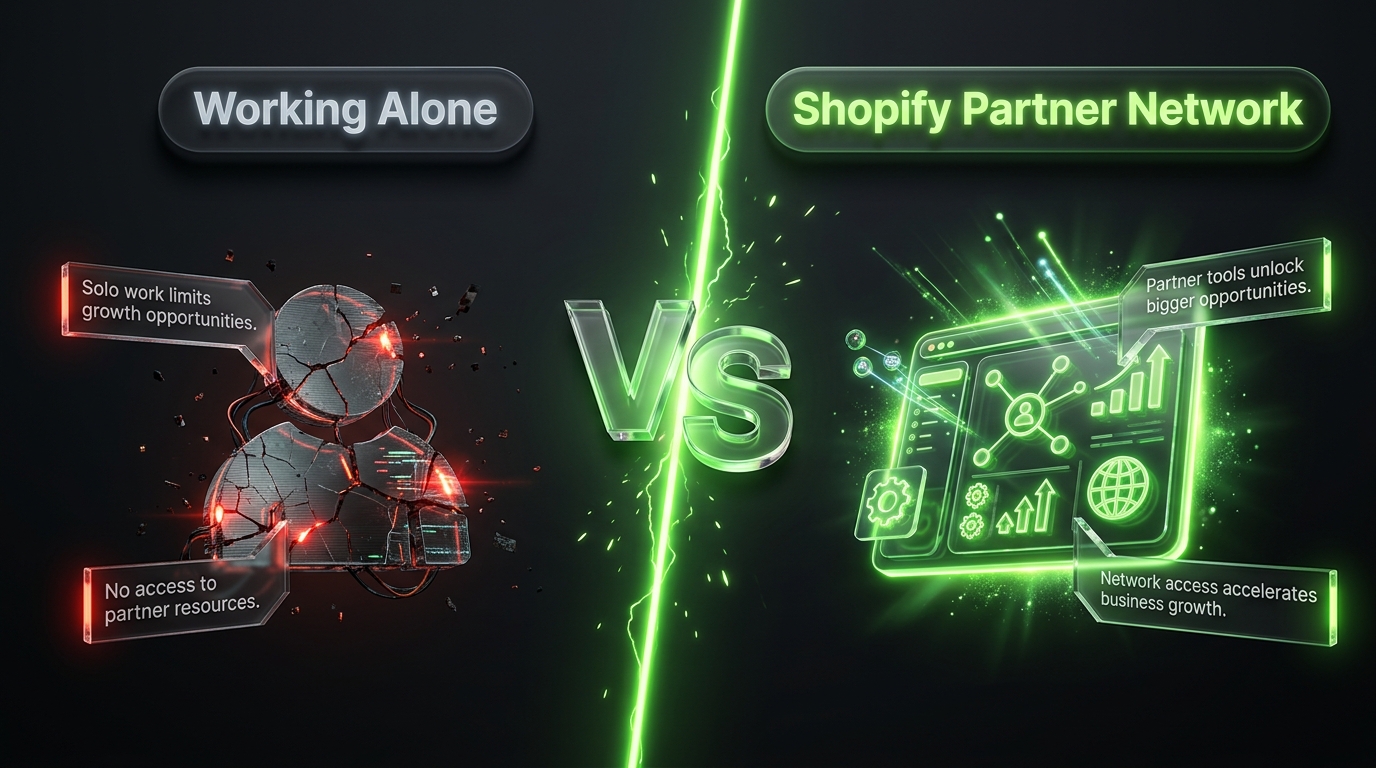
Shopify Partners are professionals and organizations operating within the Shopify ecosystem to help merchants succeed, but importantly, they are not Shopify employees. They are independent agencies, developers, designers, marketers, and technology vendors who have registered with the Partner Program and agreed to its terms. In plain terms, if you build stores, develop apps, design themes, or offer marketing and consulting services to Shopify merchants, this program is the official structure through which you get recognized, supported, and paid for that work.
The scale of this ecosystem is genuinely massive at this point. The Shopify Partner Program is free to join and includes over 700,000 partners globally. And the platform itself has grown to match, Shopify processed $378 billion in GMV in 2025, crossed $100 billion in a single quarter for the first time in Q1 2026, and reported $11.5 billion in FY 2025 revenue, a 30% year over year increase. That growth directly translates into more merchants needing help, which means more opportunity for partners.
The Two Tracks: Service Partner vs. Technology Partner
Before you even sign up, it’s worth understanding that Shopify structures the program around two distinct paths. The Shopify Partner Program runs two tracks, Service Partner and Technology Partner, with five performance tiers: Registered, Select, Plus, Premier and Platinum, reviewed every quarter.
Service Partners are the agencies, freelancers, and consultants who work directly with merchants, building stores, migrating platforms, running marketing campaigns, or offering ongoing consulting. Technology Partners are the app and integration builders creating products that get distributed through the Shopify App Store or embedded directly into merchant workflows. Plenty of partners actually operate across both tracks simultaneously, especially agencies that build custom apps for their own client work in addition to offering services.
How to Join the Shopify Partner Program
The good news here is that joining itself is refreshingly simple and completely free. There is no minimum revenue requirement, no portfolio review, and no application wait time at the Registered level. You simply visit the Partners website, click to join, and enter your basic details to get started. There’s no fixed income since earnings depend on the projects you take up and the results you deliver, and you don’t need to run a business to become a partner. Coding is not required either, which is worth knowing if you’re coming from a marketing, design, or consulting background rather than a development one.
Once you’re in, your Partner Dashboard becomes your control center. This is where you manage client projects, track referrals, access development tools, and monitor your earnings and progress through the tier system.
Understanding the Five Partner Tiers
This is where things get genuinely important to understand, because your tier affects your visibility, your benefits, and in some cases, your credibility with prospective clients. The five tiers run Registered, Select, Plus, Premier, and Platinum, and they’re reviewed on a quarterly basis rather than being a one time designation you earn and keep forever.
Tier thresholds are based on real commercial activity. Per the Q2 2026 Tiering Guide, Select tier requires $100K+ in new referral revenue or $500K+ existing merchant revenue, scaling up to $5M+ for Platinum. That’s a steep climb, and it shows in how exclusive the top tier actually is. Five tiers exist from Registered to Platinum, with only 14 partners worldwide holding Platinum status, which tells you just how competitive and rare that top designation really is.
One notable program change worth knowing about: credentials are waived for 2026, only commercial activity is evaluated for tier progression. This is a meaningful shift from earlier years where certifications and credential requirements played a bigger role in tier advancement.
As you climb tiers, the benefits scale up meaningfully. Higher tiers typically come with priority support access, co-marketing opportunities with Shopify itself, and stronger placement in the Partner Directory, which is the primary channel merchants use to find and evaluate potential partners. That directory placement matters more than people initially realize, since it directly affects how many inbound leads you get without having to do outbound outreach yourself.
How Shopify Partners Actually Earn Money
This is usually the part people care about most, so let’s get specific. There are several distinct revenue streams built into the program, and most successful partners end up combining several of them rather than relying on just one.
Referral commissions are the most straightforward. Service Partners earn 20% recurring commission on every referred merchant subscription, indefinitely. That word “indefinitely” matters a lot, this isn’t a one-time bonus, it’s an ongoing revenue stream for as long as that merchant stays subscribed to Shopify. If you refer ten merchants over a year and they all stay active, you’re building a genuinely meaningful passive income layer on top of your active client work.
App and theme development revenue works a bit differently, and it’s gotten more generous for developers recently. App developers keep 100% on their first $1M in lifetime earnings, a lifetime cap revised in January 2025, then 85% above that. For theme developers, recurring app revenue typically runs an 80/20 revenue split in your favor after platform fees, while theme sales on the Shopify Theme Store run a 70/30 split.
Development store and client project commissions add another layer. You earn a commission for each new Shopify store you build, design, or migrate for a client, on top of whatever you’re directly billing that client for your services. This stacking effect, service fees plus platform commission plus potential recurring referral income, is exactly why experienced partners describe the program as having multiple income streams rather than a single payout structure.
What You Get Beyond Direct Revenue
Money aside, the program comes with real operational value that’s easy to underestimate when you’re just getting started. You get free access to development tools, including test stores and app environments, so you can build and test client work without needing to pay for separate infrastructure. Partners also get exclusive discounts on apps, themes, and third-party tools relevant to their work.
Educational support is genuinely robust too. Shopify Partner Academy covers everything from store setup and theme development to app development, performance optimization, and broader ecommerce strategy, giving you a structured way to level up your skills rather than piecing everything together from scattered blog posts and forum threads.
There’s also a community and networking dimension that shouldn’t be overlooked. Being part of the Shopify Community, attending partner events, and following product updates closely helps you stay ahead of platform changes before they catch you off guard, and it opens doors to collaboration opportunities with other partners that can turn into referral relationships of their own.
Is the Shopify Partner Program Actually Worth It?
Given how much ecommerce has grown on Shopify specifically, the honest answer for most agencies, developers, and marketers is yes, but with a caveat: it rewards consistency far more than it rewards a single big win. The recurring commission structure means your income compounds over time as your referral base and client relationships grow, but it also means the first few months can feel slow if you’re starting from zero.
If you’re already doing Shopify-adjacent work, building stores, developing apps, running marketing campaigns for ecommerce clients, joining costs you nothing and only adds upside through commissions and referrals you’d otherwise be leaving on the table. If you’re completely new to Shopify and considering it as a way to break into ecommerce work generally, it’s still a strong entry point given the low barrier to joining, but expect a real learning curve before the income becomes meaningful.
Building a Strategy Once You’ve Joined
Simply registering as a partner won’t generate income on its own, the partners who actually succeed treat it as a real business channel rather than a passive listing. A few practical moves make a real difference early on.
Specializing rather than trying to be everything to everyone tends to pay off faster. Partners who position themselves clearly, whether that’s Shopify Plus migrations, a specific app category, or a particular vertical like fashion or CPG brands, find it easier to stand out in the Partner Directory and in direct outreach than generalists competing on price alone.
Building case studies and documented results early matters more than most new partners expect. Merchants evaluating partners, especially at higher price points, want proof of outcomes, not just a list of services offered. Even two or three strong before-and-after results from early client work go a long way toward winning bigger engagements.
Climbing tiers deliberately, rather than accidentally, is worth planning for once you’re established. Since tier progression is now based purely on commercial activity rather than credentials, tracking your referral revenue and existing merchant revenue against the published thresholds lets you consciously push toward the next tier rather than hoping it happens organically.
The Shopify Partner Program for Pakistan-Based Professionals
For developers, designers, and agencies based in Pakistan, the Shopify Partner Program represents a genuinely accessible way to earn in international currency while working with a global client base, without needing to relocate or navigate complex international business registration. Since the program has no minimum revenue requirement to join at the Registered level and doesn’t require running a formal business entity, it’s a realistic entry point for freelancers and small teams just getting started.
Building a reputation as a Pakistan-based Shopify partner also plays well into a broader trend of merchants specifically seeking cost effective, skilled development talent outside traditional Western markets. Positioning your services around Shopify Plus migrations, custom app development, or COD aware ecommerce setups tailored for South Asian and Middle Eastern merchants can be a genuine differentiator, since very few partners globally specialize in the operational realities of markets where cash on delivery, WhatsApp commerce, and local courier integrations matter as much as they do here.
Getting paid internationally is worth planning for early too. Since Shopify’s revenue share and referral commissions are typically paid out through international payment methods, understanding how those payments convert and land through Pakistani banking channels, and factoring in any conversion costs, is worth sorting out before you scale your partner income to any meaningful level.
Wrapping It Up
The Shopify Partner Program in 2026 is a mature, genuinely lucrative ecosystem for anyone doing Shopify-adjacent work, but it rewards partners who treat it strategically rather than passively. Between recurring referral commissions, generous app revenue splits, and a tier system that now rewards pure commercial performance over credentials, there’s real income potential here for developers, designers, marketers, and agencies willing to build consistent momentum. The partners seeing the biggest results aren’t necessarily the most technically skilled, they’re the ones who specialize clearly, document their results, and actively work the referral and tier system rather than just quietly completing client projects.